


Bangkok, Thailand – The BFSI landscape is rapidly shifting with a 17% decline in finance app installs over the past year, along with a 27% drop in user acquisition across the APAC region, according to the latest 2026 report from AppsFlyer.
Meanwhile, in Southeast Asia, there has been a 193% surge in investments in remarketing, highlighting how banks and financial institutions across the region have shifted their focus to retention and lifecycle-growth strategies.
Exploring this, AppsFlyer hosted the first AppsFlyer BFSI Experience conference on March 26, 2026, alongside the release of their State of Finance for Marketers in APAC – 2026 Edition report, where leaders shared and discussed the future outlook of the BFSI industry.
The event held at the Bangkok Marriott Marquis Queen’s Park showcased the significance of infrastructure, lifecycle-growth solutions, connected and secure ecosystems, and the importance of data collaboration across wallets, banks, and measurement technology platforms.
Ronen Mense, president and managing director of APAC at AppsFlyer, kicked off the event. “Transformation never stops. The markets continue to evolve. Technology is always advancing, and regulation continues to intensify.”
“Acquisition alone is no longer the differentiator. Institutions that will lead are those building strong measurement infrastructure and using trusted data to drive smarter decisions.”
Sustainable growth through retention
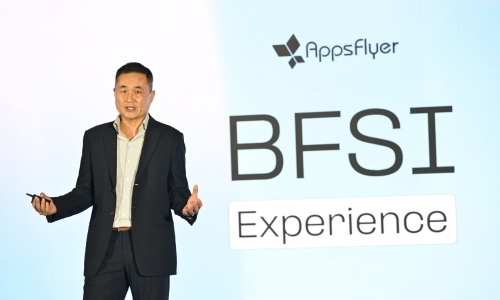
Joen Van Driel, vice president of sales for APAC at AppsFlyer, kicked off the morning with a session that highlighted a significant shift in the APAC digital economy over the last 12-24 months.
“When I speak to my customers and prospects, it’s not about raw acquisition anymore—growing at all costs. What I see is that there is more focus on where to get the value users,” he shared.
Joen discussed the evolving BFSI market across the region, acquisition strategies for LTV customers, the rise of lifecycle engagement and retention, and the impact of monetisation fraud with existing AI trends.
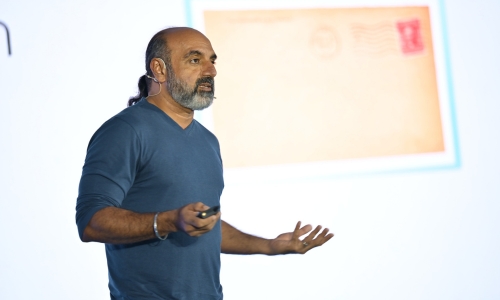
Following this, Navin Wathan, senior client partner at Korn Ferry, rewound the clock and explored specific case studies in the past across the telco and automotive industries to highlight the evolution of traditional tech convergence through financial service partnerships, operating models, and integration of AI to lead coordinated growth across various channels.
“The tech will continuously change, and your agility in navigating those changes is another key element of success,” Navin commented.
“Don’t take your eyes off customer value. It has to be the number one thing you are betting on every time. The reason you’re growing at the speed you’re growing is because of your focus on customer value.”
Marketing through signals with real-world outcomes
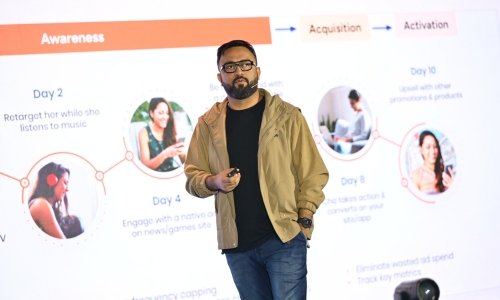
The afternoon sessions began with Krish Kidao, senior vice president of global business and Saurabh Golani, senior vice president of Brand Solutions for Asia at Mobavenue, who explored how to deploy successful full-funnel approaches for marketers across CTV and mobile platforms in the BFSI industry.
Kris and Saurabh highlighted the importance of practical conversion of audiences across segmentation, cross-screen sequencing, frequency management, and data compliance for key markets.

Moving from CTV and platforms, KC Nguyen, customer success team leader for Vietnam at AppsFlyer, Sankalp Rohatgi, senior director and head of growth at Groww, and Thao Jas Pham, product growth & business development manager at TPBank, took the stage with a fireside chat discussing how to win high-value customers within the first few minutes of onboarding.
“One pattern that I see across industries, particularly in fintech, is that people usually think it is a UX problem. This is very similar to when people think growth is an acquisition problem. This cannot be any further from reality,” Sankalp explained.
“The biggest impact I’ve seen comes from the little structural changes that you do. D30 is also very important, and how it is increasing, with trust being established through the first initial days of the app journey.”
The discussion highlighted the significance of streamlining the onboarding process to build user transaction behaviours and signals that translate to long-term value for customers.

This conversation was followed by another fireside chat that featured Hu Yang, head of performance marketing at Vantage Marketing, Hytech S Technology, Srividhya Raghupathi, offsite marketing lead at Amazon Pay (India), and Mark van der Maas, senior director of sales ROA (Rest of Asia) at AppsFlyer who delved into building long-term value and discussing signals to maximise lifetime value and avoid dormant user drop-off.
“One thing is that we look at our metrics in a full funnel view. We don’t just focus on one or two channels or compare them individually. The second thing is that we definitely evaluate in a long-term way,” Hu Yang commented.
When it comes to the long-term customer lifecycle, acquisition and activation are only just the beginning. Majority of a customer’s lifetime value comes after this phase, past dormancy risk. With it being five times cheaper to reactivate a dormant user than to acquire a new one, ensuring the lifetime value of customers is especially crucial in the BFSI industry today.
Remaining compliant with data collaboration
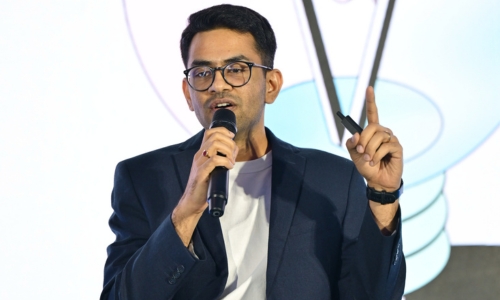
The afternoon continued with Aditya Maheshwari, senior director of customer success in SEAPAC at AppsFlyer, Niraj Patel, head of consumer acquisition & activation at GoPay Indonesia, and Srividhya Raghupathi, offsite marketing lead at Amazon Pay, who engaged in a conversation surrounding rethinking affiliate networks and navigating fraudulent cases across APAC.
From the report, affiliates drive ten times more clicks when compared to self-reporting networks, with 41% of traffic in the APAC region being fraudulent.
“Later, we realised that affiliates are an ecosystem with multiple parts to it. We realised that there are certain partners that really work well for us and some who just bring fraud bots,” Srividhya explained.
“From this, we started picking partners very specifically across industries and realised that they have better conversation, retention, and customer lifetime values.”
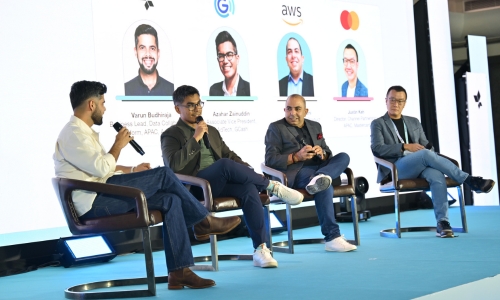
Transitioning from this discussion, the leaders heard from Varun Budhiraja, data collaboration platform lead of APAC at AppsFlyer, Azahar Zainuddin, associate vice president of AdTech for GCash, Naveen Asrani, head of strategic product & revenue growth at AWS, and Justin Keh, director of channel partnerships in APAC from Mastercard, who highlighted trust data collaboration as part of the next layer of growth across the BFSI industry.
“In the BFSI space, we need to redefine value as customer lifetime value powered by real-world signals,” Azhar commented.
“I think value should also be defined by the spend potential, which is where transaction data is really crucial, not just app engagement.”
Partners who come together to analyse first-party data in a secure and collaborative environment, with technologies such as data clean rooms, enable teams to use trusted signals to extend reach and improve ROI.
“I truly believe that the whole ecosystem is driving towards better experiences for our users,” Varun shared.
“In this new world, it’s not about someone who has more data that wins. It’s about who has better data that can be activated and really be there to serve your customers in the best possible way.”
AI in action across modern finance
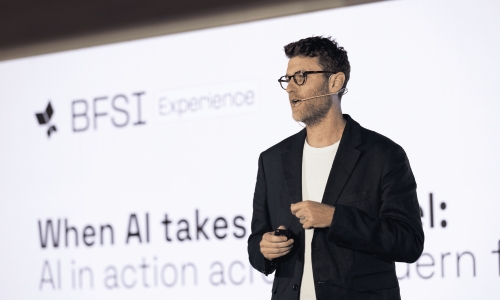
Leaders were greeted with the final session by Igal Frid, head of global industry lead group at AppsFlyer, who engaged in an interactive session with the audience with AI-driven statements about intelligent technologies in the current finance landscape,while also exploring real-world examples of AI in action across banks and financial institutions.
The session closed with an overview of a practical framework for transitioning from AI-assisted reporting to AI-supported decision-making.
*****
The conference concluded with Ronen returning to the stage to highlight the key takeaways from the sessions surrounding lifecycle, ecosystems, and data that are driving the future path of the BFSI industry.
Expansion and scaling are no longer the primary objective. It is about focusing on lifecycle growth and the long term value of customers through real-world signals and secure data collaboration.













![[Campaign] FIFA 2026](https://marketech-apac.com/wp-content/uploads/2026/07/Campaign-FIFA-2026.webp)