
Singapore — Marketing in the age of AI is not just about keeping up anymore—it is about actually being the one to set the pace.
The Sitecore City Tour Asia 2026 was a deep dive into exactly how brands can use AI, automation, and unified platforms to deliver experiences that are not just faster, but genuinely smarter and more personal.
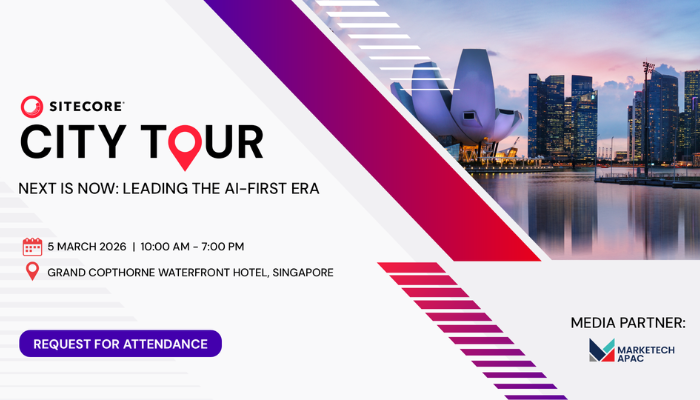
The one-day event at the Grand Copthorne Waterfront Hotel brought together the people actually building the future of MarTech—strategists and innovators from across the Asia-Pacific—to explore how generative AI and smarter workflows are changing the game for digital marketing.
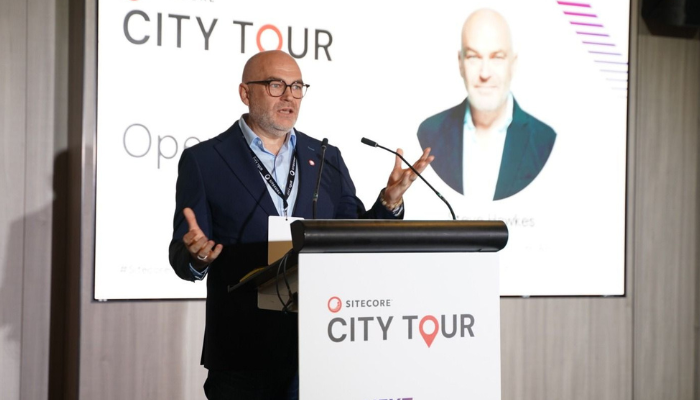
Steve Hawkes, Sitecore’s COO for APJ, kicked things off. “’Next is now’ is more than just a tagline. It’s a mindset. We’re living in a time where digital change isn’t just constant; it’s compounding—new platforms, new habits, and new tech hitting us all at once.”
To see how “Next is Now” translates into real-world market share, the morning sessions dug into the changing mechanics of how people find brands and what is now expected of the teams managing those journeys.
From strategy to execution: How AI is liberating the modern marketer
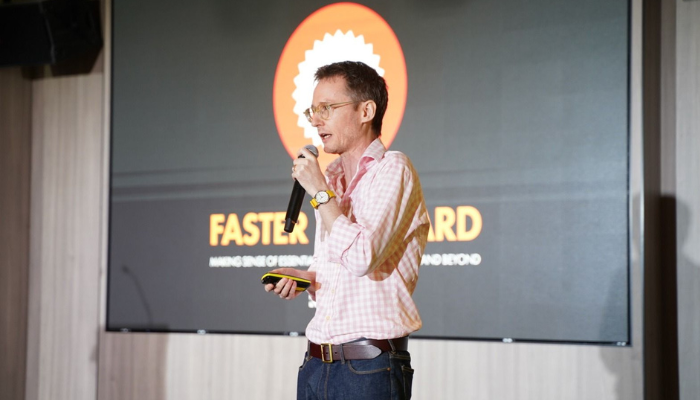
Simon Kemp, founder of Kepios, opened the morning with a session on making sense of digital opportunities in 2026. He highlighted how AI-powered tools can help us stay a step ahead of customer needs and find opportunities we might otherwise miss.
Kemp offered a refreshing reality check: “Social media isn’t going anywhere; it’s here for good. You don’t need to escape it—you just need to spend a little more time looking at the actual data, which is available for free, to understand how people are truly discovering your brand.”
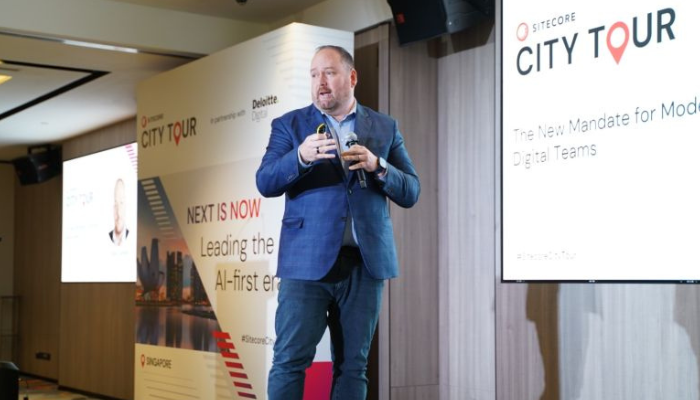
Following this, Roger Connolly, Sitecore’s chief product officer, tackled the “New Mandate for Modern Digital Teams.” He showed how centralised platforms and AI automation are not just tech upgrades—they are what allow teams to actually deliver a seamless, personal touch at scale.
Connolly pointed out that the brands leaning into AI today are the ones who will define the next generation of customer engagement. The audience then got to see Sitecore AI in action with Michael Wingert, director of Solution Engineering APJ. This was not just a slide deck; it was a look at real-time content recommendations and adaptive campaigns.
“Delivering content in a personal way is how you start seeing the real impact of your work,” Wingert noted. “It’s about making sure you’re hitting the right audience and grabbing their attention in a way that feels easy and right.”
These demos showed how AI can cut through the noise, streamline messy workflows, and turn a big vision into something you can actually measure.
It’s one thing to establish the “what” and “why” of the 2026 landscape, but the conversation naturally turned toward the “how.”
For marketers to move from just having data to actually using it, they have to get past the operational friction that usually slows things down. This led to a look at Sitecore’s answer to the fragmented workflows that often stall even the best AI strategies.
The end of context-switching: Sitecore’s vision for a unified, AI-powered future
In an exclusive conversation with MARKETECH APAC, Connolly emphasised that while AI captures attention, execution remains the ultimate differentiator.
“Execution has always mattered a lot more than people realise. Strategy ultimately falls down without execution. With AI, we’re reducing the technical constraints that historically got in the way of good ideas, ensuring marketers are set up for success rather than just having big plans.”
Connolly’s vision goes beyond just faster tools; it is about ending the “context-switching” nightmare.
Most marketers are exhausted from jumping between a dozen different platforms—DAMs, CMSs, analytics—just to get one thing done.
By bringing these into one intelligent hub, Sitecore wants to let marketers focus on the story and the strategy, while AI handles the repetitive stuff.
He also noted that being “seen” now depends on being an authority that machines can understand, “LLMs read your content differently than humans do. To stay relevant, you have to serve both the human customer and the AI agent indexing your site. That requires a clear, authoritative voice.”
“We’re also introducing Sitecore Studio. For years, companies had to choose: take the simplicity of SaaS but give up customization, or go fully flexible and get stuck with a system that’s impossible to upgrade,” he explained, pitching the tool as the “middle way” the industry has been waiting for.
Connolly describes a “virtuous loop”, where AI manages campaigns from initial briefs to real-time performance signals, freeing up creative bandwidth for marketers to focus on strategy and the art of storytelling.
Speaking from Singapore, Connolly noted the Asia-Pacific region’s upstart spirit, positioning it as a leader in embracing AI-driven automation. The recent launch of a Singapore Data Centre ensures local data residency and operational resilience.
“We now have nearly 300 customers on Sitecore XM Cloud and over 2,500 using the migration pathway. Finally, I am excited to announce that we have committed to a Singapore Data Center. All data and workloads for our customers in this region will now stay within Singapore,” Connolly added.
With the vision of a unified, “agentic” workflow clearly defined, the event moved beyond the technical roadmap to showcase real-world validation.
From theory to transformation: Delivering delight through practical AI
Having established that the tools now exist to eliminate manual toil and context-switching, the final portion of the day was dedicated to the brands and pioneers who have successfully transitioned these theories into tangible customer delight and measurable business growth.
The afternoon sessions brought AI to life through practical, results-driven examples.
Ben Israel, partner at Deloitte Digital, and Ashley Kalb, digital product manager at Melbourne Racing Club, shared Racing Victoria’s DXP transformation, showing how customer data platforms, AI-driven segmentation, and marketing orchestration unlocked growth and deeper audience engagement.
Their session illustrated how technology and creativity converge to deliver measurable outcomes.
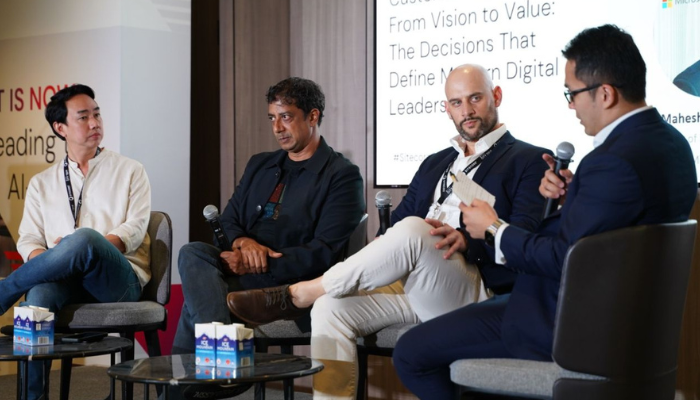
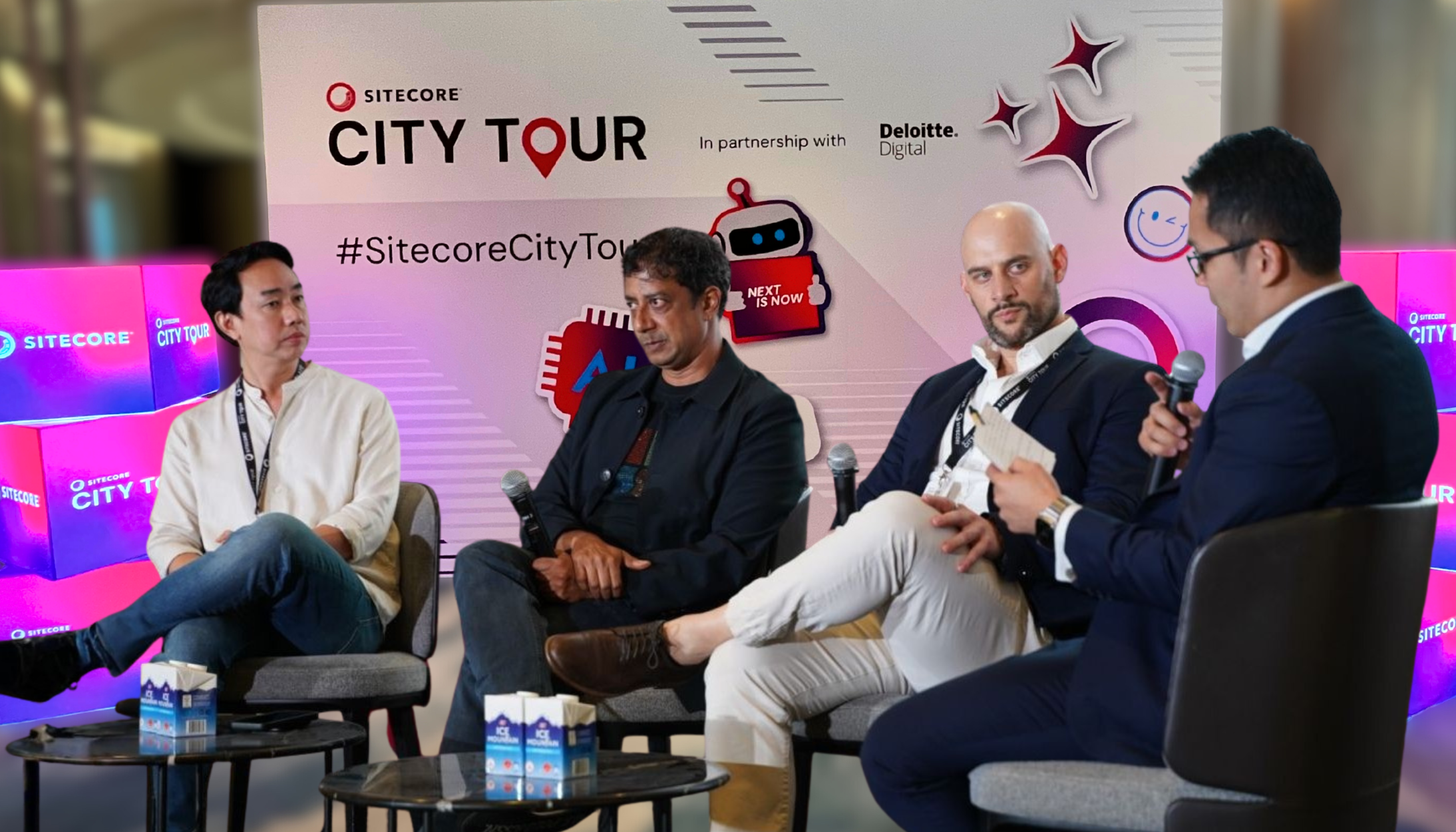
Meanwhile, the engaging customer panel featuring Lawrence Tan, assistant director, Digital Business Enablement, Sentosa Development Corporation, and Zac Lin, area vice president, Asia, Sitecore, explored best practices for scaling AI initiatives across channels.
Mahesh Neelakantan, director of Industry Advisory at Microsoft, provided additional insights on leveraging predictive analytics and automation to enhance omnichannel experiences.
Neelakantan argued that moving toward the “frontier” of marketing requires more than just the adoption of new software; instead, it demands a fundamental transformation in customer experience management.
Drawing on his extensive commercial background, he suggested that the true value of AI lies in its ability to be integrated into core processes in a way that directly advances a brand’s business objectives.
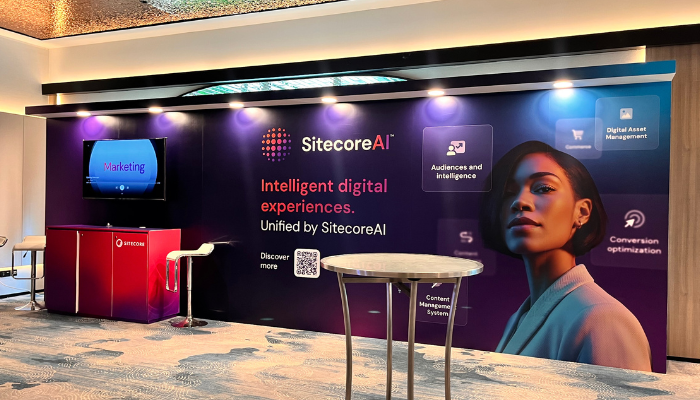
Interactive networking sessions, demo stations, and roundtables enabled participants to exchange insights, explore emerging tools, and uncover actionable strategies, proving that innovation thrives at the intersection of people, technology, and data.
The conference concluded with Avi Liran, global chief delighting officer at Delivering Delight, who framed AI as a pathway to memorable, human-centric experiences.
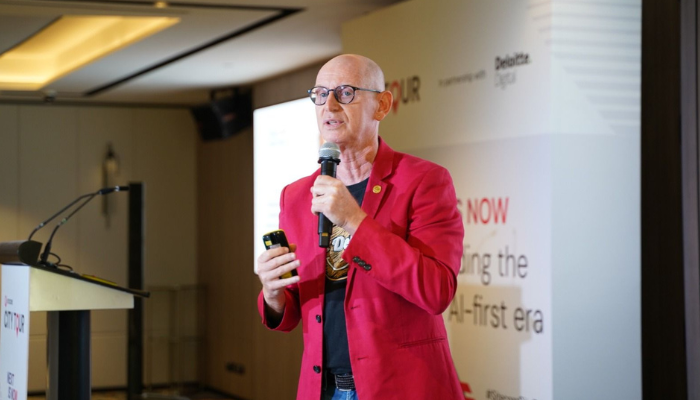
Liran highlighted how brands can use real-time behavioural insights, intelligent automation, and adaptive personalisation to create interactions that are relevant, engaging, and loyalty-building, complemented by interactive exercises illustrating what separates humans from automation.
Ultimately, the Sitecore City Tour Singapore has solidified that leading the AI-first frontier requires a transition from fragmented manual processes to unified, intelligent workflows.
In a landscape where “Next is Now,” the tour served as a roadmap for organisations to bridge the gap between AI-driven precision and the human-centric storytelling that drives genuine customer engagement.