

The Philippines is one of the more demanding consumer markets in Southeast Asia for brands trying to compete on customer experience.
Smartphone penetration is high, mobile commerce is mature, and shoppers are accustomed to global standards of digital convenience through the platforms and apps they use every day.
The commercial pressure on brands has sharpened at the same time. Acquisition costs are climbing across the region, marketing budgets are under closer scrutiny, and the return on broad discounting has thinned.
That has pushed personalisation, loyalty, and CRM further up the agenda for retailers and marketers looking for growth that doesn’t depend on margin erosion. The brands that can recognise an individual customer in real time, and respond with something genuinely useful, are pulling ahead.
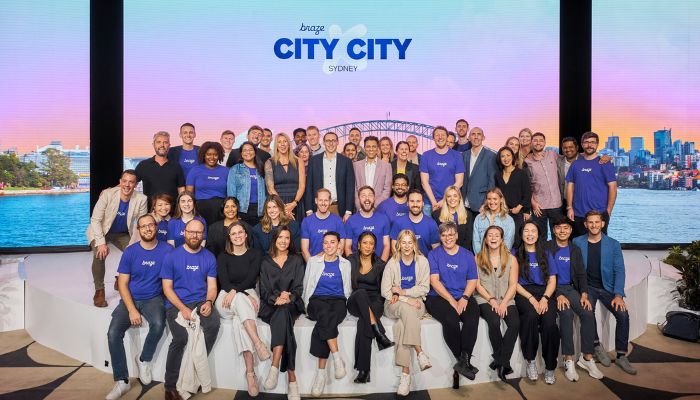
This was the topic of an executive luncheon recently held in Manila by loyalty and AI platform Eagle Eye, customer engagement platform Braze, and marketing transformation consultancy UpStride.
Where’s the biggest gap between what Filipino consumers expect and what brands are actually delivering in loyalty and personalisation?
“The biggest gap in the Philippines right now isn’t a lack of rewards; it’s the friction of redemption. Filipino consumers expect a seamless experience where value is recognised and applied instantly,” said Aziz Kastoun, Account Executive, ANZ at Eagle Eye.
“Instead, many brands still deliver manual, clunky processes that require the customer to do the heavy lifting at the counter. The real opportunity here is for the brands that move first. In a market as mobile-savvy as the Philippines, the businesses that act now to bridge this gap to real-time personalisation at scale will secure a massive first-mover advantage.”
Shaun Au Yong, Partner at UpStride, said Filipino consumers are some of the most digitally fluent in the region, they live on Shopee, Lazada, TikTok etc, and they’re used to experiences that feel tailored.
“The gap isn’t that brands here lack ambition. It’s that personalisation depends on five interdependent layers: data, technology, people, processes, and AI readiness, and a weakness in any one quietly drags the other four down. That’s why experiences feel ‘random’ even when brands are genuinely trying,” he explained.
“This is why consumers still get recommendations for fried chicken when all they had wanted was some burgers. The intent and ambition are there; the foundations underneath just aren’t.”
According to Sam Meyer, Area Vice President, Asia at Braze, the biggest gap right now is a trust gap, and it’s where revenue is quietly leaking out.
“Our latest Braze Customer Engagement Report 2026 found that 93% of marketing leaders believe AI is helping them accurately understand customer needs, yet the experience customers are actually having often tells a different story,” he explained.
“Many retailers in this market have leaned on the basics, quick shipping, slick apps, but convenience isn’t a differentiator anymore. What Filipino customers want now is personalisation that feels genuinely relevant, and a real reason to walk through a door or open an app.”
What does it actually take to make personalisation work at scale, and where do most brands fall short?
While everyone talks about data, the biggest barrier to personalisation at scale isn’t actually a technology decision, it’s internal stakeholder alignment and commitment, said Aziz Kastoun, Eagle Eye. Most brands fall short because their data, marketing, and operations teams are moving at different speeds.
“To truly succeed, you need a real-time activation layer that ties the entire customer experience together, but that requires an organisational shift. It means moving away from siloed departments and committing to a single, unified goal: recognising and responding to a customer in the milliseconds they are interacting with you,” he added.
Shaun Au Yong, UpStride, agreed, He added most brands fall short because they invest in the most visible layer, usually a newer, shinier platform, while the real bottleneck sits somewhere else entirely.
“Personalisation at scale isn’t a tooling problem. It’s an orchestration problem across data, technology, people, processes, and AI readiness. Brands that get it right stop asking ‘what should we buy next?’ and start asking ‘which layer is holding us back?’”
For Sam Meyer, Braze, personalisation at scale means breaking away from the old playbook of rigid rules and broad segments, and building something that can actually keep pace with how customers behave in real time.
“At its core, it means treating every customer as an individual rather than a segment. The message itself, the channel, the timing, the offer, even the creative all need to flex based on what you actually know about each person from their own first-party data,” he explained.
AI is moving from predictive to agentic. What changes for brands when that shift hits loyalty and engagement?
We are moving from a world where we ‘target’ customers to a world where we ‘enable’ their agents. Predictive AI told us a customer might want a discount; Agentic AI means the customer’s digital assistant will actively negotiate for the best value, said Aziz Kastoun, Eagle Eye.
“For brands, this changes everything. Loyalty moves from being an emotional ‘vibe’ to being machine-readable value,” he added. If your loyalty rules aren’t simple, digital, and instantly accessible via API, an AI agent will simply bypass your brand for a competitor that is ‘easier’ to transact with. The shift is from persuasion to seamless integration.”
According to Shaun Au Yong, UpStride, Consumer expectations move in lockstep with consumer AI maturity. If a customer is already using AI agents to summarise their inbox, draft their decks, and run their calendar, they will not tolerate a brand experience that still feels like a 2018 email blast. 1:1 personalisation used to be the differentiator. In an agentic world, it’s the bare minimum.
Sam Meyer, Braze sees this shift fundamentally changes what marketers do, moving from manually setting every rule to designing intelligence that can adapt on its own, in real time.
“Agentic AI means agents start acting on their own, continuously experimenting and learning what actually works for each individual customer, instead of just predicting what might,” he added. “For loyalty and engagement, this means the conversation moves away from vanity metrics like clicks and open rates, and toward the things that actually matter to the business, customer lifetime value, incremental revenue, retention.”
Looking at the best loyalty programmes globally, what’s the one thing they do that most brands in this region aren’t doing yet?
“Looking at the most successful loyalty frameworks globally, the one thing they do differently is move beyond the ‘spend-to-get’ cycle,” said Aziz Kastoun, Eagle Eye. “They focus on lifestyle integration. The best programs don’t just reward you for the transaction; they reward you for the relationship. They look at the customer’s total journey and find ways to add value outside of a simple discount.”
“While many brands in this region are still focused on subsidising the purchase, global leaders are focused on driving a change in habit and becoming a staple of the customer’s daily routine.”
Shaun Au Yong, UpStride believes brands simply go back to basics. The best programs globally are radically simple, a customer understands the value in a single glance, he explained.
“We see the opposite with a lot of clients in the region: tiers stacked on tiers, points that expire on rules no one can explain, partner mechanics bolted-on for one reason or another. The consumer’s mind space is already overcrowded. The moment a program feels like homework, they switch off, and no amount of clever segmentation wins them back.”
“The best programs are simple, easy and value is immediately understood by consumers immediately. They are almost embarrassingly simple.”
For Sam Meyer, Braze, the single biggest differentiator is that the best programmes are genuinely personalising every interaction, not at the segment level, but at the individual level, and they’re doing it consistently enough that customers actually feel it.
“Rather than leaning on blanket discounts, which erode margin and water down the brand, they use what they know about each customer to make every message land,” he said. “That means factoring in hundreds of signals, testing constantly, and adjusting in the moment.”
“They’re also doing this across every channel, online and offline, which is harder than it sounds: our research found that nearly half of marketers still lack the tools they need to orchestrate experiences consistently across channels.”
A clear message from the room
Across all three speakers, a consistent picture emerged. Loyalty programs that fail to deliver genuine personalisation at scale are losing relevance, and the brands willing to invest in real-time infrastructure, organisational alignment, and simpler value propositions are the ones positioned to benefit.

This article is written by Aaron Crowe, Head of Revenue, APAC at Eagle Eye