

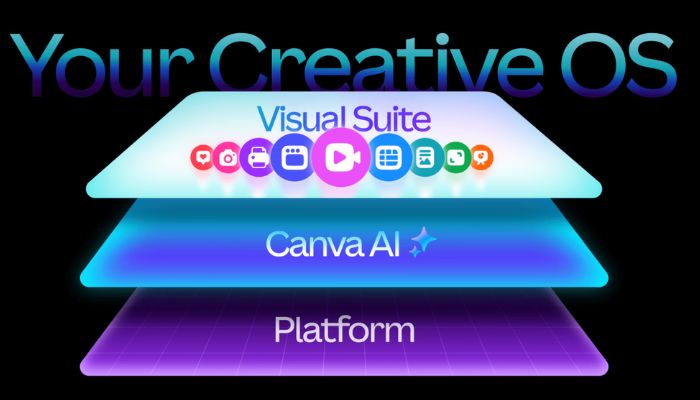
Global — Canva has unveiled what it describes as its “biggest product launch to date” with the introduction of its Creative Operating System, a platform that combines an upgraded Visual Suite, a new design-focused artificial intelligence (AI) model, and expanded tools for businesses to manage brand growth and creative consistency.
The company said the update aims to consolidate its design, marketing, and AI tools into a single ecosystem.
“Every big idea that’s shaped our world started as a spark of imagination. From rockets that reach other planets to the supercomputers we carry in our pockets to the power of generating anything with a single prompt, every breakthrough once seemed impossible until someone imagined it into being,” Canva stated.
The company added, “While the last few decades have been defined by the Information Era, we believe we’re now entering the Imagination Era: a time when technology amplifies creativity instead of replacing it.”
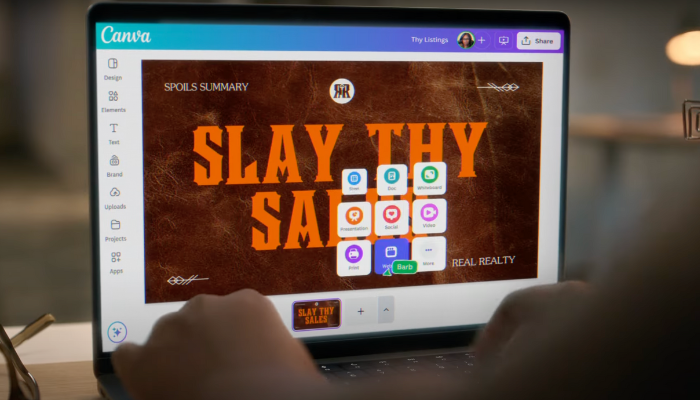
At the centre of the new platform is a redesigned Visual Suite, which includes new and enhanced tools such as Video 2.0, Canva Forms, and Canva Email Design.
Video 2.0 also introduces a faster, more intuitive editor with a timeline for complex edits, and an AI function called ‘Magic Video’ that can automatically assemble clips based on user prompts.
Canva Forms lets users add interactive forms to designs and websites, with responses collected and organised in Canva Sheets. Canva Email Design, one of the most requested additions, provides templates and AI-assisted tools for building branded email campaigns and exporting ready-to-send HTML files.
The company also highlighted greater integration between Canva Sheets and Canva Code, enabling the creation of interactive, data-driven designs directly within the editor.
Recently, Canva has also introduced what it calls the Canva Design Model, describing it as “the world’s first AI model trained to understand the full complexity of design.” The model underpins a new generation of AI-powered features across the platform, allowing users to generate editable designs and visual elements through simple prompts.
These include AI-Powered Designs, which automatically generate complete templates, and AI-Powered Elements, which can create individual design components such as photos, icons, or 3D objects.
Canva also launched Ask @Canva, a collaborative assistant that can provide feedback or generate visuals within the design workspace.
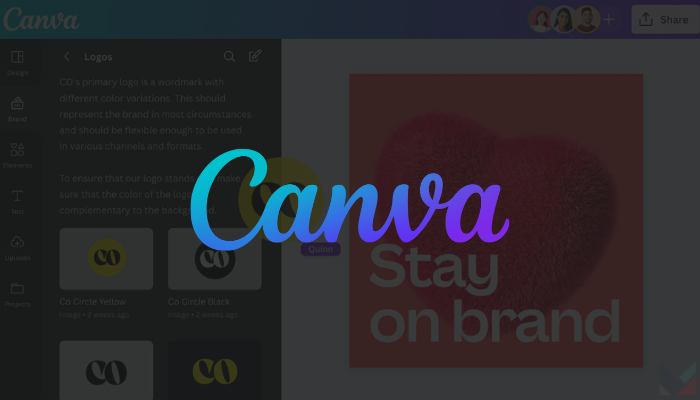
Moreover, the company has expanded its focus on enterprise users through new brand and marketing tools under the Canva Grow and Canva Brand System features.
Canva Grow acts as a creative marketing hub, allowing teams to design, publish, and analyse advertising campaigns from within the platform, while Canva Brand System offers centralised brand kits with logos, templates, and guidelines, supported by AI features that automatically align new designs with brand assets.
Canva also confirmed deeper integration with Affinity, its suite of professional-grade creative software. The company said Affinity will now be “completely free, for everyone, forever,” and can be connected directly with Canva’s ecosystem for collaboration and publishing.
The company described these launches as the beginning of a new chapter for its platform, “Everything we’ve launched today is designed to help you bring your imagination to life – because we all carry that creative spark within us. This is just the beginning of a new chapter, one where imagination and technology work together to make creativity more accessible to everyone.”






![[Brand Refresh] Panhead x Weave](https://marketech-apac.com/wp-content/uploads/2026/07/Brand-Refresh-Panhead-x-Weave.webp)