

Kuala Lumpur, Malaysia – A new study by Dentsu suggests that the travel industry’s long-standing assumption that greater discovery leads to greater growth is being challenged, particularly in Southeast Asia.
According to the study, travel behaviour in the region has shifted from being largely aspirational to more intentional, as travellers become more cautious about spending and rely increasingly on familiar brands.
The report indicates that travellers today are more digitally engaged but also more economically cautious, making decisions shaped by familiarity and trust rather than exploration. Technologies such as artificial intelligence, social media platforms, and broader economic pressures have contributed to what the study describes as a more compressed decision-making process, where travel brands are evaluated more quickly and compared more critically.
Across APAC, 57% of travellers reported using AI for travel planning. However, the report also found that 53% consider AI recommendations to be generic, while 42% say the technology makes them more likely to stay with familiar brands.
According to the study, AI is functioning less as a tool for discovery and more as a validation filter, favouring brands that consumers already recognise and trust.
The report also highlights differences across Southeast Asian markets, noting that travel behaviour varies significantly within the region.
Malaysia: High influence, lower trust
In Malaysia, travellers appear highly influenced by digital content but remain cautious about acting on it. The study found that 67% of Malaysian travellers rely on social media for travel inspiration. At the same time, 67% said they are choosing more affordable destinations, while 63% reported that geopolitical concerns influence their travel decisions.
This dynamic, according to the report, creates a situation where brands may achieve visibility online but struggle to convert that attention into bookings without strong credibility signals.
Audrey Chong, CEO of Dentsu Malaysia, said, “Travel marketing often assumes that more inspiration automatically creates more demand. Malaysia proves the opposite. Malaysian travelers have developed an unusually sharp instinct for separating perception from reality.”
She added, “Years of economic pressure and digital saturation have created consumers who are incredibly adaptive, knowing know how to navigate abundance without fully trusting it. That changes the role of branding entirely. This is where inspiration may open the door, but credibility is what gets a brand invited in.”
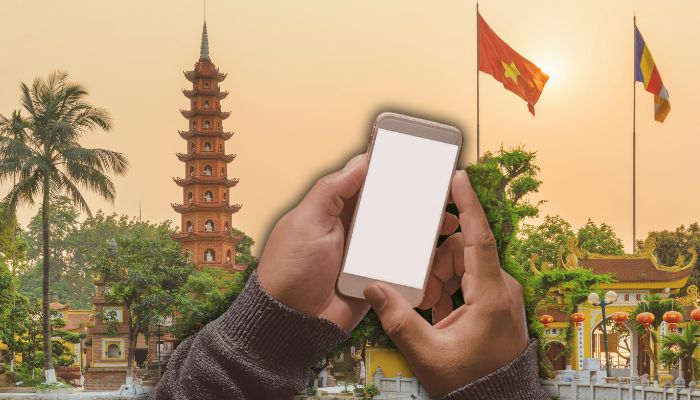
Vietnam: Experience-led but constrained
In Vietnam, travellers show the strongest interest in experiential travel across the region. The report found that Vietnamese respondents prioritise experiences at a rate 12 percentage points higher than the regional average.
Despite this appetite for experiences, the market also recorded the highest level of trip postponements in APAC, at 31%. The study further found that 63% of respondents in Vietnam are navigating geopolitical concerns, while 40% view travel as an extension of everyday life.
According to the report, Vietnamese travellers increasingly approach travel with deliberate intent, with many prioritising meaningful experiences over generic offerings. Domestic and nearby destinations also remain popular, influenced by concerns over currency fluctuations and regional tensions.
Thu Nguyen, CEO of Dentsu Vietnam, said, “Vietnam’s travel mindset today is incredibly revealing of where Southeast Asia is heading next. This is a market with enormous appetite for experience, self-expression and personal enrichment, but also one that is acutely aware of constraint. Vietnamese consumers are simply becoming more selective about what deserves emotional and financial investment. That makes this one of the most emotionally intelligent travel markets in the region, but also one operating with far more nuance than many brands realise.”
***
Overall, the study suggests that travel consumers across Southeast Asia are becoming more selective and emotionally driven in their decision-making. While AI may accelerate the discovery of travel options, the report indicates that it is also shortening the evaluation process and reinforcing the advantage of brands that already hold consumer trust.
For travel marketers, the findings suggest that building credibility and distinctive brand positioning may be increasingly important as travellers weigh options more carefully before making decisions.