
As marketers race to deliver increasingly personalised experiences, the pressure to scale without sacrificing authenticity has become one of the industry’s biggest balancing acts. Nowhere is that challenge more pronounced than in education.
Unlike transactional purchases, choosing a school is deeply emotional and often life-shaping. Parents are not simply comparing products or prices—they are making decisions about their children’s futures.
For education marketers, that means personalisation cannot merely be another tactic in the playbook; it has to become a meaningful extension of the experience institutions create for families.
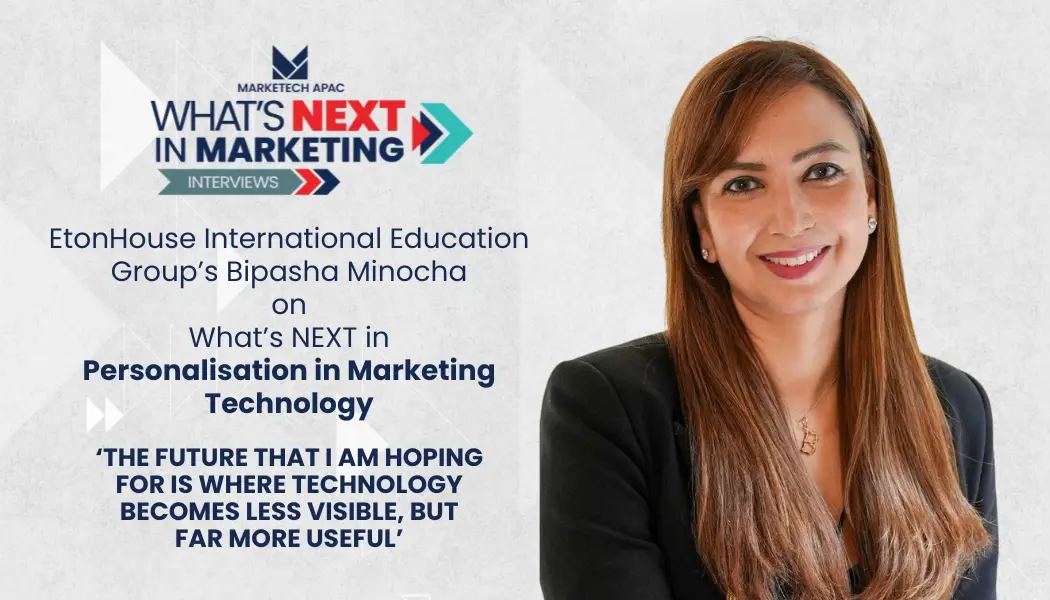
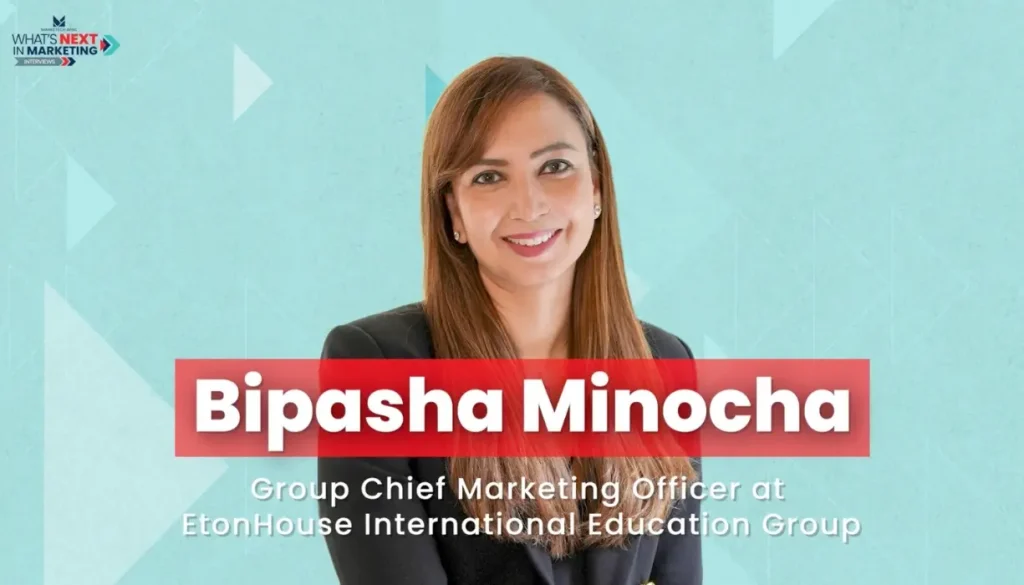
For the latest edition of MARKETECH APAC‘s What’s NEXT in Marketing interview series, we spoke with Bipasha Minocha, Group Chief Marketing Officer at EtonHouse International Education Group, about what it truly means to scale personalisation in a deeply human sector, how schools can avoid losing authenticity as they embrace technology, and why empathy should remain at the centre of every marketing decision.
Personalisation matters more in high-stakes decisions
For Bipasha, the notion that technology-driven personalisation feels at odds with education couldn’t be further from the truth.
I think there is a perception that high-tech personalisation sits somewhat awkwardly with a deeply human sector like education. But I would argue that the opposite is true.
Instead, she argues that the more complex and emotionally significant a decision becomes, the greater the need for thoughtful personalisation.
Because in sectors where involvement is much deeper, such as healthcare, banking, etc., the decision is highly complex and highly nuanced, and therefore the need for personalisation becomes even greater.
In education, families often spend months navigating uncertainty, researching extensively, and weighing multiple options before arriving at a decision.
Understanding where parents are in that journey—and responding with relevance and empathy—becomes less of a marketing exercise and more of a service commitment. And that, Bipasha argues, is where many organisations misunderstand the role technology should play.

The biggest misconception: technology isn’t the strategy
As organisations increasingly adopt AI tools, automation platforms, and sophisticated martech solutions, Bipasha believes many marketers make the mistake of confusing technology with personalisation itself.
Technology, she explains, should never dictate the experience. Instead, it should support an organisation’s ability to deliver on an already well-defined understanding of its audience.
However, even with the right intentions and tools in place, many institutions still struggle to deliver truly seamless experiences.
Rather than asking what technology can do, marketers should first ask what their stakeholders genuinely need—and then determine how technology can help bridge that gap at scale.
This distinction becomes especially important in education, where trust and relationships often outweigh efficiency gains.
Where schools lose the human touch
Ironically, one of the moments institutions risk becoming the least personal is after a family has already shown clear intent.
“Another point where institutions tend to lose the human touch is at the time of handoff,” Bipasha explains.
Despite multiple touchpoints, prospective parents are often forced to repeat information they’ve already shared.
If a family has signalled strong intent across multiple interactions—for example, they’ve visited your website, engaged with your advertising assets, and finally speak to someone—there are times when they have to start from ground zero.
The result is a fragmented experience that undermines the very purpose of personalisation. Rather than feeling recognised and understood, families can end up feeling like just another enquiry moving through the system.
Closing these gaps, however, requires more than empathy alone. It demands the right foundations, processes, and systems working together to ensure every interaction builds on the last.
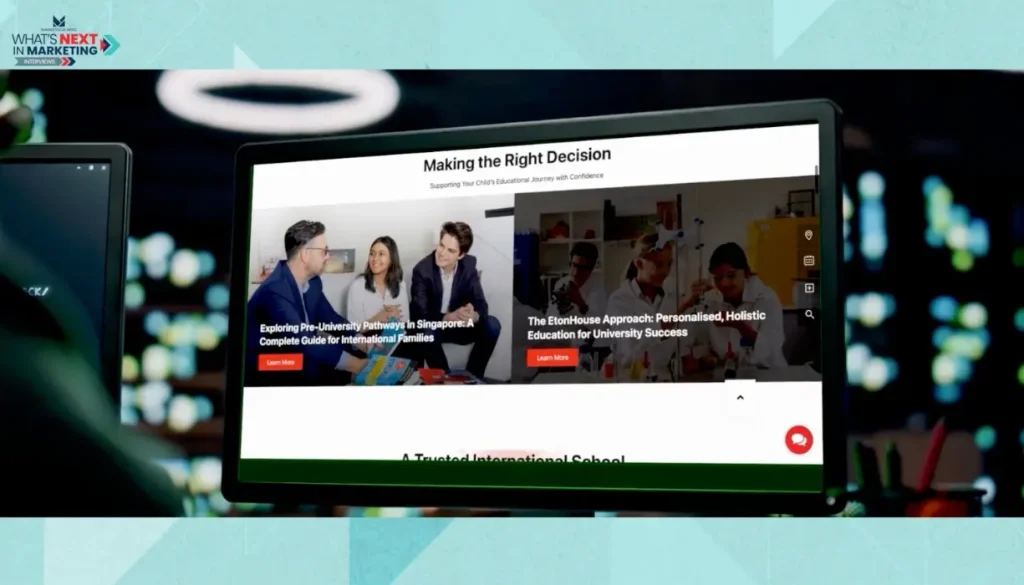
Building connected experiences at EtonHouse
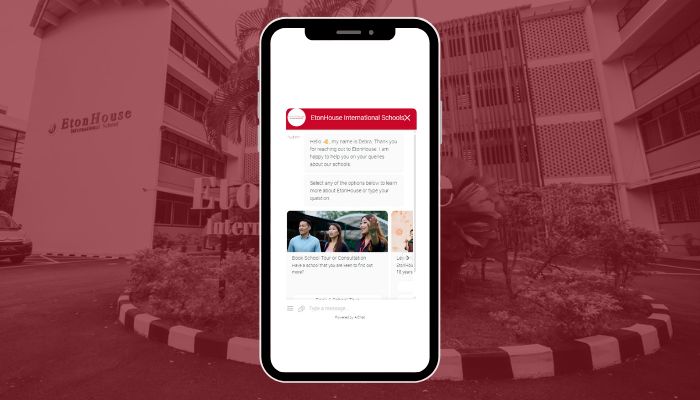
At EtonHouse, this means looking at the parent journey as one connected experience, not a series of separate touchpoints. A family that has attended an open house, enquired about a particular campus, or shared specific questions should not feel as though they are starting again at every interaction.
As communication habits evolve, institutions must create ecosystems that connect these interactions rather than treat them as isolated exchanges.
The objective isn’t merely to collect more data; it’s to use insights responsibly to deliver more relevant, consistent, and supportive experiences.
Yet Bipasha believes technology alone cannot guarantee this outcome. Without a clear philosophy guiding how these tools are used, even the most sophisticated systems risk becoming little more than automated processes.
Brand philosophy before technology
Preventing personalisation from becoming another checklist exercise requires organisations to establish a clear foundation.
Processes and automation alone cannot create meaningful experiences if they aren’t anchored in a broader philosophy of service.
When institutions begin with their values—understanding what they stand for and how they want people to feel—technology becomes an extension of that intent rather than a replacement for it.
The question shifts from “How can we automate this?” to “How can we better support our communities?”
That people-first mindset also shapes how Bipasha imagines the future of marketing—one where technology fades further into the background.
Making technology invisible
Looking ahead, Bipasha doesn’t envision a future where technology takes centre stage. Instead, she believes its greatest success lies in fading into the background.
The future that I am hoping for is where technology becomes less visible, but far more useful
Families shouldn’t be impressed by the sophistication of the systems behind the scenes. They should simply feel understood. They should feel supported.
And the best use of technology in education marketing is not when families notice it, it’s when they simply feel it
In many ways, that sentiment captures the balancing act facing marketers today: embracing innovation without losing sight of the people they serve.

Scale and sincerity can coexist
As more organisations seek to expand their personalisation efforts, Bipasha offers an important reminder: authenticity and scale do not have to exist in opposition.
When grounded in empathy, trust, and a genuine desire to serve stakeholders better, technology can amplify what makes organisations human rather than diminish it.
For marketers navigating increasingly complex expectations, perhaps the future isn’t about choosing between efficiency and empathy. It’s about ensuring one strengthens the other.
Because if this conversation makes one thing clear, it’s that the brands that succeed won’t necessarily be those with the most advanced technology. They’ll be the ones that use it to make people feel seen.
And in an age of automation, that may be the most human advantage of all.
***
Check out the highlights of the interview in our YouTube video below. For the full version of this topic, head over to our official YouTube channel and check out the full conversation.

![[Initiative] Samsung PH x Educ](https://marketech-apac.com/wp-content/uploads/2026/07/Initiative-Samsung-PH-x-Educ.webp)