


Interactive CTV campaigns are reshaping how brands engage audiences by turning passive viewing into active participation. By bridging brand storytelling with immediate actions like product discovery or lead generation, interactive CTV also shortens the path to conversion while providing advertisers with richer first-party data and clearer insights into viewer behaviour.
With this impact in mind, BMW India anchored its interactive campaign alongside VDO.AI to promote the BMW 2 Series Gran Coupé and the BMW X3. The campaigns themselves ran across leading media platforms and targeted high-intent households with an affinity for premium automotive experiences. Following its rollout and impact across our readers, this campaign has been recognised as our Adtech Campaign of the Year.
We recently sat down with Vitesh Barar, director of marketing at BMW India and Arjit Sachdeva, co-founder at VDO.AI as they discuss the execution of the campaign, and why brands should look into interactive CTV campaigns as their latest channel for future campaigns, especially when targeting affluent audiences.
Greater focus on immersive storytelling
BMW India’s Vitesh noted that for both models that they are promoting, they intended to move beyond conventional automotive advertising and create an experience that truly reflects the character and performance of a BMW. Moreover, as the brand actively experimented with new platforms and innovative formats to tell richer, more compelling stories, Connected TV offered the perfect environment for that.
“Rather than a passive viewing experience, we wanted to invite audiences into the world of each car. Through VDO.AI’s interactive CTV capabilities and precise targeting engine, we deployed ad formats that invited high-intent buyers to explore, not just observe,” he said.
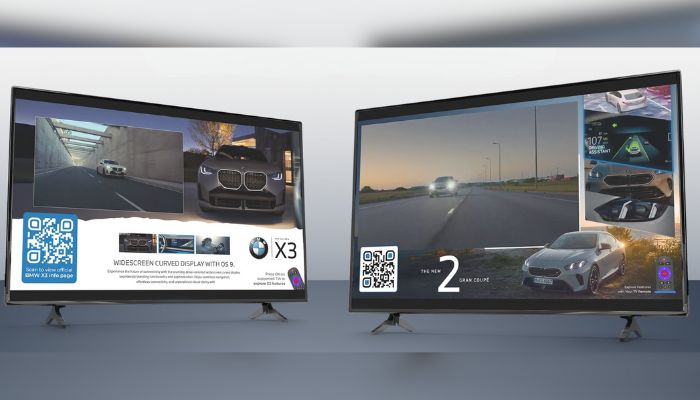
For the BMW 2 Series Gran Coupé, the remote-enabled carousel allowed audiences to navigate the car’s design nuances and key features. Meanwhile, for the BMW X3, a dynamic backdrop behind interactive elements, blending motion and design, which helped the brand transform the CTV screen into a premium brand environment.
Vitesh also added that these executions allowed us to bring engineering excellence and emotional storytelling together on a premium screen, and reflected their continued commitment to adopting new technologies and creative approaches to engage evolving audiences in meaningful ways.
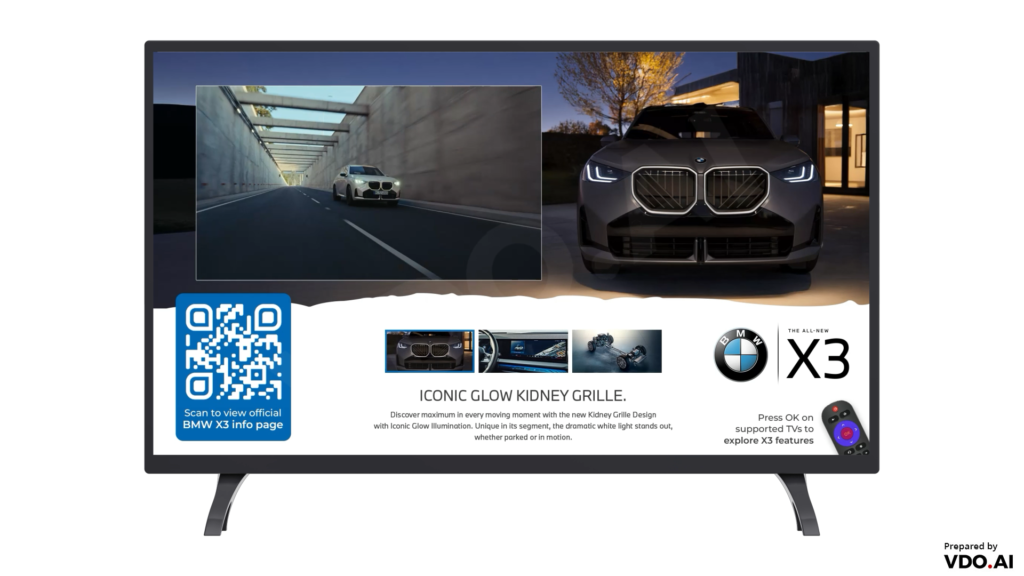
Meanwhile, VDO.AI’s Arjit noted that from the very beginning of the campaign process, their approach was guided by BMW’s brand ethos, elegance, sophistication, and emotional resonance, ensuring that every interactive element enhanced, rather than diluted, the brand experience.
“Our technology didn’t reinvent the brand; it amplified it, creating opportunities for audiences to engage more deeply while preserving BMW’s premium tone. We also focused on precision in placement. BMW campaigns ran exclusively on premium CTV environments, reaching high-intent, luxury-oriented audiences. This ensured that the context, as much as the content, reinforced the brand’s stature,” Arjit explained.
He also noted that interactive features were subtle, intuitive, optional, and never disruptive, allowing viewers to explore at their own pace without compromising the premium experience. The outcome was a campaign that felt modern and innovative, yet unmistakably BMW.
“It was a seamless fusion of luxury, storytelling, and technology, demonstrating how brands can push digital boundaries while staying true to their identity,” he added.
What makes a CTV campaign stand out?
When asked about their goals for the campaign, Vitesh stated that while awareness is always a non-negotiable objective for any campaign, their goal for this partnership with VDO.AI was far more ambitious.
“We wanted audiences to slow down and genuinely engage with the story behind each model, rather than simply register another ad on a busy screen. That’s why we moved towards an interactive and cinematic experience. For us, this was about creating memorability in a cluttered category and building a moment that viewers would genuinely recall, not just recognise,” he explained.
Vitesh also added that as consumer media behaviour is evolving rapidly, CTV and interactive formats are also becoming increasingly central to how premium audiences consume content.
“Through this initiative, we reinforced BMW’s position as a brand that willingly embraces innovation, whether in mobility, design, storytelling, or the experiences we create for our customers,” he said.
Meanwhile, Arjit noted they have always seen CTV as far more than just a bigger screen for video ads, and rather as a platform where storytelling, engagement and choice can coexist.
Some of those approaches include:
- Remote-enabled CTV ads let viewers navigate overlays and carousels to explore product features or design details right from their TV remote.
- Countdown-based formats introduce a sense of urgency and anticipation, driving engagement with time-sensitive product launches.
- Dynamic creative optimisation (DCO) allows campaigns to adapt in real time based on signals such as location, context, or viewer behaviour, making every impression relevant and timely; and
- Advanced overlays and branded canvases, including in-frame expandables and 3D interactive modules- enable layered storytelling, giving viewers the freedom to engage with rich narratives while seamlessly moving toward action.
“What makes our approach different is how we bring all of this together, cinematic storytelling, interactivity, and data-driven personalisation in a single, cohesive environment. We aim to strike a unique balance of delivering a premium, brand-safe experience for audiences while giving marketers deep visibility into engagement, intent, and performance,” Arjit explained.
Success beyond storytelling
When asked about what counts as success for BMW in terms of this campaign, Vitesh said that success is a blend of the right audience, the right environment, and the right depth of engagement. For them, CTV naturally provides a high-quality environment, and with interactive formats, the brand can go beyond impressions to see how audiences engage with the story they are telling.
“In this campaign, we were able to observe how viewers explored different elements, where they chose to pause, what features drew their interest, and how long they engaged with the experience. The presence of a QR code also enabled us to capture clear, intent-driven actions directly from the screen,” he said.
Moreover, the campaign ensured that BMW messaging appeared in premium, high-value environments, where every impression contributes meaningfully to brand equity.
“Beyond immediate performance, long-term brand impact and recall are critical for us. Luxury car purchases follow a longer decision cycle, and these campaigns were designed to influence early-stage consideration, to ensure that the BMW 2 Series Gran Coupé and BMW X3 feature strongly in a consumer’s mental shortlist,” Vitesh added.
For Arjit, he noted that luxury brands like BMW don’t just market products; they trade in emotion, aspiration, and craftsmanship. To do justice to that, he notes that brands need a medium that can hold attention and carry nuance, and CTV is built for it. This then gives the story room to unfold, without the noise and compression that define most digital environments.
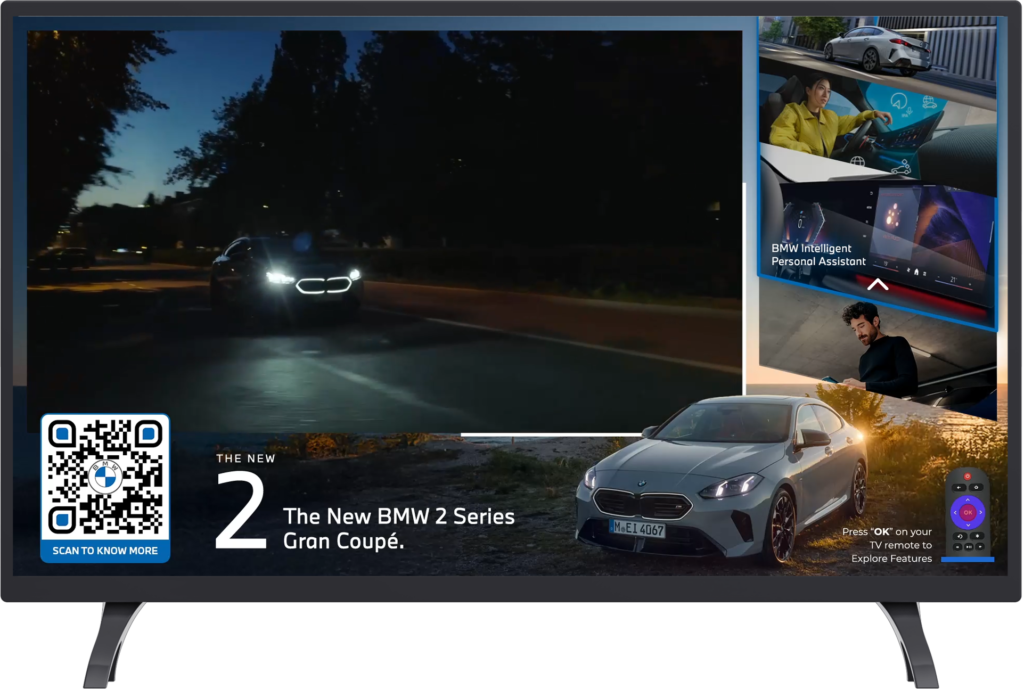
He then added that what makes CTV particularly compelling is that it gives brands the scale of television with the depth of digital, without forcing the trade-off that typically comes with each medium.
“When interactive features are integrated into CTV, they shift the viewer experience entirely. Instead of pulling viewers away from what they’re watching, it lets them lean in on their own terms, the way they would in a showroom, where discovery happens at their pace.” he said.
Arjit added, “Exploring features, spending time on design details, choosing what to learn next, those micro-moments of voluntary engagement often matter more in high-involvement categories than any single creative asset. They’re what move a product from simple awareness into real consideration.”
He also explained that another key advantage of CTV is its ability to carry the viewer forward in their journey. With QR-led flows or on-screen prompts, the shift from inspiration on TV to deeper research on mobile becomes seamless. In the luxury category, where decisions are spread across multiple touchpoints, this continuity matters. It respects how people actually shop for big-ticket products.
Moreover, CTV gives marketers clarity, as traditional television has always struggled with measurement, but interactive features on CTV let brands understand what viewers engaged with, how long they stayed, and what actions they took next, without compromising on the premium look and feel of the experience.
“While the medium itself is a good fit for luxury, interactive CTV combines the strengths of storytelling, engagement, and accountability. It lets brands stay true to their identity while using technology to deepen the relationship with their audience, and that’s where the real value lies,” he concluded.
This recognition is based on Google Analytics results on the most-read stories of 2025, along with editorial validation on the significance of a leader’s contribution, campaign results, and overall impact.










![[Partnership] Atome x Dunkin](https://marketech-apac.com/wp-content/uploads/2026/06/Partnership-Atome-x-Dunkin.jpg)