

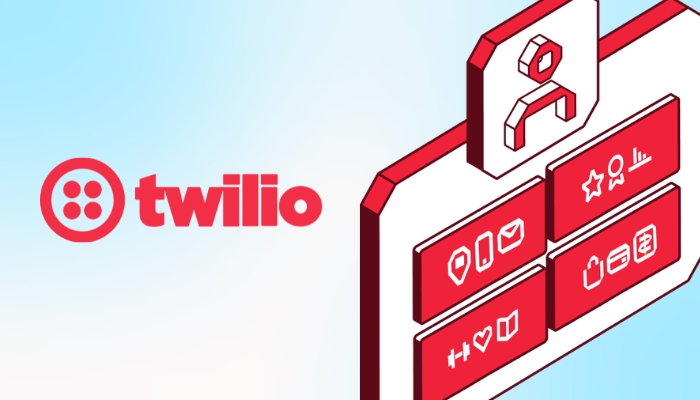
Singapore – Twilio has unveiled a set of new platform capabilities aimed at supporting customer engagement in what it describes as the “agentic era,” where both human and AI agents participate in customer interactions. The announcement was made during the company’s SIGNAL user conference on May 7.
The new features—Conversation Memory, Conversation Orchestrator, Conversation Intelligence, and Agent Connect—are designed to help businesses manage continuous conversations across channels while retaining context from past interactions.
According to the company, the tools aim to transform fragmented customer engagements into persistent and context-aware conversations involving humans, AI agents, and enterprise systems.
“The agentic era is here. Agents are joining conversations alongside the people they represent, and modern customer engagement requires an infrastructure that serves both equally,” said Khozema Shipchandler, Chief Executive Officer at Twilio. “Twilio’s new platform is the foundational infrastructure layer that makes every conversation persistent, contextual, and actionable – ensuring interactions feel like part of one continuous relationship.”
Platform capabilities for contextual conversations
Twilio said businesses often face challenges when customer interactions occur across multiple channels without shared context, forcing customers to repeat information each time they interact with a different support channel or agent.
The company said its platform updates are designed to address these issues by providing persistent memory across interactions, real-time context that follows conversations across channels, and orchestration tools that manage both human and AI participants.
According to Twilio, the new components include Conversation Memory, which stores customer history and preferences across interactions; Conversation Orchestrator, which manages routing and transitions between channels and agents; Conversation Intelligence, which uses generative AI to analyse live conversations and trigger workflows; and Agent Connect, an open-source framework that links AI agents directly with voice and messaging channels.
“Most brands still treat every conversation with a customer like it’s the very first one,” said Inbal Shani, Chief Product Officer and Head of R&D at Twilio. “Twilio is changing that at the infrastructure layer, so every business built on Twilio can remember, learn, and respond like they actually know their customers.”
Industry analysts say the move reflects a broader convergence of technologies supporting customer engagement.
“At the center of the CPaaS, CCaaS, CDP, and AI convergence, Twilio is redefining what a Customer Engagement Platform (CEP) looks like—one that remembers, adapts, and orchestrates across every touchpoint. That combination of vision, execution, and ecosystem leverage is what solidifies Twilio’s place at the top of the category,” said Mila D’Antonio, Principal Analyst for Customer Engagement at Omdia.
Updated console and additional integrations
Alongside the platform updates, Twilio also introduced a redesigned console intended to provide a central interface for managing communications workflows. The console includes a developer workspace called Workbench and an integrated AI assistant for real-time support.
The company also announced additional updates, including the general availability of Twilio Email, built on SendGrid technology, as well as new Voice AI capabilities such as Payment Card Industry-compliant voice workflows and integrations with speech recognition models from Deepgram.
Other updates include a public beta for EU data residency for SMS services and a private beta enabling Twilio to act as a provider for Apple Messages for Business.
Twilio also confirmed its participation in Stripe Projects, allowing developers and AI agents to provision Twilio services directly within Stripe’s programmable command-line workflow.
Early customer and partner feedback
The platform capabilities have been in private beta since January 2026 and have been tested by several customers and partners.
“For Centerfield, performance comes down to how well every interaction moves a customer forward. We’re capturing each conversation in real time and applying what we already know about the customer to guide our agents and AI systems in the moment. With the Twilio Platform, including Conversation Orchestrator, Conversation Memory and Conversation Intelligence, we can see what’s driving conversations so we can standardise what works, eliminate what doesn’t and continuously improve outcomes at scale.” – Aniketh Parmar, Chief Technology Officer, Centerfield.
“Twilio’s vision for orchestrating context-rich conversations fundamentally redefines customer engagement, turning every interaction into a seamless and deeply personalised journey. At Ciptex, we are excited to help our customers leverage these innovations to drive smarter, more meaningful connections at a scale that was previously unreachable.” – Tom Kharchi, Chief Revenue Officer, Ciptex.
“We are thrilled to introduce a transformative solution poised to redefine our industry and extend our global footprint across all Constellation dealerships. The value of this partnership is evident—our team progressed from evaluating Twilio’s agent infrastructure to realising measurable outcomes within days. This rapid speed-to-value exemplifies the agility and innovation required to propel the dealership industry into the future.” – Richard Pineault, Director of R&D, Constellation Dealerships.
“Meera.ai has partnered with Twilio since our inception to champion a conversation-first future for commerce. As the industry shifts toward real-time LLM-enabled interactions, Twilio’s platform and the new Conversations products will help us reach customers in the moment. We’re proud to scale this mission alongside Twilio.” – Vivek Zaveri, Chief Executive Officer, Meera.ai.
Future development plans
Twilio said it plans to further expand the platform’s capabilities to address authentication, identity verification, governance, and observability as AI agents increasingly act on behalf of users and businesses.
“Twilio’s latest platform capabilities deliver a trusted infrastructure layer for conversations; one that makes them contextual, persistent, and personal across every channel and participant, human or AI,” said Paul Nashawaty, Principal Analyst at theCUBE Research. “That foundation is increasingly critical as conversational AI scales, with 85% of consumers already interacting with AI agents in recent months and 68% expecting seamless, consistent experiences across channels, forcing enterprises to unify communications, data, and intelligence into a single, interoperable engagement layer.”









![[News] Philippine banks scrap online transfer fee](https://marketech-apac.com/wp-content/uploads/2026/07/News-Philippine-banks-scrap-online-transfer-fee.webp)