

There has always been a challenge when it comes to connecting fragmented customer data across multiple platforms and touchpoints. From a marketing standpoint, this means dealing with scattered enterprise applications and various customer touchpoints, making it difficult to extract real-time, actionable insights that can inform marketing strategies and drive engagement.
This is where Salesforce Philippines comes into play.
By combining its unified marketing platform, Agentforce Marketing, with Data 360, Salesforce enables marketers to gain actionable insights, deliver personalised experiences, and orchestrate seamless omnichannel campaigns.
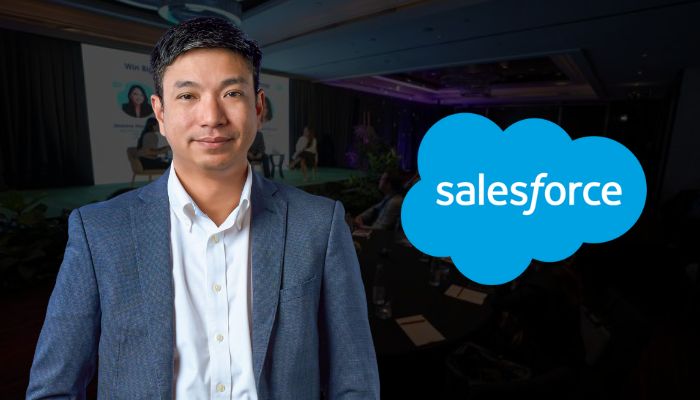
In an interview with Abraham Cuevas, regional vice president and country manager of Salesforce Philippines, he unravels how the company is helping brands turn these data challenges into opportunities, helping Filipino marketers transform data into strategy, strategy into engagement, and engagement into measurable growth.
Why localising siloed data into Tagalog matters
Prior to opening its first Manila office, what can be considered a game-changer is the fact that Salesforce announced that both Agentforce Service and Employee Agent are now available in Tagalog.
This aids in aiding local businesses in tapping into the power of Agentic AI, improving customer experiences, and further enhancing operational efficiency.
“Agentforce Marketing (formerly Marketing Cloud) is a complete marketing platform with a unified data foundation built directly into it,” Abraham explained.
He added, “Agentforce Marketing, together with Data 360 (formerly Data Cloud), unifies disparate data across systems to create a single, trusted view of the customer, allowing marketers to accurately segment their customer groups and deliver real-time, personalised engagements for customers across every touchpoint.”
In this process, routine tasks such as scheduling appointments and drafting meeting summaries are handled by the Employee Agent, which automates administrative work. The agent can also process information in Tagalog and take action where marketers work.
“This is a game-changer for businesses in the Philippines – it accelerates their transformation into Agentic Enterprises, and unlocks a new model of work where AI elevates people rather than replacing them,” said Abraham.
He continued, “For marketers, the Employee Agent can serve as a personal digital assistant that automates routine administrative work. The agent can process information in Tagalog, reason, and autonomously take action directly where marketers work.
Aside from this, the Employee Agent can also suggest improvements for creative campaigns, generate initial content drafts, and support development of marketing plans—in Tagalog.
“This allows marketers to craft campaigns that capture the nuances of the local language and develop culturally-relevant campaigns that resonate with Filipino consumers,” explained Abraham.
Levelling the playing field for Philippine MSMEs
In explaining the use of Data 360, Abraham offered a scenario: a customer browsing a retailer’s online store.
The process begins once the customer receives a personalised welcome message, alongside personalised product offers. Adding a few items to her cart without completing the purchase, an AI agent would reach out to the said customer via the retailer’s mobile app and remind them about the expiring discounts.
Once this happens, the customer would be redirected to the cart, and with coupons applied, the purchase is made.
“This seamless omnichannel experience is made possible with Data 360, which unifies diverse, siloed customer data across all channels and every customer touchpoint into a single, trusted customer profile,” Abraham elaborated.
Through this unified data, Abraham added that marketers can then orchestrate customer journeys across all channels with Agentforce Marketing to deliver personalised customer experiences.
According to Salesforce, both Agentforce Marketing and Data 360 can also aid the processes of micro, small, and medium enterprises (MSMEs) to compete with higher level companies.
“MSMEs make up 99% of all companies in the Philippines, and their growth is critical for the national economy. Yet, many struggle to compete effectively with larger enterprises and meet rising customer expectations for faster, more personalised interactions due to resource constraints,” explained Abraham.
Offering an example, MSMEs can utilise Agentforce Campaign Creation to build and deploy a marketing campaign, while Agentforce can be used to generate a complete campaign brief.
From here, an AI agent can be allowed to create the audience, draft the email, and SMS content, and set up the customer journey.
“By harnessing autonomous AI agents, MSME teams now have the ability to match the customer-serving capacity and capabilities of larger enterprises, to drive unprecedented efficiency and deliver superior customer experiences at scale,” he stated.
As Filipino consumers continue to expect faster, more relevant, and more personalised brand interactions, the ability to unify data and act on insights in real time has become a critical differentiator.
By combining AI-driven marketing, localised language capabilities, and a unified view of the customer, Salesforce is positioning Philippine marketers—whether from large enterprises or MSMEs—to move beyond fragmented data and disconnected touchpoints. As Abraham Cuevas underscores, the shift is not about replacing people with AI, but about enabling marketers to work smarter, focus on strategy and creativity, and deliver customer experiences that translate into measurable business growth.








![[Creative Work] Uninfluenced](https://marketech-apac.com/wp-content/uploads/2026/07/Creative-Work-Uninfluenced.webp)