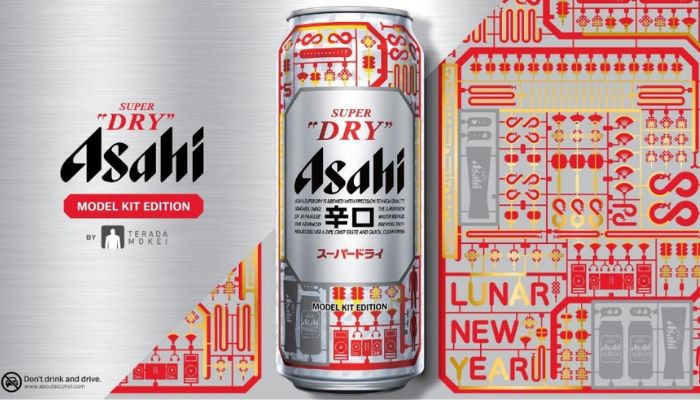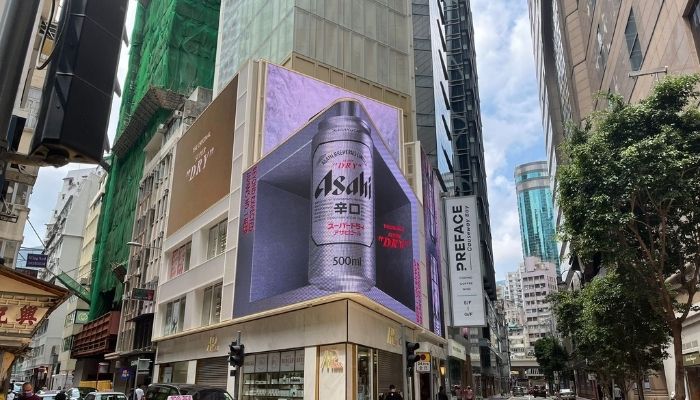

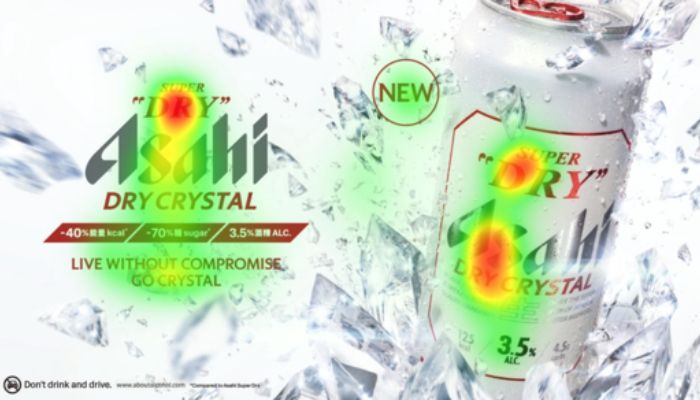
Hong Kong – Dentsu X has recently rolled out a market-first campaign for Asahi Dry Crystal, in collaboration with global media platform Teads. The campaign deployed predictive attention technology to measure cognitive responses within seconds, allowing dentsu X to optimise media placements based on actual user engagement, rather than surface-level visibility.
To sharpen creative performance, dentsu X leveraged Teads’ AI-powered neuroscience tools—developed with Neurons—to anticipate how audiences would interact with the campaign content. Teads also incorporated real-time attention metrics from Lumen Research into its proprietary Teads Ad Manager (TAM), enabling brands to access privacy-safe insights for smarter media planning in a cookieless world.
“As media planners, we’re constantly seeking ways to bridge data with human behavior. Predictive attention tech lets us plan with foresight—shaping campaigns around how people actually engage, not just what they see,” said Kitty Kwan, planning director at dentsu X.
Chrystal Ng, insights director at Teads APAC, noted the strategic value of the approach: “In today’s fragmented media landscape, attention is emerging as a powerful metric for brand-building. It goes beyond viewability to reveal true consumer engagement for brands such as Asahi, helping marketers craft more resonant campaigns and drive stronger brand outcomes at scale.”
Jenny Yeung, head of marketing at Asahi Hong Kong, highlighted the broader brand ambition behind the campaign, stating, “This campaign underscores our commitment to innovation and our drive to create unique value while fostering meaningful connections with our consumers, all in alignment with our long-term vision.”
The campaign rollout is part of dentsu X on how it is positioning attention—not just impressions or viewability—as the new currency of media effectiveness. The initiative is part of the broader Attention Economy project, a core element of dentsu’s long-term strategy, which has revealed that attention is 1.4 times more predictive of brand recall than traditional viewability standards.