

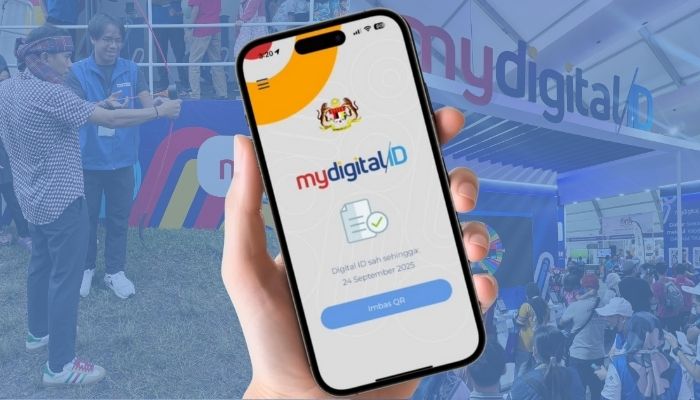
In a world where digital scepticism runs deeper than digital adoption, MyDigital ID set out to rebuild fragile public trust—and succeeded.
When MyDigital ID launched in 2023, it entered a landscape marked by fear, confusion, and distrust.
As MyDigital ID’s appointed PR and Marketing agency, Mechanikos started their work by measuring people’s awareness, understanding and willingness to adopt MyDigital ID.
Awareness stood at only 16%. Nearly half of Malaysians were concerned about data privacy, and 55% criticised the interface and usability.
In a country where scams, data breaches, and wariness toward government-led digital initiatives are part of daily conversation, these numbers signalled a potential national setback—threatening MyDigital ID with the fate of becoming “just another failed app.”
The core challenge was beyond visibility, it was sentiment.
Traditional marketing frameworks lacked the sensitivity to measure emotional readiness, meaning mass media alone could not solve the problem.
Without real understanding of what the rakyat feared and why, adoption would stall.
Mechanikos set out to fix that—by listening more closely, responding more transparently, and using real-time insight to shape how trust could be earned.
The Challenge
MyDigital ID was designed and campaigned by Mechanikos to serve all Malaysians across every state, language group, and level of digital literacy—a massive, diverse audience with equally diverse expectations.
Yet at launch, three major barriers stood in the way:
- Low awareness and understanding of what a national digital identity actually does
- High fear and misinformation, especially relating to privacy and government-owned data
- A fragile trust landscape, shaped by rising scam incidents and past digital project failures
Parents, youth, seniors, urban professionals, and rural communities all wanted the same thing: safety, clarity, and reassurance.
The challenge was evident: how could MyDigital ID build trust, educate the public, and accelerate adoption across a nation where digital doubt was the cultural default?
The Solution
The strategy centred on a sentiment-led framework—a continuous feedback loop built from Pendapat.my surveys and real-time social listening.
This allowed concerns, misconceptions, and emotional triggers to be identified and addressed dynamically.
Three key strategic pillars shaped the approach: audience segmentation, cultural and linguistic adaptability, and sentiment-responsive content.
Mass Malaysians across states, languages, and digital literacy levels—with tailored content for urban, rural, and underserved communities.
Campaigns were crafted in multiple languages with relevant cultural cues, ensuring the message felt inclusive and approachable.
When concerns around scams, privacy, or data misuse spiked, influencer-led explainers on MyDigital ID’s Common Criteria EAL3+ security standard were deployed—directly addressing the fears driving negative sentiment.
The solution was not merely technological—it was human-centred, culturally aware, and deeply empathetic to public sentiment.
The Campaign
The campaign rolled out from May to December 2024 in three strategic phases, each evolving in real time as public sentiment shifted.
The first phase, running from May to July, focused on broad hero awareness. Radio jingles, and outdoor billboards drove mass visibility, while high-reach digital placements across YouTube, TikTok, and Google ensured younger and digitally active audiences were consistently exposed to the message.
Throughout this period, the campaign anchored itself in the core promise of “Selamat. Pantas. Mudah.”, establishing a strong and unified positioning. Influencers were also activated early to seed trust, clarify misconceptions, and begin shaping a more confident narrative around Malaysia’s new digital identity.
From August to October, the campaign transitioned into the Tactical Education phase.
Here, content became more benefit-specific, with the “Semuanya Selamat”, “Semuanya Pantas”, and “Semuanya Mudah” series breaking down the practical value of MyDigital ID.
Explainer videos demystified security protocols, sign-up flows, and real-life use cases, helping Malaysians understand not just what MyDigital ID was, but how it protected and simplified daily life.
These assets were pushed across Meta, TikTok, YouTube, and Google to maximise comprehension among digitally active segments while maintaining broad reach.
The final stretch, from October to December, focused on conversion and community engagement.
Mobile roadshow trucks and kiosks travelled through major cities and rural towns, bringing the platform directly to the rakyat.
On-site assistants helped Malaysians sign up on the spot, supported by QR-enabled digital onboarding for a seamless experience.
At the same time, geo-targeted digital ads concentrated efforts in regions with lower adoption, ensuring resources were channelled where they were most needed.
Innovation played a crucial role throughout execution.
Real-time sentiment triggers allowed the team to react within days whenever concerns spiked, deploying tailored content that directly addressed emerging fears or misunderstandings.
Influencers generated “trust moments” by responding to sceptical posts and turning potential negativity into advocacy.
Budgets were also managed dynamically, shifting mid-campaign toward platforms and regions demonstrating the strongest conversion potential.
ROI was carefully tracked through a measurement framework linking spend to awareness, understanding, and completed registrations, enabling continuous optimisation and ensuring every ringgit delivered impact.
The Results
The campaign led by Mechanikos’ strategy produced a nationwide shift in awareness, sentiment, and adoption, delivering impact at a scale never before achieved by a Malaysian public-sector digital initiative.
Awareness rose from 37.4% before the campaign to 47.1% during rollout, and ultimately to 51.3% by its conclusion—a 37% uplift that reflected strong nationwide penetration.
Understanding improved significantly as well, with a 16% increase in comprehension and a 7.5% reduction in Malaysians who previously reported not understanding MyDigital ID at all.
Sentiment, once overwhelmingly sceptical, shifted dramatically toward confidence.
Conversations that once focused on privacy risks and distrust evolved into discussions about convenience, security, and national digital progress.
This emotional turnaround was mirrored in behaviour: registrations surged from just 80,000 in the first five months to 1.5 million after the campaign—an 18x increase that underscored the campaign’s ability to convert education into action.
Engagement metrics reinforced these gains, with significant spikes in keywords like “positive”, “trust”, “secure”, and “legit” across social listening channels.
Users praised campaign assets as “cute but clear,” “finally something I understand,” and “this explains it properly,” reflecting the effectiveness of simplified and culturally attuned communication.
ROI indicators were equally strong as data-led optimisation reduced media waste, and sentiment spikes aligned directly with increases in registrations, demonstrating clear causality between message refinement and adoption results.
By merging cultural understanding, sentiment intelligence, and agile execution, Mechanikos’ MyDigital ID successfully evolved from a low-trust initiative into a nationally recognised and embraced digital identity platform.
The campaign not only delivered on its objectives—it reset public expectations for how government digital services can be communicated, understood, and trusted.










![[Partnership] Zitcha and Pentaleap](https://marketech-apac.com/wp-content/uploads/2026/06/Partnership-Zitcha-and-Pentaleap.jpg)