
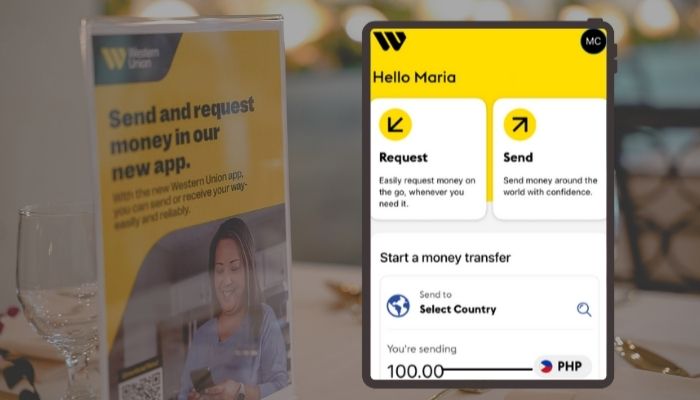
Manila, Philippines —Western Union has launched a new mobile app in the Philippines, marking the first time the company has rolled out an application that allows both sending and requesting of funds.
The app enables users to send money abroad through Western Union’s financial network, which includes access to bank accounts, digital wallets, cards, and retail locations for cash payouts. Payments can be made via the national QR code system ‘QR Ph’, with sign-up taking only a few minutes, according to the company.
“Today’s launch marks an important milestone in our effort to serve consumers in the Philippines better and connect them to their families and loved ones across the world,” said Gregory Laurent, vice president for the Philippines, Japan, Australia, New Zealand, and Pacific Islands at Western Union.
“For many in the country, remittances represent a life with more opportunity and hope. At the same time, an increasing number of Filipinos opt to send funds abroad. Our new app gives the opportunity to do both, with the flexibility and trust that Western Union can provide,” noted Gregory.
Moreover, users in the Philippines can also request funds from senders in markets such as the United States, Australia, Singapore, and the United Kingdom. Senders in those countries are able to complete the transfer online, while recipients in the Philippines can access funds via bank deposits, digital wallets, or cash pick-up.
Receivers can also have the option to redirect incoming funds to their preferred bank or wallet, and can track transactions using a reference number within the app that is available on both Google Play and App Store.
Meanwhile, data from the Bangko Sentral ng Pilipinas showed that inflows in the Philippines have reached a record $38 billion in 2024, marking the country as one of the world’s largest remittance markets. The World Bank also reported that the country ranked fourth globally among low- and middle-income nations in terms of remittances last year, with the United States as the biggest source of cash inflows, followed by Singapore.