
In mid-2023, the Philippine Department of Tourism launched its “Love the Philippines” branding campaign but risked serious credibility loss almost immediately. Investigations found that the launch video included stock footage from overseas, including Indonesia, Brazil, and Switzerland. The misalignment was not just cosmetic: the campaign’s contract with its agency was terminated.
This isn’t a tone-deaf mistake. It’s a cautionary tale in scale without context; a real-world example of what happens when a brand assumes cultural familiarity but fails to do the hard work of listening. Technology and reach may help spread a message, but without deep local insight, the message itself can backfire. That’s the core of “Marketing to the Middle”: scaling with relevance, not just volume.
Not One Region, but Twelve Realities
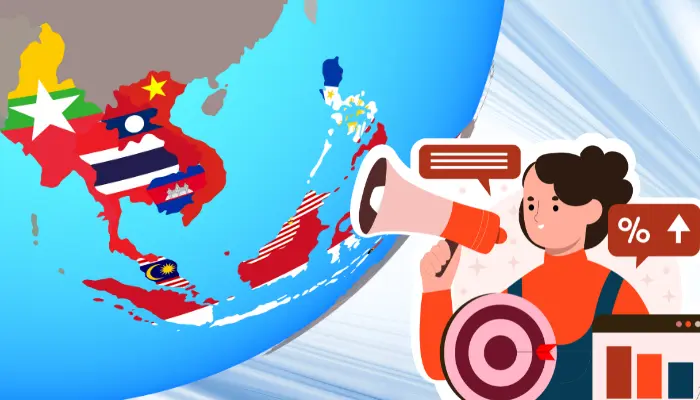
Many global platforms treat Southeast Asia as a single market, when it isn’t. That monolithic view favours efficiency over nuance. A campaign that performs well in Singapore can fall flat in Surabaya. Chatbots trained on Western idioms may misread what “lah” means in Malaysia. Martech delivers automation, but cultural comprehension requires human insight.
Scaling without nuance is just amplifying mistakes.
Platforms as Cultural Signals
In Southeast Asia, platforms aren’t just channels. They reflect how people communicate, trust, and decide:
- Thailand: LINE isn’t supplementary — it is the primary conversation medium.
- Indonesia: Shopee drives discovery more than search engines.
- Vietnam: TikTok’s remix culture is a language of expression, not just entertainment.
- Philippines: Facebook Groups are central to trusted interactions.
A martech stack that ignores these behaviours produces clean dashboards but shallow insight.
Decentralised Storytelling Matters with Support
Local voices e.g., franchisees, micro-influencers, community admins, often translate brand intent better than central templates. But decentralisation only works when teams have the tools and capability to interpret the brand strategically.
For instance, Nestlé’s TikTok campaign with Lazada succeeded because creators translated the brand for their audiences, not by repeating a global script.
HQ vs Local Teams: Course-Correction, Not Conflict
Global HQs push ready-made templates. Local teams adapt because templates often miss the mark. Adjusting sustainability messaging from “carbon offsets” to “food security” isn’t rebellion — it’s ground work your HQ should have done in the first place.
Local teams need autonomy and governance: toolkits, data access, and creative support. Without it, your “global strategy” just looks like a polite suggestion.
Funnels Don’t Behave Like Funnels in SEA
Traditional linear marketing funnels assume rational journeys. In Southeast Asia, consumer behaviour is relational and non-linear. People forward links on WhatsApp. They seek peer validation through Facebook Groups. They consult local creators before buying. Trust drives discovery; relationships drive conversion. Funnels may be neat on slides, but in Southeast Asia they’re more like spaghetti.
Localisation as a Capability
Localisation isn’t just translation. It’s a structured capability requiring governance, training, and feedback loops. Some local teams are ready to lead, while others need investment. Brands that factor this in will gain relevance without sacrificing brand integrity.
Measuring What Matters: Cultural KPIs
Clicks, impressions, and ROAS (return on ad spend) are incomplete. Cultural KPIs measure resonance:
- Sentiment shifts
- Community sharing velocity
- Creator-led lift
- Engagement quality
- Accuracy of local interpretation
If you don’t measure cultural connection, you can’t scale it. You might see numbers, but you won’t see the whole truth.
Tech Can Scale. Culture Converts.
AI and automation are powerful, but not inherently culturally intelligent. As of now, many SEA languages and dialects lack robust datasets. Emotional cadence, hierarchy, humour, and courtesy vary by country.
AI + human insight is the combination that produces impact. Otherwise, you’re just automating tone-deafness.
The Future: Marketing to the Middle by 2026
Brands that lead will invest in:
- Cultural AI — tuned to dialects and local emotional cadence. Research and industry reports show that off-the-shelf global AI often misreads sentiment in Thai, Malay, Vietnamese, and other SEA languages. Brands must budget for local datasets, partnerships, and in-market testing to ensure cultural fidelity.
- Conversational UX & voice commerce — reflecting real speech patterns. This includes adapting chatbots, voice assistants, and customer-facing AI to the subtleties of local phrasing, politeness levels, and humour. It ensures automated interactions feel human, not mechanical.
- Hyper-personalisation — responding to cultural micro-moments, not just segments. Micro-moments include events like Ramadan, local festivals, or platform-specific humour trends. Personalisation that ignores culture risks alienating the very audiences it seeks to convert.
- Creative governance — local teams shape story while systems preserve brand integrity. Centralised oversight ensures consistency, while local autonomy allows teams to translate brand intent into culturally resonant content. Governance, toolkits, and training make this scalable.
Marketing to the Middle isn’t just a strategy. It’s a capability. Ignore it, and you’re leaving relevance on the table.

This thought leadership piece is written by Farrell Tan, Founding Director at Orchan Consulting Asia Sdn Bhd