


AI agents are becoming integral to the marketing function. From virtual customer service bots to marketing automation tools, marketing tech innovators are scrambling to launch agents that promise faster service, smarter decisions and greater adaptability. For consumers, AI agents open up an exciting portal of new personalised customer experiences, alongside AI assistants and new modes of gen engine optimised ‘conversational commerce.’
“AI agents are poised to become part of everyday life. Google’s Gemini helps plan your week, while OpenAI’s voice assistants manage tasks through natural conversation,” says Jonathan Reeve, vice president for APAC at Eagle Eye. “A wave of startups and innovators are already building AI agent solutions for specific business needs using foundation models from leading providers.”
Will the real Agentic AI please stand up
Previously limited to their own data, agentic AI models now incorporate additional information and capabilities through special APIs and developments like Model Context Protocol (MCP), creating reliable connections to external sources.
But experts are calling on the industry to step up on defining agentic AI clearly, and choosing the right solutions amongst the ‘AI washing hype.’
“I keep hearing the term agentic AI thrown around, and frankly, I’m confused,” says Marty Hungerford, chief innovation officer at BRX. “I’ve been searching for this mythical agentic AI, and all I seem to find are automated processes that leverage AI to complete tasks.”
“Let’s define it clearly: an agentic AI is one that acts like a true digital agent, setting goals, making decisions, taking action, and learning independently.”
So, what should a true agentic AI be able to do? According to Hungerford, they need to:
- Understand and interpret high-level goals
- Plan and decompose tasks independently
- Make decisions under uncertainty
- Take action across systems without supervision
- Self-correct and learn from feedback
“Recently, we built a zero-touch solution that scours the web for the latest AI news, writes a two-person script, generates two AI avatars to perform it, edits the video, and emails it for human review,” he explains.
“All of this happens without intervention. Impressive, yes. But agentic? No. It’s a finely orchestrated automated process linking multiple AI tools, not a self-driven agent. In fact, I’ve yet to encounter any AI that ticks all the boxes above.”
According to Hungerford, systems like OpenAI Operator, Manus by Butterfly Effect AI, and Kruti by Ola Krutrim tick some of the boxes. They can interpret goals, take action across systems, and in some cases even self-correct. But they remain far from truly agentic. But they still rely on preset workflows, lack robust autonomous reasoning, and often require human initiation or oversight. But when a truly agentic system does emerge, it will have mind-bending implications for brands.”
AI assistants vs AI agents
There is also a distinct difference between AI assistance and agents, though often the two are used interchangeably. AI assistants primarily help users with tasks and queries, requiring ongoing input and direction. AI agents, on the other hand, are more autonomous, able to operate and make decisions independently to achieve a goal with minimal or no direct human intervention.
A great example of an ‘AI assistant’ was recently launched by Nexxen, a global, flexible advertising technology platform with deep expertise in data and advanced TV.
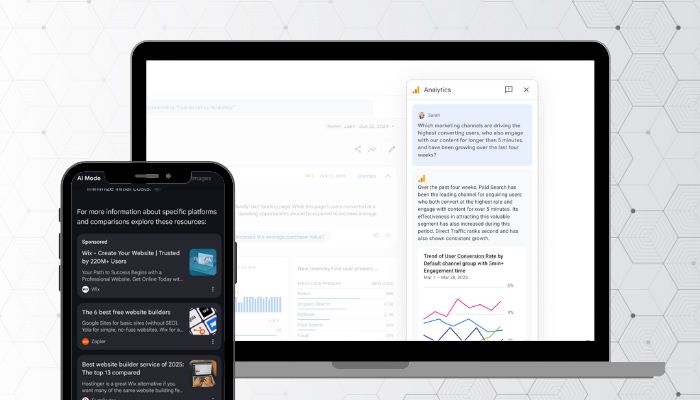
Earlier this year they announced their newest advancement, nexAI: the introduction of generative artificial intelligence (“AI”) to the Nexxen Data Platform, including a UI assistant within its proprietary insights tool Nexxen Discovery. With this advancement, nexAI enables clients to quickly turn complex consumer data into clear, actionable audience profiles and campaign planning for seamless activation.
The first of these generative AI advancements includes an in-platform assistant, natively integrated into Nexxen DSP, designed to streamline workflows and elevate campaign performance while prioritising transparency and user control.
“Our clients are continuing to lean into data and technology to navigate the fragmented media landscape, and nexAI meets this evolving need,” Karim Rayes, chief product officer, at Nexxen. “By integrating AI across our unified platform – and leveraging our existing data to inform these capabilities – we’re not just adding features; we’re fundamentally transforming the way campaigns are run and inventory is monetised.”
“Sifting through campaign data to uncover meaningful insights can take hours, but nexAI puts that power at our fingertips in an instant,” adds Jamie Snider, director of digital strategy at Assembly Global. “By streamlining reporting and optimisation, it lets us spend less time digging and more time driving real results for clients.”
‘Conversational commerce’ vs AI agents
Another term often used alongside agentic AI is ‘conversational commerce.’ Conversational commerce and AI agents, while related, serve different purposes. Conversational commerce focuses on using AI-powered chatbots and messaging platforms to enhance customer interactions and facilitate online shopping. AI agents, on the other hand, are more advanced, autonomous AI systems capable of performing a wider range of tasks on behalf of users, including complex problem-solving and decision-making.
“Conversational commerce is not just changing how consumers shop; it’s transforming how creative producers build brand experiences. As AI assistants increasingly mediate the relationship between brands and consumers, we’re witnessing a profound shift in how creative work is conceptualised, produced, optimised, and delivered,” says Sangeeta Mudnal, chief technology officer of pioneering GenAI platform Glu.
As an example, Glu isn’t simply another productivity tool but rather the foundation for the evolution in conversational commerce. The recently launched AI-powered platform organises digital assets with automatic tagging, generates tailored content suggestions, and automates time-consuming tasks like bulk cropping and resizing, creating the operational efficiency brands need to experiment with emerging AI channels.
Agentic AI and customer interactions
Experts agree the marriage of AI, retail and marketing makes a lot of sense. Eagle Eye, for example, already has a powerful AI-driven personalisation engine and other predictive systems, which thrive on ingesting and processing data intelligently.
In addition to being able to ask questions, AI agent helpers can make decisions, compare prices and steer people to where to shop. This stands to change how retailers reach customers.
“Consider this scenario: a customer asks their AI assistant, “Where can I unlock behind-the-scenes content as a member?” If your program’s benefits can’t be found and understood by that assistant, you’ll be excluded from consideration,” Reeve explains.
“AI agents, personal shoppers and deal-hunting assistants will change how brands promote their products and offers. The way large language models and agents process information will likely lead to a reorganisation of marketing strategies and loyalty structures.”
According to The Australian Loyalty Association (ALA) Founder and Director, Sarah Richardson, AI innovation is now giving brands the ability to deliver personalisation at scale, tailoring offers and experiences to each individual in real time across channels.
“This level of engagement also helps brands to analyse behavior patterns and anticipate what customers might need or want before they even know themselves,” she adds.
“Agentic AI will be most transformative to the loyalty landscape. Having an agent that can answer all your queries with relation to your membership as well as past purchase information helps brands to get on the front foot with customer expectations. Emerging technologies like voice assistants and visual search are also creating new pathways into loyalty ecosystems, so there’s plenty of innovation that AI will bring!”
Billy Loizou, APAC area vice president at Amperity agrees agentic AI is poised to reshape how brands compete for consumer attention globally.
“Imagine a world where your next purchase isn’t selected solely by you, but by an AI agent acting as your personal shopper. Need an autumn outfit? Your AI agent instantly scours online stores, considering your size, style preferences, budget, event theme, and even the weather forecast to deliver perfectly tailored recommendations,” he says.
Success starts with strong data infrastructure
Loizou notes success in the era of AI agents will hinge on a brand’s ability to deeply understand customer preferences and anticipate future needs.
“Brands that excel will consistently surface the most relevant recommendations, predicting and meeting their customers’ evolving desires and behaviours,” he explains. “To succeed in this future, brands must fundamentally transform how they collect, unify, and leverage customer data.”
To prepare for a future where AI agents traverse the world wide web, Loizou recommends brands invest in their data infrastructure now.
“Companies that excel at managing customer information will create a positive data cycle: the more effectively they use data to personalise interactions, the more engagement they’ll generate, leading to richer datasets and increasingly tailored experiences. Such precision will also help brands craft offers capable of navigating past AI gatekeepers,” he adds.
Derek Slager, co-founder and CTO at Amperity, agrees. He stresses even the most advanced AI agent is only as good as the data it’s built on.
“At their core, AI agents use data to make decisions across systems, based on constantly changing variables and conditions. However, if the underlying customer data is spread across disconnected tools, fraught with duplication or siloed in different formats, the agent is doomed to be ineffective,” he explains.
“Fragmented, outdated or inconsistent information can make the best tech unreliable. To work effectively, AI agents need data foundations that are accurate, connected and governed. Without them, outputs become unreliable and trust breaks down. Meanwhile, expectations keep rising.”
Are brands ‘mature’ enough to embrace agentic AI?
Despite the buzz around agentic AI, research reveals significant maturity gaps when it comes to adoption and transformation. A recent Digital, Marketing & eComm in Focus 2025 report, produced by digital, data and eCommerce advisory & consultancy Arktic Fox in collaboration with recruitment firm Six Degrees Executive revealed a whopping 75% of all surveyed brands felt their eCommerce maturity lags behind global leaders and they have work to do. In fact, only 2.5% of retailers believe their maturity is very high and on par with global leaders.
Teresa Sperti, founder and director at Arktic Fox says with their houses out of order and lacking maturity, particularly in the current core pillars of eCommerce, local brands stand to be challenged even further with the growth of AI, which is going to completely reshape the shopping experience.
“Agentic AI will see machines talking directly to machines to undertake shopping on behalf of consumers and B2B buyers and that will completely up-end the shopper journey as we know it – as it means we need to market as much to the machines as we do shoppers,” she adds.
“I believe retailers who don’t understand where the industry is headed are at risk of extinction within five to ten years, given that the vast majority of product discovery for most categories now starts online.”






![[Creative Work] Leron Leron Sinta x Mighty Hotdog](https://marketech-apac.com/wp-content/uploads/2026/07/Creative-Work-Leron-Leron-Sinta-x-Mighty-Hotdog.webp)