
As the digital landscape continues to evolve, influencer marketing is entering a new era defined by authenticity, data-driven strategies, and technological innovation. Once seen as a novelty, it has become a cornerstone of modern brand communication — bridging the gap between personal storytelling and commercial impact.
From the continued rise of the creator economy to the growing demand for transparency and meaningful partnerships, the future of influencer marketing promises to reshape how brands connect with audiences in an increasingly fragmented online world.
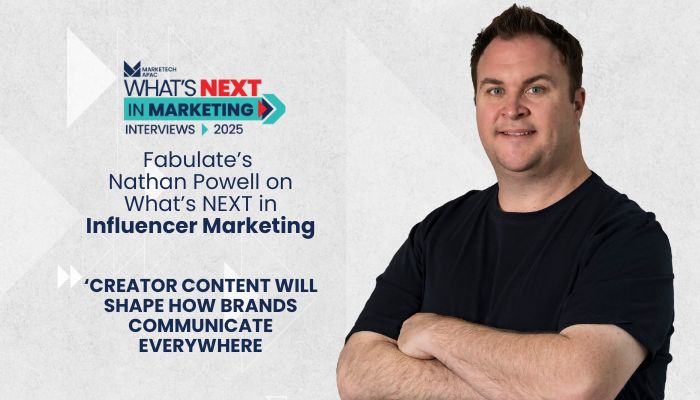
In our latest What’s NEXT in Marketing interview, we recently spoke with Nathan Powell, co-founder, chief product and strategy officer at Fabulate, to discuss on what the ideal brand-creator relationship is nowadays in the current state of the creator economy, how new technologies are helping brands to partner with the right influencer, and what lies ahead for the future of creator partnerships by brands.
What is a ‘sustainable’ creator-brand relationship like?
To begin tackling what lies ahead for the future of influencer marketing, Nathan first stresses the importance of having a sustainable creator-brand relationship. Unlike one-off campaigns that deliver spikes in awareness but lack brand equity or creator advocacy, sustainable relationships are built on consistency, collaboration, and co-creation, not transactions.
“The strongest creator programmes are those that strike the right balance between quality and quantity. You need enough content volume to keep a steady presence across platforms, but not at the expense of creativity or authenticity. The brands getting this right are the ones building a scalable content engine powered by creators that is consistent in tone, adaptable in execution, and aligned with audience culture,” he explained.
In terms of consistency in these campaigns, Nathan points out an important distinction: consistency does not mean using the same creators all the time; it means being consistent in the approach to content.
“You should absolutely double down on partnerships that perform well, but you should also feel comfortable bringing in new voices who can add fresh perspectives while maintaining the same creative and strategic direction. The goal is for every piece of content, regardless of who is creating it, to feel recognisably your brand,” he added.
He also remarked how the worst thing a brand can do is launch a creator campaign and then neglecting their content strategy after it goes live. For Nathan, sustainable influence requires ongoing storytelling and rhythm.
“Audiences expect brands to show up regularly with content that evolves but stays true to its essence. That is what builds long-term trust and recall: not the occasional big campaign, but a continuous dialogue driven by creators who genuinely believe in your brand,” he noted.
AI as a driver for next-gen ‘influence’
While discussions on marketing nowadays aren’t totally void of any mention of artificial intelligence (AI), Nathan makes a point of why AI is becoming more essential for creating influencer-driven campaigns.
“AI will allow us to better measure and define influence. For years, influence has been seen through the lens of reach and popularity. What AI does is move the conversation from reach to relevance,” he said.
It is with this reasoning why Fabulate had recently launched its SparQ2.0 platform which introduced five new Agentic AI tools: Lens, Compliance Check, Echo, Quality Control, and Scout to provide marketers with deeper insights into influencer campaign performance and the ability to make data-driven decisions without needing to be data experts.
“With platforms like SparQ 2.0, we can now analyse content patterns, tone, audience overlap, and brand safety signals at scale. It uses machine learning to map how creators align with a brand’s values, sentiment, and audience interests in real time. This gives marketers a far more accurate view of which creators truly shift behaviour and perception, not just generate engagement,” he stated.
He also believes that AI brings precision without removing the human element, as it strips out bias, speeds up discovery, and uncovers insights that would otherwise take weeks to find. However, he noted that the real change is philosophical: influence will no longer be defined by the size of a following, but by contextual authority, which is the credibility and trust a creator holds within their community.
“AI gives us the tools to quantify what has always been instinctive. It bridges the gap between creativity and intelligence, allowing marketers to combine human storytelling with machine-led insight. The result is a new era of influence that is measurable, authentic, and scalable,” he explained.
Moving beyond influencer discovery’s commodification
When asked about influencer discovery, Nathan remarked that it is surprising that many brands and specialist agencies are still doing this manually, scrolling their own feeds and using hashtags to identify creators. For him, this is incredibly inefficient and fraught with bias.
“While data on creators is becoming more accessible, and most platforms now offer similar filtering tools for reach, engagement, and demographics, the real differentiation will not come from who has the biggest database, but from who can turn that data into meaningful intelligence,” he said.
In their case at Fabulate, Nathan notes that their investment is focused not just on helping marketers find creators, but also on helping them understand why those creators are the right fit. By connecting audience insights, brand safety signals, and content performance data, they can provide recommendations that are not only data-driven but strategically relevant to each brand.
“Discovery on its own is becoming a utility. The real value comes after that stage, in how platforms empower marketers to make better creative and commercial decisions. The future of differentiation will sit in intelligence, integration, and insight, not just in access to creator lists,” he added.
Approaching the power shift between brands and creators
It is worth noting that creators today are not just influencers; they are small media businesses with their own creative direction, audience insights, and production capabilities. With that, many of them now operate with the sophistication of publishers, managing teams, content calendars, and multi-platform distribution strategies. For Nathan, that shift means brands need to change how they think about collaboration.
“Rather than treating creators as media placements, brands should view them as creative partners with built-in distribution. The best campaigns give creators the space to interpret the brief through their own lens while staying aligned with brand goals. When creators are given that level of trust and creative ownership, the content performs better because it feels authentic to their audience,” he explained.
Using Fabulate’s case as an example, Nathan stated how they have seen that the most successful partnerships are built on mutual respect and shared ambition.
“Brands that embrace this shift and work with creators, rather than trying to control them, will create more relevant and culturally connected content. The most impactful collaborations feel commissioned, not sponsored, and that is the mindset shift marketers need to make,” he added.
What’s next for influencer marketing?
When asked what lies ahead for influencer marketing’s future, Nathan noted that over the next few years, influencer marketing will move from being something that sits on the side of a campaign plan to becoming the thing that drives the plan.
“It will sit at the centre of brand strategy, right alongside media, creative, and data. The change will not just be about working with more creators, but about using creator content more intelligently across every part of the funnel,” he said.
In an even shorter period, Nathan added that creators will no longer just be a line item on the media schedule; they will be the media schedule.
“Their content will anchor campaigns, set the creative direction, and define how brands show up across channels. Creator content will not just live on social platforms anymore, it will shape how brands communicate everywhere.
He also stated that they are already seeing this shift through what we call ‘creator everywhere’, where clients are no longer just using creators for social content, but are extending that storytelling into digital out-of-home, connected TV, and other real-world executions. It is helping brands bridge the gap between online and offline experiences, giving campaigns far more cohesion and consistency.
“At Fabulate, we see this as the natural next phase of the category. Creator marketing will move even closer to performance marketing, but it will keep its creative heart. The brands that win will be the ones that treat creators as an always-on creative layer that helps them stay relevant, agile, and connected to culture,” he concluded.
***
Looking ahead, the future of influencer marketing will hinge on trust, creativity, and adaptability. As consumers grow more discerning and platforms continue to diversify, brands that embrace genuine collaboration, long-term partnerships, and ethical engagement will stand out. Whether through human or virtual influencers, micro-communities, or immersive experiences, the next chapter of influencer marketing isn’t just about reach — it’s about relevance, resonance, and lasting relationships.
Fabulate recently won Gold in the ‘Best Influencer Marketing Platform’ category at MARKETECH APAC’s Marketing Technology Awards 2025.