
As algorithms optimise for engagement and efficiency, brands risk producing work that is technically perfect but emotionally hollow. As creativity enters the picture as the ultimate distinction, making it feel natural and human comes as the challenge.
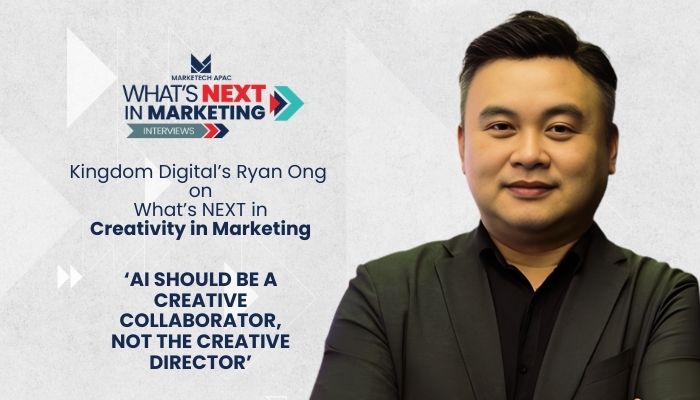
For Ryan Ong, CEO of Kingdom Digital, this creativity is not about flashy visuals or clever gimmicks—it is about insight, collaboration, and the human touch that no algorithm can replicate.
In MARKETECH APAC’s What’s NEXT in Marketing series, Ong explores how brands can remain distinctive and meaningful in a world driven by technology—proving that creativity, not automation, is the true differentiator.
Effective creativity in a data-driven world
Ong describes effective creativity as “the sweet spot where human insight meets technological intelligence.”
“Martech tools can tell us what people are doing, but creativity helps us understand why,” he explained.
He added that true creativity is more than aesthetics or emotion—it is work that can: solve a real business problem, resonate with human truths, and maintain a consistent narrative thread across platforms and audiences.
“To us, creativity becomes effective only when technology amplifies it, not replaces it. Data can sharpen the idea, but it’s the human storytelling behind it that makes people care,” Ong said.
Standing out among the digital clutter
With platforms increasingly driven by algorithms, Ong believes creativity is the last true competitive advantage.
“Brands are competing not just with each other, but with creators, communities, and platform trends,” he said. “When everyone has access to the same tools, creativity is what gives a brand soul.”
He explained that creativity allows brands to challenge category clichés and disrupt norms, connect emotionally with audiences, and produce shareable work that matters.
“Without creativity, martech only accelerates mediocrity. With it, technology becomes a multiplier for standout storytelling,” Ong said.
Distinctiveness beyond tools
Ong emphasised that tools alone do not make a brand distinctive—perspectives, experimentation, and collaboration do.
“Brands with a clear creative identity, a culture of experimentation, and multidisciplinary teams working together are the ones that remain memorable,” he said.
He added, “Impactful creativity happens when strategists, data specialists, creators, and technologists build ideas together, not in sequence. People and ideas create competitive separation—tools just level the playing field.”
Guardrails for originality
As AI and automation become common, Ong recommends three guardrails to maintain originality.
He emphasises that brands should stay anchored to their storytelling: while templates can improve efficiency, the brand’s personality, tone, and visual language must remain intact.
AI, he explains, should be used to scale production, not to replace human narrative direction.
Equally important is investing in social intelligence—algorithms can highlight trends, but it is cultural insight that keeps creativity meaningful and relevant.
“At the end of the day, AI should be a creative collaborator, not the creative director,” Ong noted.
Leadership for the creative future
At Kingdom Digital, Ong says the creative process is now “more integrated, adaptive, and insight-driven.”
He outlined four key ways the agency is evolving: idea-first, data-supported, content ecosystems, not one-off campaigns, investing in people, and expanding abilities with AI.
Ong believes creative leadership requires curiosity, courage, and clarity.
“Leaders must empower teams to experiment, fail fast, and embrace risk while keeping human impact at the centre,” he said.
“The future isn’t about choosing between tech and creativity—it’s about integrating both to build brands that stand apart and stay meaningful,” Ong added.
For Ong, AI is not a replacement for human creativity—it is its amplifier.
In marketing, it offers brands new ways to express intent and emotion with precision, but it is human insight, collaboration, and judgment that give campaigns soul.
As AI and automation enforces new marketing practices on how to optimise, accelerate, and scale, Ong emphasises the importance of keeping one’s grip on work that feels closer to people than perfection. Ultimately, Ong believes that it is people—thinking differently, experimenting boldly, and staying true to human truths—who make brands memorable in a machine-driven world.