
The marketing industry is no stranger to change. From the rise of digital and social platforms to the accelerating impact of AI, automation, and data, marketers today are navigating a landscape defined by constant disruption. Yet amid conversations dominated by technology, tools, and performance metrics, one critical dimension often receives far less attention: the human skills required to survive—and thrive—through it all.
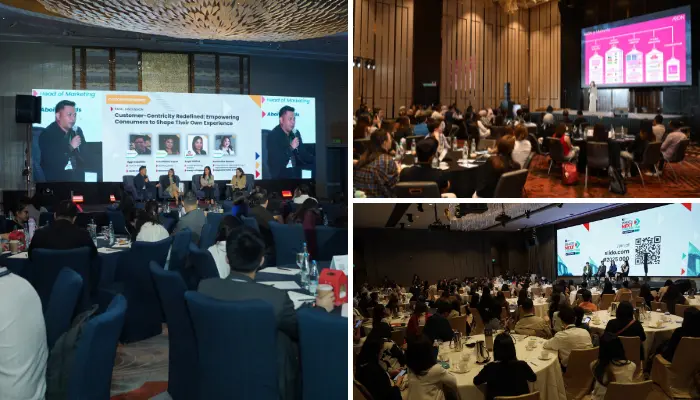
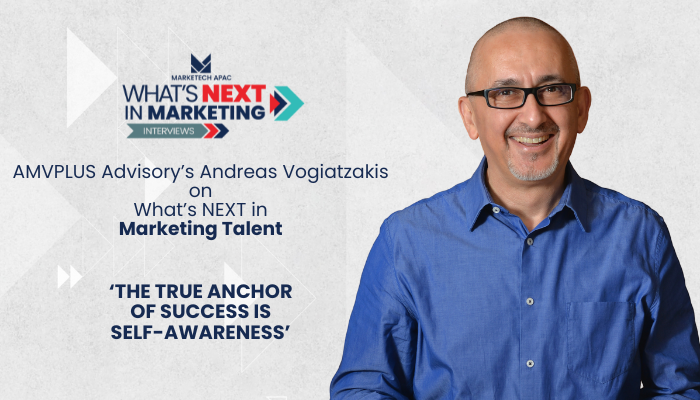
At MARKETECH APAC’s What’s NEXT in Marketing conference in Malaysia, Andreas Vogiatzakis, executive director of AMVPLUS Advisory, delivered a keynote that cut against the grain. Instead of focusing on platform innovation, he challenged marketers to look inward—towards self-awareness, adaptability, and what he calls “power skills.”
In this edition of the What’s NEXT in Marketing Interview Series, MARKETECH APAC sat down with Andreas to unpack why these attributes are becoming the true differentiators for leadership and what they mean for the future of marketing talent.
Navigating constant disruption: Why self-awareness is the anchor
Having led organisations through recessions, global crises, and multiple pandemics, Andreas described today’s environment as a “constant change challenge” that is testing leaders across industries.
“I started my career where the internet didn’t exist,” he said. “And every year, change became faster, with geometrical speed. Things have never been the same, especially after COVID.”
According to Andreas, navigating this accelerating pace of change requires more than technical expertise.
“The true anchor of success becomes self-awareness, love for what you do, and the ability to adjust, adapt, and be flexible,” he explained. “These are the values that hold you anchored to success.”
In a world where skills and knowledge are rapidly expiring, Andreas believes traditional competency models are no longer enough.
“Probably 90% of everything students learn today will be obsolete in five to ten years,” he said. “So if that’s the case, what is the constant we build success on?”
For him, the answer lies in what he calls power skills—often mislabelled as “soft skills.”
Andreas is blunt about his dislike for the term. Skills like empathy, emotional intelligence, listening, and adaptability, he said, are anything but soft. “I call them power skills because these are the ones that empower us to really build the future the way we want it and to succeed in it no matter what the changes are…”
Power skills as foundation of high-performing teams
At the heart of Andreas’ philosophy is the belief that power skills enable individuals and teams to perform consistently amid uncertainty.
During his keynote, Andreas highlighted power skills such as problem-solving, emotional intelligence, adaptability, creativity, critical thinking, time management, leadership, teamwork, decision-making, conflict resolution, and communication. These, he said, are the capabilities that build high-performing teams.
He emphasised that while learning, unlearning, and relearning remain essential—echoing futurist Alvin Toffler—it is attitude and self-management that ultimately determine success.
“What is the attitude that really guides our beliefs and our behaviour?” Andreas said. “If you love what you do, you cultivate the power skills that empower you to be the best at it.”
Reflecting on his own journey navigating companies through SARS, recessions, and COVID-19, Andreas noted that growth does not come from action alone.
“We don’t learn from doing. We learn from reflecting,” he said. “When we connect the dots, then we realise what the secret of success is and what we need to do in order to succeed forward.”
Self-awareness and adaptability as the starting point of leadership
When asked to identify the most critical power skills for marketers and leaders today, Andreas was unequivocal.
“Number one—without any doubt—is self-awareness,” he said. “Socrates said ‘know yourself’ more than 3,000 years ago, and that is the beginning of everything.”
He described leadership as operating across what he calls the “three rings of leadership.” The outer ring is systems leadership—understanding the environment, regulations, and mechanics of the business. The second ring is organisational leadership—leading teams and stakeholders. At the centre sits self-leadership.
Without that inner ring, Andreas stressed, the other two cannot exist.
“If I don’t know what I don’t know, what am I going to do about it?” he asked. “If I’m not self-aware, how am I going to lead better? How am I going to make high-performing teams and guide them to success?”
From there, emotional intelligence follows—encompassing empathy, listening, social awareness, and relationship management. A growth mindset, adaptability, resilience, and flexibility complete the core skill set leaders must continuously sharpen.
“They say the one that is most flexible controls the system,” Andreas noted.
He also shared the DEO principle—detach, elevate, observe—which encourages leaders to step back, understand their emotions, and respond rather than react.
At the core of this mindset are three personal choices Andreas emphasised:
First, choosing to be the cause rather than the effect. Being the effect, he explained, means blaming circumstances and seeing oneself as a victim. Being the cause means taking responsibility and making things happen.
Second, choosing results over excuses. “If you want results, you do anything in your power, in your capacity, to achieve them—zero excuses,” he said.
And third, taking 100% responsibility for everything that happens to you. “When that happens, that means I’m the cause. I’m not the complainer. I don’t put the blame on other people.”
All of these, Andreas stressed, stem from self-awareness. “If we want to succeed, know yourself. That’s where all wisdom begins.”
Winning the inner game before the outer game
A central theme of Andreas’ keynote—and his work at AMVPLUS Advisory—is the idea of the “inner game.”
“If you don’t win the inner game, there is absolutely no way to win the outer game,” he said. “Forget it.”
Drawing on the Johari Window model, Andreas explained that leadership breakdowns often stem from blind spots—where intentions do not align with how behaviour is perceived.
“Everything is behavioural,” he said, pointing to examples of leaders whose good intentions are misunderstood because of how they show up. In these cases, misunderstanding arises not from intent, but from unexamined behaviour.
“The responsibility to be understood is on the one who delivers the message,” Andreas said.
Winning the inner game, he added, requires courage, feedback, and the willingness to confront one’s ego.
“You are the captain of the ship, not your ego,” he said.
Beyond self-awareness, Andreas highlighted resilience and belief as critical during inevitable downturns.
“When the world comes down on you and you’re in a dark spot, that belief—to believe that you are the light and that this happens for a reason—that’s the most amazing thing,” he shared.
That belief, however, must be paired with action and clarity. “I’m not saying sit there, believe, and do nothing. Of course, you’ve got to put in the hard work.”
Clarity, he added, is a fundamental pillar of leadership. “If you’re blurred on what you want, what do you expect to achieve? SMART goals need to be specific.”
What’s next for marketing talent in an AI-driven world
Looking ahead, Andreas sees a future where successful marketers are defined not by competing with AI, but by complementing it with humanity.
Adaptability and flexibility, he believes, will be non-negotiable as automation accelerates and roles continue to evolve.
As the industry races towards an AI-powered future, Andreas argued that talent development must be urgently rethought. While universities and organisations focus heavily on skills and knowledge because they are easier to teach and measure, far less attention is paid to listening, empathy, emotional intelligence, and trust.
“They’re not about trustworthiness,” Andreas said. “And yet trust is the number one most fundamental element of building a high-performance team. It’s the most important thing, and yet we don’t reward it.”
For Andreas, the path forward is not a choice between technical skills and power skills, but a combination of both.
Ultimately, he believes future-ready marketers will be those who invest as much in self-awareness as they do in upskilling.
“Know yourself—gnothi safton,” Andreas said in closing. “That is the beginning of all wisdom. Everything else trickles down from there.”
*****
In today’s rapidly changing marketing landscape, Andreas reminds us that success starts from within. While AI and automation transform how work gets done, it is self-awareness, adaptability, and power skills that set leaders and teams apart. Future-ready marketers, he argues, will be those who pair technical know-how with the human skills that technology cannot replicate—winning the inner game to navigate the outer one.