
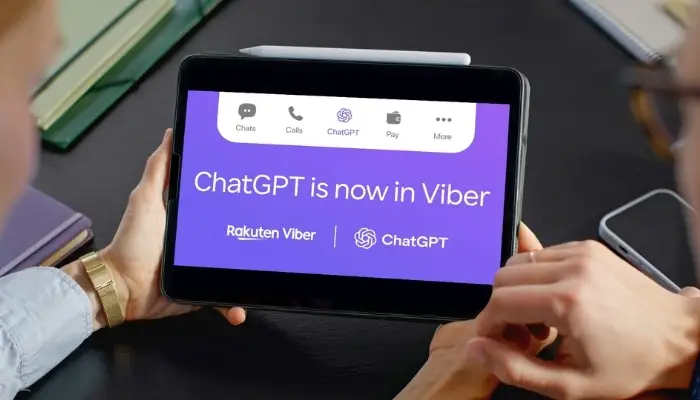
Singapore – Rakuten Viber has partnered with OpenAI to bring ChatGPT-powered features directly into its messaging app, allowing users to access AI tools without leaving their conversations.
The collaboration introduces a dedicated ChatGPT contact within Viber, enabling users to ask questions, brainstorm ideas, draft messages, and complete everyday tasks without requiring a ChatGPT account, although signing in provides higher usage limits.
Users can also mention @ChatGPT in private or group chats to receive AI-generated responses that remain clearly identified within the conversation.
According to Viber, only the specific messages sent to ChatGPT or those mentioning it are shared with OpenAI, rather than the entire chat history.
The update also adds several AI-powered features, including Image Remix for editing photos, Link Summary for generating summaries of shared articles and documents, Chat Summary to help users catch up on conversations, Polish Messages for refining drafts before sending, and Translate Message for in-chat translation.
“Partnering with OpenAI means we can bring ChatGPT to our users to add real, day-to-day value – even if they would never have sought it out on their own,” said Ofir Eyal, CEO of Rakuten Viber.
“Whether you’re drafting the perfect message, remixing an image, or just exploring a new idea, this is now built into the app people already use every day.”
Torben Severson, VP and Head of Global Business Development at OpenAI, said the partnership reflects how AI can support users within the messaging apps they already rely on.
“Messaging is where so much of everyday life happens. With ChatGPT in Viber, people can get helpful, creative support right in the moment, from finding the right words to catching up on busy chats or remixing a photo,” Severson said.
The rollout is available to Viber users on iOS and Android in most markets where ChatGPT is supported, with desktop availability planned for a later date.
Viber said users must provide explicit consent to OpenAI’s terms before using AI features, while core messaging services remain protected by end-to-end encryption.

![[Partnership] OpenAI, Sea](https://marketech-apac.com/wp-content/uploads/2026/06/Partnership-OpenAI-Sea-1.jpg)