
Singapore – Growth of Muslim travel worldwide is expected to continue, with international Muslim visitor arrivals projected to reach 245 million by 2030, according to new data from Mastercard and CrescentRating.
According to the reports, international Muslim visitor arrivals are estimated at 186 million in 2025 and are expected to grow to 245 million by the end of the decade. The reports also note that baseline services such as Halal food availability and prayer spaces have become more established in many destinations, while newer expectations are emerging around safety, digital confidence and faith-aligned assurance.
Asia continues to play a significant role in the global Muslim travel market. The report estimates that the region attracted nearly 120 million Muslim visitors in 2024, accounting for around 65% of the world’s 176 million global Muslim travelers.
The study attributes the region’s strong position to connectivity, cultural diversity, established Halal infrastructure and proximity between major Muslim source markets and destinations.
Southeast Asia in particular is seen as well placed to capture future demand. Countries such as Malaysia, Indonesia, Singapore and Brunei are cited among preferred destinations for Muslim women travelers. The reports also identify Southeast Asia as a significant source market, accounting for around 5.8 million Muslim women travelers.
Beyond Muslim-majority countries, the reports point to growing opportunities for destinations that can make their Muslim-friendly services more visible and reliable to travelers.
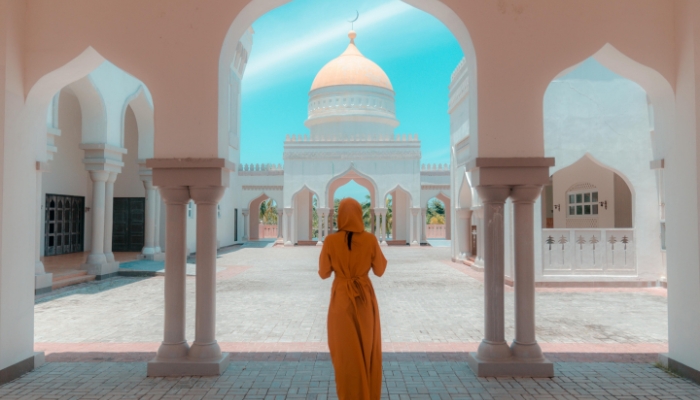
In 2025, Muslim women travelers accounted for 90 million international arrivals, representing 48% of global Muslim visitor arrivals. This marks an increase from 63 million travelers and a 45% share in 2019.
The report notes that Muslim women are increasingly shaping travel planning across a range of travel types, including family vacations, solo travel, religious journeys, business trips and women-led group experiences.
Safety and comfort remain the most important factors in destination choice, cited by 60% of Muslim women travelers surveyed. Muslim-friendliness — including access to Halal food, prayer spaces and the ability to dress modestly without discrimination — was cited by 30% of respondents.
Digital platforms are also playing an important role in travel planning. The report found that 68% of respondents said social media influences their travel decisions, with Instagram identified as the most-used platform, followed by YouTube and TikTok. Artificial intelligence tools are also increasingly used by travelers to research destinations, plan itineraries and identify Halal-friendly services.
“Muslim travel is entering a more sophisticated phase, where confidence, inclusion and purpose are becoming as important as access and convenience,” said Aisha Islam, Senior Vice President, Customer Solutions Center, Southeast Asia at Mastercard. “Through the RIDA framework, destinations and businesses have a practical way to think about the full traveler journey from trusted digital information and secure payments to meaningful experiences that respect faith, culture, safety and personal values.”
The RIDA framework refers to the following:
- Responsible: support community-led tourism, environmental stewardship and regenerative travel practices.
- Immersive: create deeper cultural, heritage and local experiences that go beyond sightseeing.
- Digital: use technology, AI and secure digital payments to reduce friction and increase confidence.
- Assured: build trust through verified Halal services, safety standards, inclusive infrastructure and consistent quality across touchpoints.
The reports highlight an opportunity for destinations to strengthen their appeal by making Muslim-friendly services more visible, verifiable and consistent.
Under the RIDA framework, destinations are encouraged to support community-led tourism and environmental stewardship, offer deeper cultural experiences, adopt digital tools such as AI and secure payment systems, and ensure reliable Halal services and inclusive infrastructure.
“For destinations, the opportunity is to move from availability to assurance,” said Raudha Zaini, Director of Operations, CrescentRating. “Muslim travelers are looking for experiences that are meaningful, inclusive and easy to trust. The destinations that clearly communicate their readiness and deliver consistently across the journey will be best positioned to earn long-term loyalty.”