

For over three decades, First Standard Finance Corporation has built a reputation grounded in trust and reliability. But in an increasingly competitive and digital-first landscape, legacy alone was no longer enough to stand out.
Despite its long-standing presence, the company faced a critical challenge: it had yet to become a top-of-mind brand among Filipino entrepreneurs. Fragmented messaging, inconsistent brand representation, and a reliance on traditional marketing limited its ability to clearly communicate what it stood for.
This became the catalyst for transformation—one that would not only redefine its brand identity, but also challenge how loans themselves are perceived.
At the centre of this shift is “The Smart Move”, a campaign designed to reposition borrowing not as a burden but as a strategic, empowered financial decision.
From debt as burden to debt as leverage
For Jacqueline Tan-Sainz, CEO and President of First Standard Finance, the inspiration behind the campaign stemmed from a disconnect between industry narratives and real customer behaviour.
In an exclusive interview with MARKETECH APAC, she shared, “At First Standard, we realised that for too long, the industry has framed debt as a burden. We wanted to change the narrative.”
“‘The Smart Move’ was inspired by the grit and vision we see in Filipino entrepreneurs every single day. They don’t take out loans because they are struggling; they take them out because they are growing, innovating, and building a legacy.”
This reframing marks a fundamental shift—not just in messaging, but in how the company positions its role. Rather than acting solely as a lender, First Standard is aiming to be seen as a growth partner.
“We aren’t just providing capital, but we are fuelling the engine of Philippine entrepreneurship,” Tan-Sainz added. “By reframing loans as empowered financial actions, we honour their ambition and place the power back where it belongs: in their hands.”
Closing the ‘legacy gap’ through rebranding
However, shifting perception required more than a campaign—it demanded a full-scale rebrand.
“Thirty-three years is a long time to build a reputation, but it’s also long enough for a brand to become ‘part of the furniture’—reliable, but perhaps overlooked,” Tan-Sainz explained.
One of the biggest hurdles was what she describes as a “legacy gap”. While the company had built trust over decades, its identity and messaging had not evolved at the same pace as its audience – the digital-first Filipino entrepreneurs.
“We struggled with fragmentation; different branches and services felt like separate entities rather than one cohesive force,” she said.
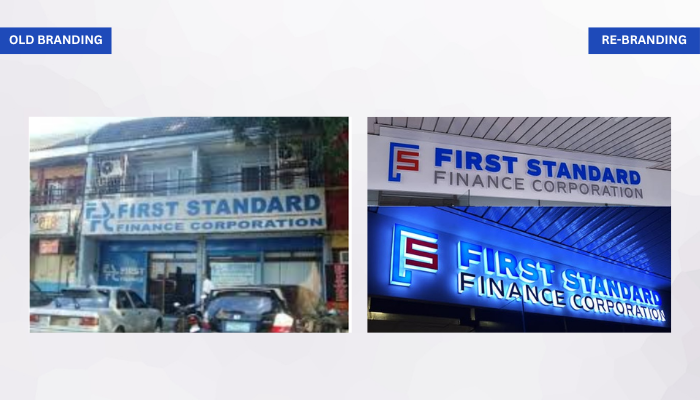
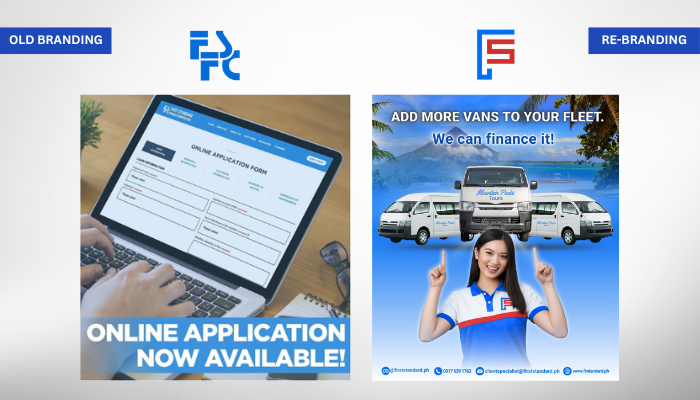
The rebranding sought to resolve this by unifying both visual and verbal identity across all touchpoints. This included simplifying brand language, modernising design elements, and shifting the focus from product-led messaging to impact-driven storytelling.
“By centring the brand on the ‘Smart Move’ principle, we turned a scattered service list into a clear, recognisable mission,” she noted.
Balancing digital acceleration with on-the-ground trust
A key differentiator in the campaign’s execution lies in its hybrid approach—combining digital scale with hyper-local relevance.
As First Standard expanded its footprint, it uncovered a critical insight: while entrepreneurial ambition is consistent across the Philippines, how it manifests varies widely by region.
“We couldn’t use a ‘one-size-fits-all’ map for a country of multiple islands,” Tan-Sainz said.
In urban centres like Metro Manila and Cebu, where speed and convenience are paramount, the campaign leaned heavily into digital channels—highlighting seamless online applications and content-driven engagement.
Meanwhile, in provincial markets, trust remains deeply rooted in face-to-face interactions.
“For many, a loan isn’t just a transaction but a conversation,” she explained. “That’s why we maintained a heavy traditional footprint with 80+ offices.”
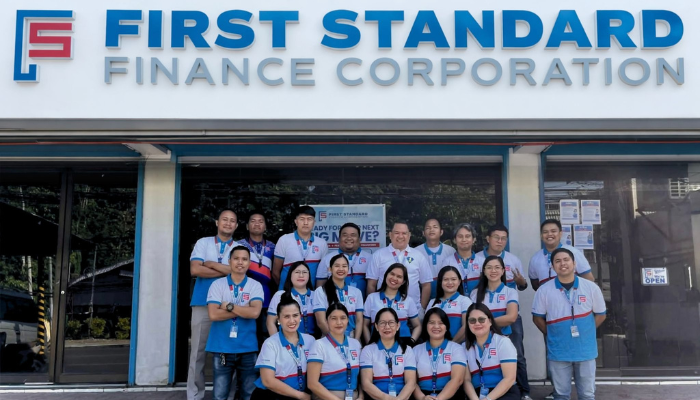
This included localised materials, regional language adaptations, and active participation in community events—particularly during times of crisis such as natural disasters.
“By blending the efficiency of digital with the traditional presence, we ensured that whether an entrepreneur is a tech-savvy seller in Metro Manila or a farm owner in the Visayas, they feel seen and supported.”
From broad messaging to precision targeting
Beyond creative execution, data played a pivotal role in reshaping how First Standard approached both awareness and acquisition.
“Data is the heartbeat of our strategy,” Tan-Sainz said. “We use data to listen to our clients before we ever speak to them.”
Historically, the company relied heavily on intuition and branch-level insights. But with the rebrand, it shifted towards a more analytical, insight-led approach.
One key finding was a visibility gap in digital spaces—despite its strong offline presence, the brand was not appearing where entrepreneurs were actively searching for solutions.
“We moved from generic ads to educational, purpose-driven content,” she shared, positioning the brand as a resource rather than just a service provider.
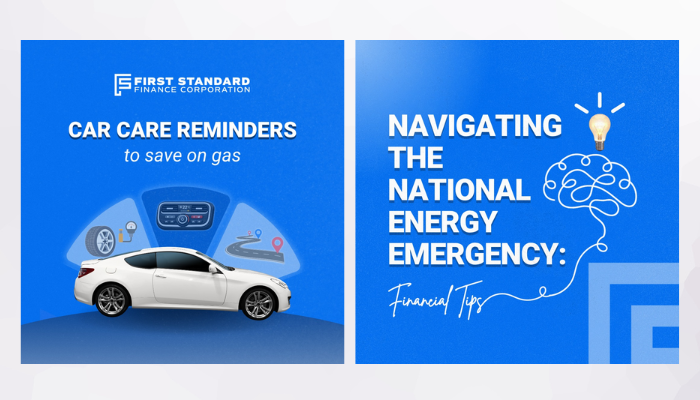
For lead generation, the strategy also evolved from mass outreach to more targeted engagement.
“We used data-driven geographic and psychographic targeting to reach entrepreneurs who actually fit our profile,” Tan-Sainz explained. “We also identified foot traffic patterns to place traditional posters in strategic, high-growth areas.”
This integration of digital analytics with offline insights allowed the campaign to move from broad messaging to what she describes as a “precise, targeted dialogue”.
Redefining what loans mean—for the industry and beyond
Looking ahead, Tan-Sainz sees The Smart Move as more than a rebranding effort—it’s a long-term blueprint for how the company, and potentially the industry, evolves.
“Our goal is to reshape our positioning in three distinct ways,” she said.
First, to shift brand association from loans as endpoints to loans as starting points for growth. Second, to reduce the intimidation often linked to financial products by simplifying and reframing them as strategic tools. And third, to influence broader industry thinking.


“By proving that a borrower-centric, empowered approach leads to stronger business outcomes and better loan performance, we hope to challenge the entire industry to rethink how they support the entrepreneurial community.”
Ultimately, the ambition goes beyond market share.
“We aren’t just looking to capture market share; we are looking to cultivate a more confident and prosperous generation of Filipino business owners who view their financial decisions with clarity and pride.”
*****
As financial institutions face increasing pressure to modernise, First Standard’s approach signals a broader shift in how lending is communicated—and understood.
In a landscape where trust, accessibility, and relevance must coexist, reframing loans as strategic enablers rather than liabilities may well become a defining narrative for the next wave of financial marketing.
And for brands looking to stay competitive, the message is clear: transformation is no longer just about visibility—it’s about reshaping perception at its core.