
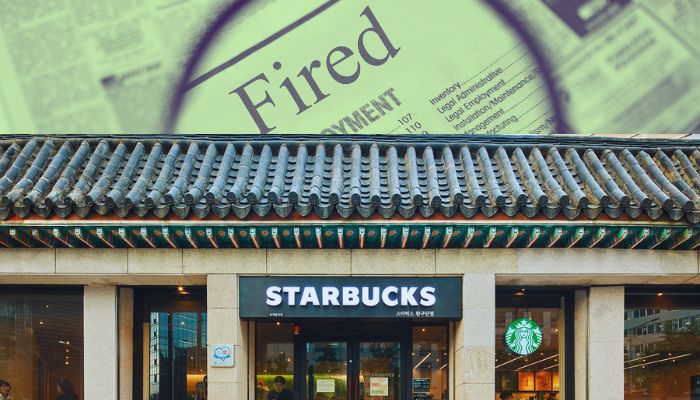
South Korea – Starbucks Korea CEO Sohn Jeong-hyun has been dismissed following backlash over a promotional campaign that drew criticism for allegedly referencing painful moments in South Korea’s democratisation history.
According to Korea JoongAng Daily, Shinsegae Group Chairman Chung Yong-jin ordered Sohn’s dismissal on Monday following mounting public backlash over the campaign, which coincided with the anniversary of the May 18 Gwangju Democratic Uprising.
The group also removed the executive who planned and supervised the promotion together with Sohn, while disciplinary action is expected to be taken against employees involved in the campaign.
“Chairman Chung ordered a strict and thorough internal investigation immediately after being briefed on the matter,” a Shinsegae Group source said, as quoted by the media source. “He believed the issue was extremely serious and took the extraordinary step of dismissing the chief executive.”
Campaign draws criticism over historical references
The controversy stemmed from a Starbucks Korea tumbler promotion launched on Friday that used marketing phrases including “Tank Day” and “Tak! on the Desk.” The campaign promoted items from the company’s Tank tumbler collection, such as the Colourful Tank Tumbler Set and Tank Duo Set.
Although the promotion was originally intended to continue until May 26, the company pulled it shortly after criticism spread across social media and online communities.
Critics online argued that the timing and wording of the campaign were insensitive, particularly because May 18 marks the anniversary of the 1980 Gwangju Democratic Uprising. The uprising began when citizens protested against martial law imposed by military leader Chun Doo Hwan after a coup. The subsequent military crackdown, which killed and injured protesters, is regarded as a defining chapter in South Korea’s democratic history.
According to Korea JoongAng Daily, the phrase “Tak! on the Desk” also became a point of criticism due to its association with the 1987 death of student activist Park Jong-cheol, who died after being tortured during police interrogation. At the time, authorities infamously claimed his death occurred after an officer hit a desk with a “tak” sound — a statement that later became symbolic of state violence during the era.
In response to the backlash, Starbucks Korea removed the campaign materials and issued a public apology through its website and mobile application.
“We recognised that content related to the May 18 Gwangju Democratisation Movement—which holds grave historical significance—was used highly inappropriately in the promotional copy for our online tumbler sales event. We immediately suspended the event upon realising this,” the company said in a statement.
Shinsegae chairman apologises as controversy escalates
As criticism intensified, Shinsegae Group Chairman Chung also released a public apology on May 18.
According to The Korea Times, Chung said he had “deeply wounded the spirits of those who sacrificed for the May 18 Democratic Uprising, their bereaved families and the people of Korea”, adding that he bows his head in apology on behalf of the group.
He further described the campaign as “an inappropriate marketing campaign that should never have happened and cannot be tolerated”, calling it “an inexcusable mistake that trivialised the pain and sacrifice of those who dedicated themselves to the nation’s democracy.”
The issue also drew a response from South Korean President Lee Jae-myung, who criticised the campaign in a post on X.
역사적인 광주 5.18 민주화운동 기념일에 광주희생자들과 광주시민들의 피어린 투쟁을 모독하는 '5.18 탱크데이' 이벤트라니..
— 이재명 (@Jaemyung_Lee) May 18, 2026
그 날 억울하게 죽어간 생명이 대체 몇이고 그로 인한 정의와 역사의 훼손이 얼마나 엄혹한데 무슨 억하심정으로 이런 짓을 저질렀을까요?
대한민국 공동체와 기본적…
“On this historic Gwangju May 18 Democratisation Movement Memorial Day, calling an event ‘5.18 Tank Day’ that mocks the blood-soaked struggle of the Gwangju victims and citizens…I am outraged by this inhumane, bottom-feeding behaviour from these low-class merchants who deny the Republic of Korea’s community basic human rights and democratic values,” he wrote.
“They must be held accountable with the corresponding moral, administrative, legal, and political responsibility,” he added.
(All statements quoted in this article were either sourced from local media reports or translated with the assistance of translation tools, including Google Gemini.)