

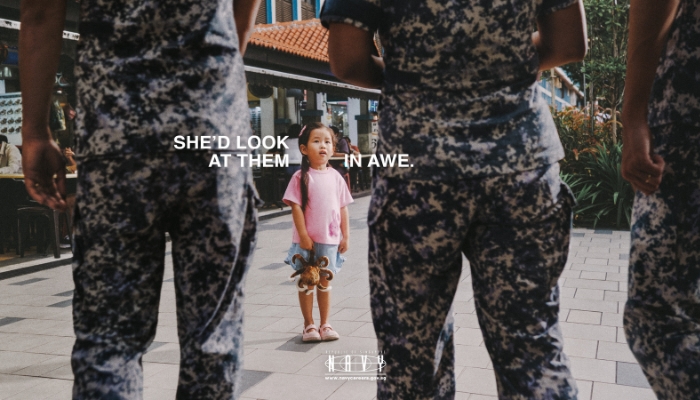
Singapore – The Republic of Singapore Navy is attempting to rewrite how young women see military careers—not through toughness or discipline, but through memory.
In a new recruitment campaign developed with McCann Singapore, the Navy is targeting the self-limiting beliefs that have long kept women from considering careers in defence, particularly in Singapore’s tightly structured and academically driven society.
Called ‘There Was a Time (When Nothing Was Too Crazy for Her)’, the campaign arrives as armed forces across Asia-Pacific face mounting competition for younger recruits, especially women, in labour markets increasingly shaped by tech, finance, and creator-economy aspirations.
The work draws from research commissioned by the Navy, which found that 82% of young women dismiss a Navy career because they believe it does not align with their passions, while 58% see the role as physically too demanding.
Rather than countering those assumptions with statistics or recruitment promises, the campaign leans into nostalgia. Through out-of-home placements, social content, and direct mailers, it depicts young girls in moments of uninhibited play—taking charge, making noise, and acting without hesitation.
The visual treatment resembles faded family photographs, deliberately evoking a version of childhood before social expectations began shaping ideas of what women should or should not pursue.
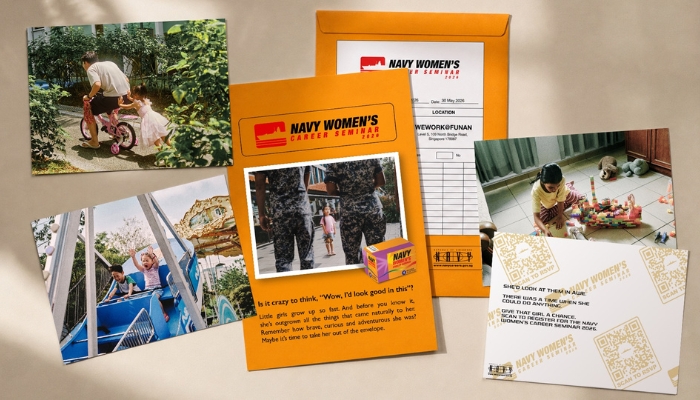
Singapore’s defence recruitment advertising has historically leaned heavily on patriotism, resilience, and elite performance. This campaign takes a notably softer route, reflecting how recruitment marketing across the region is evolving to compete not only for attention, but for identity alignment.
“We believe that the most effective recruitment work does not just showcase what’s on offer, but shifts how people see themselves in relation to it,” said Daniel Kee, Chief Creative Officer at McCann Singapore.
“Guided by McCann’s ‘Truth Well Told’ philosophy, this idea is powerful because it is rooted in a simple truth—that there is a version of every woman that existed before society placed limits on her ambitions,” Kee said.
“We wanted to reframe not only how women perceived the Navy, but the beliefs they hold about themselves,” he added. Kee said the campaign intentionally avoided a heavily informational tone.
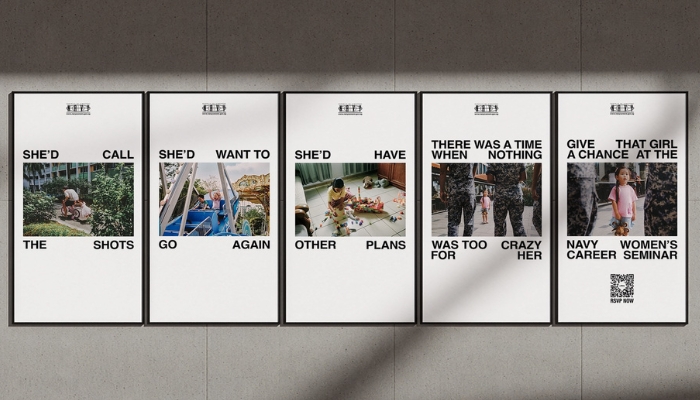
“To do that, the work had to feel personal, rather than fact-driven. By grounding the campaign in the visual language of childhood memories—grainy, intimate, like old photographs from a family album—we wanted to meet women in a place that existed before any of those limits were learned, and encourage them to remember who they already are,” Kee further explained.
He also noted that the campaign idea was developed by an all-female creative team, which explained the reason why it feels “less like an advertisement and more like recognition.”
The campaign forms the latest chapter of the Navy’s long-running It’s Not Crazy, It’s the Navy recruitment platform, which McCann Singapore has worked on for the past six years.
This time, however, the focus is less on changing perceptions of the institution itself and more on confronting the internal narratives potential recruits may carry long before they ever consider enlistment.
The campaign is targeting female students across junior colleges, ITEs, polytechnics, and universities in Singapore.