
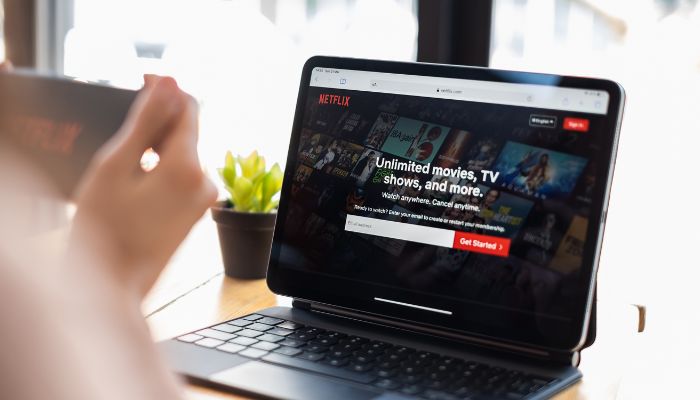
Indonesia – Indonesia’s Film Censorship Institute (Lembaga Sensor Film or LSF) has announced that the government is preparing new regulations to filter film content on over-the-top (OTT) video streaming platforms such as Netflix, YouTube, Viu, and others.
According to a report by Indonesian national news agency Antara, LSF Chairman Naswardi said the regulation is being initiated under the Ministry of Culture as part of the upcoming Cultural Omnibus Law, which integrates the Film Law, the Cultural Advancement Law, and the Cultural Heritage Law into a more structured and comprehensive framework.
First announced in 2024 by Minister of Culture Fadli Zon, the Cultural Omnibus Law is intended to streamline regulations supporting education, art, and cultural preservation.
Naswardi explained the rationale for regulating OTT platforms, highlighting the lack of a proper filtration system compared to traditional media.
“Currently, OTT has no mechanism for curating and filtering film content, and downstream oversight is also lacking. So, there’s no balance between filtering in cinemas, TV, and OTT. OTT has been relaxed, but cinemas and TV are being tightened,” Naswardi told ANTARA on Tuesday (September 16).
He added that the move reflects public demand. A 2024 LSF survey indicated that viewers want OTT content filtered to ensure it reaches the appropriate audience.
“So, there has been public input, particularly through research conducted by the LSF. The public, through surveys, wants OTT video-on-demand platforms to be curated or filtered, and one of the suggestions is through censorship,” he said.
Currently, Law Number 33 of 2009 requires films shown in cinemas and on television to undergo censorship but does not explicitly cover OTT streaming services. This regulatory gap means content on streaming platforms is not consistently classified or filtered according to public expectations.
The push for OTT regulation comes as platforms like Netflix, YouTube, Disney+, Viu, WeTV, and Vidio continue to expand rapidly in Indonesia.
Similar efforts are also underway in the Philippines, where the Senate recently approved a bill expanding the mandate of the Movie and Television Review and Classification Board (MTRCB) to include streaming platforms. The bill empowers the MTRCB to regulate digital content to address issues such as obscenity, immorality, and excessive violence.