
Singapore – The Competition and Consumer Commission of Singapore (CCS) has found that retailers Courts and PRISM+ used online design features that misled consumers, prompting enforcement action and corrective measures from both companies.
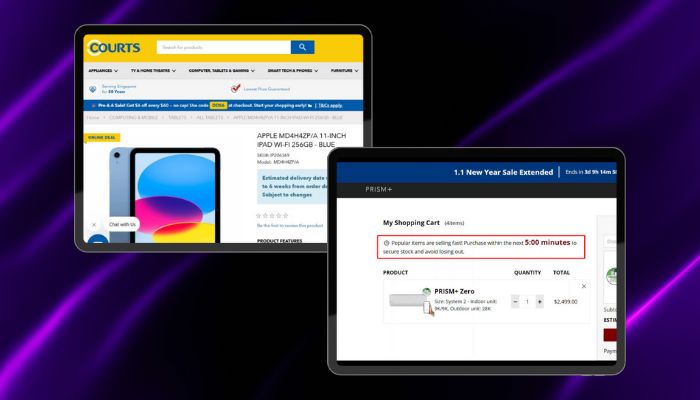
According to CCS, Courts automatically added unsolicited products to customers’ shopping carts during selected promotional periods. The practice came to light following a consumer complaint, which led to an investigation revealing that items such as an Acer vacuum cleaner were placed into a shopper’s cart after they selected an Apple iPad.
CCS noted that this exposed consumers to the risk of paying for items they had not chosen if they failed to notice and remove them before checkout.
Despite customer feedback dating back to 2024, CCS said Courts only amended its process after regulatory intervention in June 2025. The retailer has since undertaken to stop the practice immediately, make changes to its website and issue refunds to affected consumers.
In a separate probe, CCS identified several design features on PRISM+’s website that created false urgency around purchases. These included countdown timers that were not connected to inventory levels and automatically reset, stock indicators suggesting limited availability despite ample inventory, and claims of industry-wide shortages that the company could not substantiate. CCS also found examples of discounts marketed as “up to 67% off” even though such discount levels were not actually achievable for the products listed.
PRISM+ has since rectified the issues and committed to avoiding unfair trade practices.
CCS reiterated that businesses must not charge for unsolicited products or make misleading claims that pressure consumers into purchases. It also highlighted the need for accurate disclosures around stock levels, pricing and add-ons, and advised businesses to ensure countdown timers and similar prompts reflect genuine conditions.
Consumers were encouraged to check online shopping carts for unexpected items, verify payment details and remain cautious of urgency-driven prompts. CCS provides resources on identifying misleading online design features, commonly known as dark patterns, on its website.
“These two interventions form part of a series of recent enforcement actions taken by CCS against businesses that employ dark patterns to mislead and pressure consumers into unintended purchases,” said CCS Chief Executive Alvin Koh. “CCS remains committed to ensuring fair, transparent and honest business practices in the digital space, enabling genuine competition amongst suppliers while empowering consumers to make informed decisions.”
Members of the public can report suspected unfair trade practices to CASE via phone or its online portal.