


Manila, Philippines — The Philippines continues to see strong digital adoption as it heads into 2026, with the majority of its population now online and active on social media.
Data from multiple sources, including Kepios and GSMA Intelligence, show that as of late 2025, the country had 137 million cellular connections, surpassing the total population of 117 million. While some individuals maintain multiple connections for personal and work use, 89% of these connections are broadband-capable, supporting 3G, 4G, and 5G services.
Internet usage also remains high, with 98 million users, or 83.8% of the population, online. The number of internet users also grew by 789,000 compared to the previous year, while 19 million Filipinos remained offline. Moreover, internet speeds have also improved notably: median mobile download speed reached 59.6 Mbps, up 77 percent year-on-year, while fixed broadband speeds averaged 105.2 Mbps, an 11.4 percent increase.
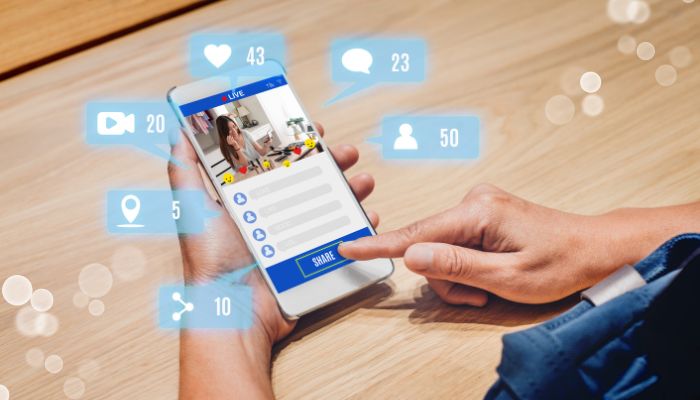
Additionally, social media continues to be a central part of digital life in the Philippines, with Facebook and Messenger remaining dominant, with 95.8 million and 65.8 million users, respectively.
TikTok also reached 64 million users aged 18 and above, while YouTube ad reach accounted for 59.6 million users, or about 51 percent of the population. Platforms like Instagram and LinkedIn also recorded notable growth, with 26.9 million and 22 million users, respectively.
On the other hand, smaller platforms show mixed trends with Snapchat’s ad reach declining to 3.39 million users, and X (formerly Twitter) reported a drop to 7.98 million users. Reddit, on one hand, saw a sharp increase, reaching 15.1 million users, though these figures reflect advertising reach rather than total active accounts.
Additionally, the demographic profile of digital users shows that social media usage is slightly female-skewed, with 52.3% of social media identities identified as female. The median age of the population remains 26.1 years, with almost half of the population under 26, reflecting a youthful user base that continues to drive online engagement.
Overall, the Philippines’ digital landscape indicates robust mobile adoption, high internet penetration, and growing social media activity, underscoring its importance as a key market for online platforms, advertisers, and e-commerce services.










![[Brand Refresh] Panhead x Weave](https://marketech-apac.com/wp-content/uploads/2026/07/Brand-Refresh-Panhead-x-Weave.webp)