
Over the past decade, mega-sale events such as Singles’ Day and Black Friday have become synonymous with record-breaking online traffic, flash promotions and mass consumer excitement. Initially, these dates stood out as rare occasions for deep discounts and limited-time offers. However, the e-commerce landscape has shifted. Today, platforms run recurring monthly campaigns (1/1, 2/2, 3/3 etc.), effectively creating a perpetual promotional calendar.
Against this backdrop, marketers and retailers alike have begun to ask: has the hype surrounding these mega-sales dissipated? Are consumers now desensitised to what once felt like exceptional shopping moments? And as promotions become more frequent and inventory cycles tighten, a new operational question has emerged in parallel – how can brands scale stock and fulfilment capacity quickly?
Delving into the Consumer Psyche and its Logistical Implications
Consumer behaviour suggests a more nuanced reality. While shoppers are increasingly selective, value-oriented, and skeptical about “too good to be true” deals, they still respond to the temporal urgency and social momentum that mega-sale events create. Consumers may scroll past everyday promos, but marquee events like 11/11 or Black Friday still drive outsized traffic, social buzz and conversion surges – underscoring their continued relevance in the e-commerce calendar.
For businesses, this creates a paradox: even if the average consumer may feel numbed by constant discounts, the aggregated attention during mega sales is too significant to ignore. Sellers cannot afford to sit out; they serve as a catalyst for visibility and volume, giving brands (especially SMEs) opportunities to reach wider audiences and clear inventory efficiently.
The numbers are testament to this. In Shopee’s 11/11 sale last year, more than 100,000 items were sold within the first 11 minutes in Singapore, with visits across Southeast Asia and Taiwan up six times from an average day in the first two hours. Over 136 million vouchers were claimed, and orders placed on Shopee Live were 20 times higher than on a normal day.
Reconciling these two dynamics – apparent consumer apathy versus operational urgency – requires precision in inventory planning, timing, and promotional design, underscoring why mega sales remain a pivotal strategic moment despite the perception of discount fatigue.
The Next Frontier: Flexible Storage as a Growth Lever
Behind every record-breaking campaign sits months of planning and preparation: securing inventory, staging fulfilment capacity, and managing logistics with tighter margins. This is where the next wave of marketing and e-commerce innovation will unfold – not just in the digital front-end of advertising, but in the physical backbone of operations: storage, fulfilment, and logistics.
The telling sales figures are not marginal bumps; they are seismic shifts in volume that compress weeks of transactions into hours. For sellers, particularly smaller businesses, it can make or break the quarter. Yet this intensity comes with a structural challenge. To participate effectively, businesses must hold significantly more stock than usual, pack and dispatch it quickly, and do so without undermining their already thin margins. To thrive in an era of perpetual campaigns, sellers need storage that can flex as fast as demand changes.
Traditional warehousing solutions (with long leases and high fixed costs) are ill-suited to this rhythm. They lock businesses into capacity they may not need outside peak periods and limit their ability to experiment with new markets or categories.
This is where flexible storage models are starting to fill a gap. By allowing shorter-term contracts such as one month, modular units and value-added services under one roof, such facilities give e-commerce sellers and SMEs a way to scale up inventory and fulfilment operations ahead of mega sales without carrying heavy overheads. Beyond peak seasons, the same flexibility allows them to repurpose the space – to store new product lines, expand their catalogue, or explore new fulfilment strategies. In the next phase of e-commerce growth, storage will not just be a back-end necessity, but a strategic enabler for marketing agility.
Underpinning the Promotional Economy
From our vantage point working with hundreds of SMEs and online retailers, the weeks leading up to 11/11, Black Friday and year-end festivities consistently show spikes in demand for storage space and fulfilment support. On average, Work+Store sees a minimum spike of 15% (and up to 65%) across its e-commerce business storage users ahead of this period.
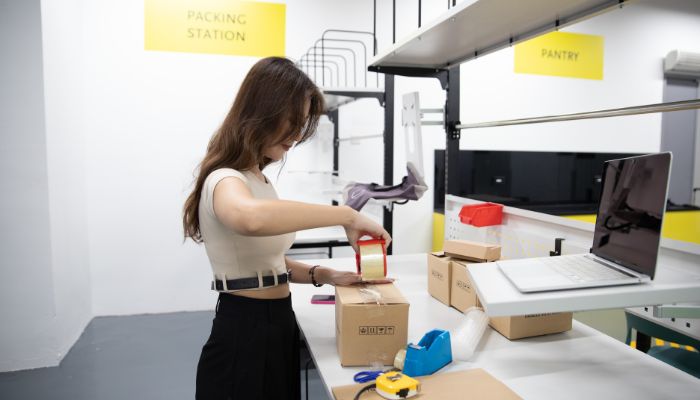
Sellers are not only preparing more inventory; they are also staging stock closer to customers to cut delivery times, or using on-site packing stations and last-mile services to cope with surges. For foreign businesses newly setting up a Singapore entity, these flexible spaces also provide a cost-effective way to establish an operational footprint without committing to a full warehouse or long-term lease in a highly competitive and logistics-driven market.
The benefits cascade down the chain. By reducing fixed costs, SMEs can invest more in promotions and customer acquisition during peak sales, passing some of the savings on to shoppers. They can also respond faster to unpredictable demand spikes, which will only grow more frequent as e-commerce becomes more global and real-time.
Flexible storage thus quietly underpins the “always on” promotional economy by giving sellers the agility to act like much larger operations, but without their cost base.
Looking Ahead: From Marketing Hype to Operational Readiness
Mega sales are not only marketing events; they are operational marathons. If the first wave of e-commerce innovation was about platforms and payments, the next will centre on logistical flexibility, faster fulfilment, and infrastructure that lets SMEs compete at scale.
For brands and SMEs, these events remain high-stakes moments requiring months of planning and, increasingly, flexible infrastructure to execute. The smartest players will go beyond ad spend, and cast their focus on systems that support it.
As marketers rethink their promotional strategies in an environment of constant campaigns, it is worth paying equal attention to the quiet but transformative role that storage and fulfilment solutions play. Because in the next era of e-commerce, competitive advantage does not come from mere deeper discounts, but from how seamlessly brands can move, store, and deliver.

This thought leadership is written by Danny Wong, CEO at Work+Store