

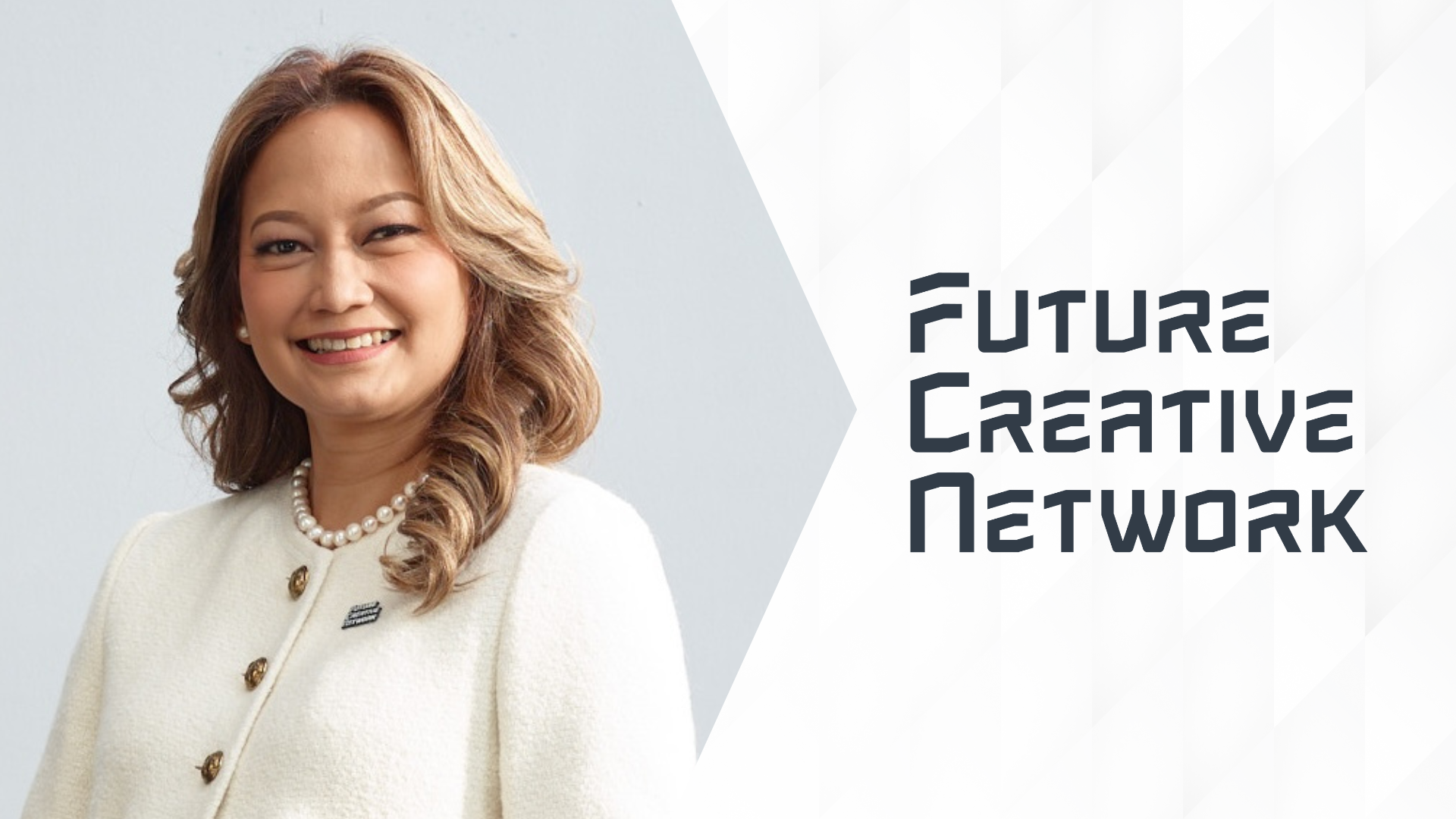
In the dynamic world of creative networks, balancing innovation with operational excellence is both an art and a science. Few leaders understand this better than Anne Mutia Ridwan, chief operating officer of Future Creative Network (FCN), who has been instrumental in shaping how the group harmonises creativity, technology, and structure across its vast ecosystem.
In our latest Agency Leadership Decoded feature, MARKETECH APAC speaks with Anne about her role in helping FCN turn its bold vision—to transform businesses, brands, and consumer experiences through technology and creativity—into an operational reality, one project and one habit at a time.
Turning vision into operational culture
Leading a network of over 40 creative, digital, and tech companies with more than 1,200 talents, Anne’s mission has been to turn FCN’s bold vision—to transform businesses, brands, and consumer experiences through creativity and technology—into an everyday operational reality.
“At FCN, our vision to transform businesses, brands, and consumer experiences through creativity and technology sounds like a big statement, and I think it is. But it’s what we work hard to live up to,” Anne said.
Recognising that creative teams often thrive more in the world of ideas than in systems, Anne and her team began their transformation journey by introducing technology in small, accessible ways.
“We started small,” she explained. “We introduced technology through everyday operations, from project management tools to HRIS and now to financial systems that make collaboration and visibility easier for everyone. Once people adopt this as their everyday habit, embedding other tech systems would be easier.”
Beyond internal processes, Anne shared that FCN also encourages cross-team collaboration through pilot projects that pair creative and tech talents.
“With our tech companies like Genexyz, Pixie Lab, and Antikode in the network, we’ve pushed for real collaborations,” she said. “It’s not just internally but also with clients. We believe getting clients on board and showing them how technology can bring the WOW effect to their brand experiences—and that we can help them with that—is super important.”
For Anne, the process is gradual but deeply cultural. “It’s still a work with impressive progress, and we are pleased with it. Transformation isn’t a switch you flip; it’s a culture you build. One habit, one project, one shared success at a time.”
Where creativity meets structure
Anne’s philosophy as COO is clear: creativity needs both freedom and form.
“I believe that creativity needs space to breathe, but it also needs structure to stand,” she said. “I don’t see process as the opposite of creativity; I see it as its organiser – organising the insanity mix of creativity, collaboration and business.”
For Anne, balance is everything. At FCN, she and her team focus on building “just enough” structure to create clarity, movement, and accountability—without letting it slip into bureaucracy.
“Our creative teams work with freedom within a framework: clear goals, transparent timelines, and supportive systems that let ideas grow without chaos – or minimum chaos, at the least,” she added.
She credits much of FCN’s operational strength to its leadership culture. “Many of our subsidiaries are led by founders themselves—people who understand that the success of a creative business doesn’t rely on output alone, but also on the strength of its process and operations,” she explained.
Over time, this mindset evolved into a defining aspect of FCN’s culture. “We’ve built a culture that sees operational discipline not as control, but as CARE—care for the work, for the business, and for each other. It’s what allows us to run a creative company that is not shy about accountability, because accountability, at its best, fuels trust and long-term partnerships.”
Collaboration by design
With over 40 companies under its network, collaboration sits at the core of FCN’s identity.
“The holding management of FCN are old timers in the industry. We’ve experienced that going solo might get you somewhere, but it won’t get you scale, nor the greatness,” Anne shared. “So, here, we intentionally make collaboration our backbone.”
Collaboration is not just encouraged—it’s institutionalised. “We believe so strongly in its importance that we have it as one of the FCN Seven Habits, the habits that should be built as a culture that we uphold,” she said.
Anne emphasises that with a network as large and diverse as FCN, synergy doesn’t simply happen. “It has to be intentionally designed,” she noted.
In the early days, this required deliberate effort to break down silos and nurture trust across teams.
“We had to actively connect different disciplines, encourage leaders to open up their teams, and prove that cross-agency work could create greater value,” Anne said. “But today, that collaboration happens naturally. There’s no more ego, just a shared ambition to deliver the best work and to grow together.”
She added that the approach benefits clients as much as it does teams. “Clients could interface working with us with a team that comes from different agencies, giving their expertise to ensure the objective is met. This has become a regular practice, and our clients love it! The key is to make it seamless for clients. It could be a little messy internally, but we always aim to learn and make it better in the next one. That’s the mindset.”
For Anne, the outcome speaks for itself. “I am just grateful that now our leaders also believe that in this business, the magic really happens when we build together, not apart.”
Keeping technology human-led
As FCN advances in its digital transformation, Anne remains intentional about ensuring that creativity stays deeply human at its core.
“Balancing technology and creativity is always a work in progress, and I think it’s important to acknowledge it,” she said. “The goal of technology is not to replace intuition but to strengthen it.”
Her approach to integration is rooted in practicality and empathy. Rather than imposing new tools from the top down, Anne focuses on embedding technology naturally into everyday workflows.
“We are also in the midst of a project to leverage technology in consumer research with our research partner,” she explained. “The aim is to expedite respondents, accessibility and accuracy of the data; especially as the largest local network, we want to champion hyperlocal insights.”
Anne believes that real innovation happens when creative and technical minds intersect. “We’ve seen amazing things happen when teams start to connect the dots—when a creative director works with a data strategist or a developer joins an ideation session,” she said. “But the balance is still evolving, and that’s okay. Transformation doesn’t happen overnight; it happens project by project, mindset by mindset.”
Preparing for the future of creative networks
Looking ahead, Anne envisions a fundamental shift in how creative networks will operate. Rather than being defined by hierarchy, she believes the next decade will be characterised by fluidity — built more around ecosystems than structures.
“AI, automation, and data will handle what’s repetitive, giving humans more space to do what machines can’t: imagine, empathise, and inspire,” she said.
FCN, she shared, is already positioning itself for that future. “We’ve been building creative infrastructures supported by technology, investing in AI-driven insights, and exploring tools that can make us faster and smarter,” she said. “But more importantly, we believe that before technology comes people.”
This belief drives FCN’s investment in talent development. “Empowering our talent has always been at the core of our transformation,” Anne explained. “We created our own learning framework and modules, built our own LMS, and made learning part of our performance system. It is mandatory, measurable, and meaningful.”
Her conviction is simple but powerful: “Technology will keep evolving, but it’s people who make it matter. The next tech will always come, but without great operators—curious, competent, and courageous ones—it’s just potential waiting to be wasted.”
Leading with purpose and legacy
Reflecting on her journey as COO, Anne views her role as one of empowerment.
“If I could define my legacy, I don’t think it would just be about building a culture where creativity and business support each other. That’s expected of any leader,” she said. “For me, it’s about empowering the founders and leaders across our network to truly own their strength.”
Her mission, she shared, has always been about nurturing leaders who “combine powerful creativity with soul.”
“People who can lead with empathy, redefine what’s possible and make bold moves for growth while staying grounded,” she continued.
Ultimately, Anne hopes her legacy lives through the people she’s helped shape. “What I hope to leave behind is not just stronger businesses, but stronger people: founders who see themselves as heroes of their own stories, capable of shaping the next chapter of Indonesia’s creative economy. If they continue to lead with courage, integrity, and imagination, then that’s the real legacy.”





![[Report] Gemini SEA Users](https://marketech-apac.com/wp-content/uploads/2026/07/Report-Gemini-SEA-Users.webp)