
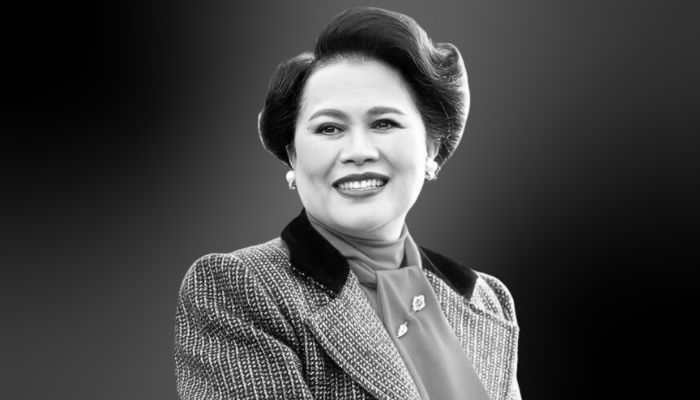
On October 24 this year, Thailand’s Royal Household Bureau had announced the death of Queen Mother Sirikit at the age of 93. As the husband of the late King Bhumibol Adulyadej–the country’s longest reigning monarch–the Queen Mother had also become a nationwide symbol for her charitable work and maternal virtue.
Following her death, the Royal Household Bureau had announced a year-long mourning period, which not only encouraged people to wear mourning attire for the first 15-30 days since the Queen Mother’s passing but also advised various industries to exercise discretion when holding public-facing activities, especially those that are related to entertainment.
As Thailand enters this mourning period for a year, the country’s adland is also responding swiftly to focus its marketing campaigns that reflect the Queen Mother’s virtues while also being in a state of mourning.
Immediate decorum and risk mitigation
For Thisirak Pitayagulsarn, CEO of HEPMIL Thailand, the immediate focus on the first 15-30 days is toning down on celebrations to fully reflect the first wave of the mourning period.
“Agencies enforce a strict suspension or toning down of all celebratory, loud, or entertaining content, shifting client visuals to a subdued, monochromatic palette (black, white, grey) across all media to align with the national mood and official advisories,” she said.
Similarly, Patt Nitikarn, managing director at We Are Social Thailand, also paused celebratory-related campaigns, and have established a ‘Cultural Sensitivity Taskforce’ to vet all content for appropriateness. Moreover, they have also adopted a sombre tone & Visuals using monochrome palettes and black ribbons on logos.
“[We have] transformed content from ‘Selling’ to ‘Serving’ for an initial 30 days, replacing commercial messaging with condolences, tributes to The Queen Mother’s legacy, or respectful silence,” he added.
He also noted that they have overhauled media planning with partners to adapt to royal tribute programming, pausing clashing placements.
Meanwhile, Nitikarn Ladasathean, media relations director at Vero, stated that with these immediate strategies, the goal is not only to manage risk but to navigate this sensitive time with respect and grace for the Thai society.
“During the first 30 days, we are prioritising content that supports, informs, and uplifts the public, while deferring celebratory, provocative, and festive campaigns. Where appropriate, we are also recommending alternative timelines and formats to align with national guidance and public sentiment,” she said.
All of these sentiments reflect the recent guidelines from the Digital Advertising Association of Thailand (DAAT), which states as follows:
- Adjust the format of all types of entertainment activities to suit the mourning atmosphere. Content and format should be considered carefully to be appropriate and show high honour, expressing respect and gratitude for the Queen Mother’s graciousness, instead of cancelling everything.
- Marketing activities, marketing communications, and advertisements can continue, but the tone should be softened and respectful. For example, reduce elements of fun, upbeat music, or celebratory images for a period of 15 days. (This guideline applies to all media types: Offline, Online, Out of Home Media.)
- Adjust the tone or suspend the broadcasting/publication of advertisements at the discretion of media operators and brands, by considering the appropriateness according to the context of the situation.
Carefully assessment of public sentiment, cultural sensitivity
In the days after the initial wave of the mourning period, Vero’s Nitikarn said that agencies should carefully assess public sentiment and cultural sensitivity before moving forward with any communications.
“While it’s normal to have an initial desire to be seen as part of the mourning, this must come from a place of sincerity rather than symbolism. It is important to consider the nature of each client and the relevance of their messaging. Genuine respect is reflected not in how often a brand speaks, but in knowing when it’s appropriate to pause, listen, and adapt,” she explained.
She also noted that they understand that sensitive times like this can be challenging or confusing for brands, as the line between appropriate presence and perceived insensitivity can be thin. With that in mind, clear communication with clients is crucial so they understand community expectations and reputational risk.
“It is therefore essential for agencies to equip client-facing teams, especially account leads, media relations and influencer specialists, strategic planners, and event/activation managers, with clear internal guidelines and updated talking points/references to ensure consistent, sensitive communication across all client touchpoints. Moments like this call for brands and agencies to make thoughtful decisions that protect their relationship with the community while also maintaining brand integrity,” she added.
Meanwhile, HEPMIL Thailand’s Thisirak stated that the long-term strategy during the mourning period should be focused on sustained respect and brand repurposing.
“Agencies advise maintaining a measured, soft tone, channeling marketing budgets toward Corporate Social Responsibility (CSR) that genuinely reflects the late Queen Mother’s legacy, and gradually facilitating the return to commerce with great sensitivity to protect the brand’s long-term reputation,” she stated.
This is similarly echoed by We Are Social’s Patt, who noted that while brands can slowly re-introduce functional, subdued, and grayscale/muted messaging; they should also shift focus to purpose-driven marketing, CSR, or initiatives honoring the legacy (e.g., supporting Thai crafts).
“Sincerity is non-negotiable: Brands must avoid appearing opportunistic or ‘tone-deaf.’ Do not post for visibility. Any message must be genuine,” he stated.
Over at DAAT’s regulations, these guidelines have been released as well:
- Carefully consider Live content. Avoid live performances that are entertaining, such as singing, dancing, or playing music. For product sales Live streams, reduce the liveliness or activities that appear inappropriate during the mourning period.
- Review all advertisements (Ads). It is recommended to check running ad campaigns or pre-scheduled posts, especially content, images, sounds, or words that may be inappropriate for the situation.
- After the 15-day period, operators and brands can return to normal marketing activities, while still considering appropriateness during the 15-to-30-day period following the announcement.
“At the same time, agencies should act as strategic consultants to their clients—providing guidance, reassurance, and well-considered alternatives to ensure that, although adjustments may be necessary, each campaign continues to be managed smoothly and responsibly,” Vero’s Nitikarn concluded.
***
These insights show how deeply social and cultural imperatives intersect with marketing practice in Thailand, where the public mood and respect for the monarchy shape not only signage and sound-bites, but also the very pacing of business operations. As the industry navigates a subdued climate, the challenge will be to honour collective grief while preparing for the eventual return to the more familiar rhythms of brand communications.