
For brands trying to win the modern household, there’s one audience you can’t afford to misunderstand: moms. And today, moms live—research, decide, compare, advocate—on digital platforms. A dedicated digital space for mothers isn’t just a community play; it’s a strategic marketing imperative.
Moms are not passive consumers. They are chief purchasing officers of their homes, trusted advisors within their social circles, and powerful amplifiers of brand sentiment. From groceries and healthcare to fintech and travel, their influence stretches across categories.
A well-built digital platform, much like Supermom, designed specifically for them, becomes more than a content hub—it becomes a data-rich ecosystem where insights, conversations, and commerce intersect.
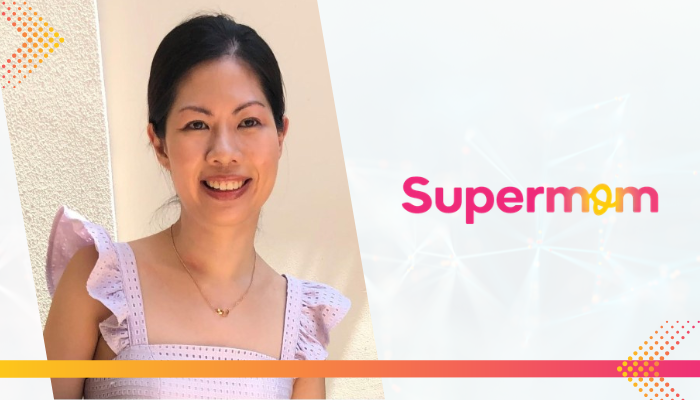
In light of this status quo, MARKETECH APAC spoke with Kai Xin Lee on her insights upon taking the role of chief experience & marketing officer at Supermom Business, and what’s next for the platform in providing a platform for mothers across Southeast Asia.
Defining the intersection of experience and marketing
Reflecting on her first months with Supermom Business, Kai Xin notes that the platform believes in the perspective of experience being marketing as well. In the case of mothers who use their platform, trust is built through every interaction alone, and is earned through every interaction, from how we listen, respond, and show up consistently across touchpoints.
“This alignment is especially critical as Supermom evolves into a trusted, intelligent village for modern motherhood. As personalisation & tailored experiences are becoming a standard in the industry, we recognise that no two mothers are the same, and they cannot be grouped into a single, broad segment,” she explained.
For Kai, this belief underpins the brand’s community engagement approach and drives their continuous effort to identify nuanced mom segments; to engage the unique needs of each mother we serve with relevance.
“As we continue to expand and refine experiences that respond to the evolving needs of mothers across every life stage in our regions, our commitment remains clear: to deliver meaningful, lasting value to every mother within the Supermom community across Southeast Asia,” she added.
Improving brand experiences with community in mind
Looking at the status quo of consumer behaviour amongst mothers in SEA, Kai Xin states that parents in the region simply don’t have time to go looking for brands.
For them, brands need to show up where they are, when it matters most. Moreover, they want relevance, ease, and trusted support–and that the feeling of over-commercialisation happens when there is too much noise that adds little to no value for its users.
“We know mothers trust other mothers. That is why Supermom’s AI and data infrastructure transforms real community conversations into trusted, community-filtered insights,” she says.
She also added, “Combined with precise segmentation, this intelligence sharpens our partners’ strategies and ensures their offerings reach the right moms with greater relevance. At the same time, these insights are fed back into our ecosystem — giving every mother access to peer perspectives and clearer guidance for better decision-making.”
Citing their Supermom Brand Awards as an example, this annual award leverages the participation of over 5,000 mothers in their base to spotlight the brands that have gained their genuine trust and preference.
Aside from commercial recognition, the award results are also shared transparently with their community, giving mothers visibility into how fellow parents evaluate products and services.
In addition to annual campaigns such as the Supermom Brand Awards, Kai also explains that the brand consistently curates deals, samples and trial opportunities into the community so that mothers can experience relevant products firsthand and elevate products and services through community recommendations and review.
“When mothers receive experiences that feel relevant and genuinely helpful, brands grow alongside that trust. By connecting the right brand to the right mom, at the right moment, with the right message, we safeguard a trust-led ecosystem that avoids over-commercialisation — while driving stronger engagement and deeper marketing impact for the partners who tap into our community,” she explained.
Indicating marketing success at Supermom
For Kai, trust compounds through the positive impact they create across the parenting ecosystem: supporting mothers meaningfully while enabling brands to grow with purpose. She also believes this carries far greater value than any traditional metrics alone.
“Instead of chasing campaign spikes, we measure repeat engagement across life stages and the quality of interactions within our ecosystem. Through Supermom’s data infrastructure, we decode the real pressures mothers face and translate them into meaningful action for both Supermom and our brand partners,” she said.
As an example, Supermom’s recent report revealed that escalating healthcare and education expenses are top concerns for Southeast Asian parents entering 2026.
“Organic community-driven insights like this shape how we build trust-led content for mothers, and guide brands toward sharper strategies, ultimately bringing positive change to the Southeast Asian parenting landscape,” she added.
Redefining internal process in new role
Kai, who previously worked with Meetsocial and Lyte before returning to Supermom in this role, said that her first focus has been on alignment and clarity.
“Supermom has strong teams and deep user insights from 10-million moms across Singapore, Malaysia and Indonesia. But as we scale, everyone needs to build from the same understanding of who we are serving and why,” she says.
In early February, the brand rolled out the Supermom 3.0 revamp across all user touchpoints, guided by a new brand manifesto that acknowledges the complexity of modern motherhood including the emotional shifts, the mental load, and the constant search for trusted support.
For Kai, this revamped approach serves as our guiding point both in growing & nurturing their community and tailoring the approach of brand partners tapping into their community.
“In short, this was not just a creative exercise. It functions as a decision filter internally, shaping how teams prioritise work, evaluate partnerships, and design experiences,” she says.
From an operational perspective, she added, “Operationally, I am tightening feedback loops between community, product, marketing, and data so that real conversations amongst mothers in our network translate faster into meaningful action. We are also shifting from output-led execution to experience-led planning — asking not just what we are launching, but who it is for, what tension it solves, and whether it genuinely helps mothers feel supported rather than overwhelmed.”
After all, Kai’s goal is simple: ensure that everything they have built is shaped by everyday realities, because motherhood isn’t tidy, and support shouldn’t be generic.
Building a ‘best in-class experience for mothers in SEA
When asked what “best-in-class experience” would mean for a platform supporting millions of mothers across Asia, Kai says that best-in-class experience is not about being the loudest voice in the room, nor about trying to be everything to everyone.
Moreover, when asked about how Supermom aims to set the aforementioned benchmark under her marketing leadership, she adds that it meant being consistently and reliably helpful in the moments that truly matter.
“Motherhood is complex, emotional, and deeply personal. A best-in-class platform must respect that reality. It requires us to design experiences that acknowledge the mental load, the shifting life stages, and the nuanced needs of modern mothers across Asia. This means building products and community touchpoints that feel intuitive, empathetic, and responsive, not overwhelming or transactional,” she said.
She concluded, “Under my leadership, I want Supermom to set the benchmark by combining scale with intimacy: using data and technology to be smarter, while never losing the empathy and trust that built this community in the first place. If mothers feel understood, supported, and confident because Supermom exists, then we know we’re doing our job right.”