

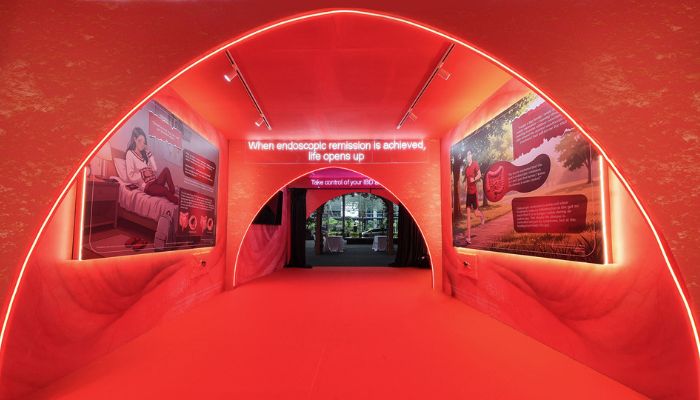
Singapore – Johnson & Johnson has launched the interactive “Gut Tunnel” experience in Singapore, alongside Asia Pacific education programmes, to encourage people living with inflammatory bowel disease (IBD) to pursue endoscopic remission—a key but under-recognised treatment goal—under its Dual Control campaign.
New data presented at Digestive Disease Week 2026 highlights why Johnson & Johnson is focusing its latest campaign on endoscopic remission in IBD. The findings show that patients who achieve endoscopic remission—defined as no visible disease activity during colonoscopy—experience significantly better outcomes, including lower risks of symptom worsening, reduced need for surgery, and less steroid use in both ulcerative colitis and Crohn’s disease.
Despite these benefits, more than 60% of people living with IBD are still unaware of endoscopic remission as a treatment goal, underscoring a major knowledge gap.
“Many people with IBD often do not fully understand what ‘remission’ truly means, due to limited knowledge and suboptimal shared decision-making. Practical tools such as patient conversation guides help patients navigate these discussions and take greater control of their condition to reclaim their lives,” said Lishan Peng, Deputy Secretary-General of the China Crohn’s and Colitis Foundation (CCCF).

Launched ahead of World IBD Day, the “Gut Tunnel” installation translates clinical information into an interactive experience, underscoring the message that symptom relief does not always indicate disease control. It is intended to prompt more active patient–doctor discussions on long-term treatment goals.
To support shared decision-making, Johnson & Johnson also developed an IBD Patient Conversation Guide in English, Simplified Chinese and Korean.
“Decades of innovation have advanced IBD care. Endoscopic remission is now the long-term treatment goal for IBD, and it indicates deeper healing and drives better patient outcomes,” said Sung-Ae Jung, MD, PhD, President of the Korean Association for the Study of Intestinal Diseases, Korea.
“Symptom improvement does not necessarily indicate that inflammation has resolved,” added Dr Shim Hang Hock, Consultant Gastroenterologist, Acorn Gastroenterology, Singapore. “The Gut Tunnel Experience helps make this invisible disease activity visible and understandable, helping patients recognise why deeper treatment goals like endoscopic remission matter.”
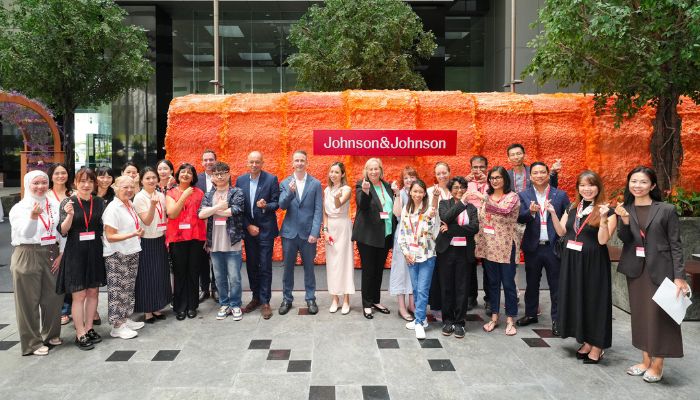
The company also convened an APAC IBD Patient Dialogue on 17 May in Singapore, bringing together 14 patient advocacy leaders from 11 organisations across the Asia Pacific and the United States to discuss unmet patient needs.
“We share a common goal to help people with IBD achieve more than symptom relief and advance toward deeper disease control,” said Earl Dancel, Vice President of Commercial Strategy, Asia Pacific Strategy Office, Johnson & Johnson Innovative Medicine Asia Pacific. “For more than 30 years, we have driven scientific innovation in IBD and remain committed to supporting shared decision-making to empower patients to speak up, align on treatment goals, and help people with IBD pursue what matters most in their lives.”

![[Creative Work] Ogilvy SG x CNB](https://marketech-apac.com/wp-content/uploads/2026/05/Creative-Work-Ogilvy-SG-x-CNB.jpg)