The post Empowered Women Awards 2026 opens entries to honour women shaping the future of marketing and technology appeared first on MARKETECH APAC.
]]>In recognition of these trailblazers, MARKETECH APAC and UpTech Media have officially opened entries for the Empowered Women Awards 2026, dedicated to celebrating women who are creating meaningful change and driving progress across the marketing and technology landscape.
Designed to spotlight inspiring leaders and changemakers, the awards honour women who are pushing boundaries in their careers while uplifting others around them. More than just recognition, the programme aims to amplify the voices, stories, and achievements of women who are helping shape a more inclusive and innovative future for the industry.
The Empowered Women Awards has grown into a key platform that highlights the growing influence of women across marketing, media, digital, and technology roles throughout the region. Through this initiative, MARKETECH APAC continues to champion gender diversity and recognise the impact of women who are leading with purpose, resilience, and vision.
The 2026 edition will feature 38 award categories, celebrating a wide spectrum of achievements—from outstanding leadership and transformative marketing initiatives to groundbreaking technology contributions. These categories aim to recognise women who are not only excelling in their respective roles but also creating lasting influence within their organisations and communities.
Entries for the awards will remain open until 22 May 2026, with the judging process scheduled to take place from 1 to 12 June 2026. Finalists will be announced on 23 June 2026, building anticipation toward the awards’ culminating celebration.
Winners will be revealed during the Empowered Women Awards 2026 gala dinner in August 2026, where industry leaders, innovators, and rising talents will gather to celebrate the achievements of women who are helping transform the marketing and technology ecosystem across Asia Pacific.
To ensure a fair and rigorous selection process, MARKETECH APAC is currently assembling an esteemed panel of judges composed of respected leaders from across the marketing and technology sectors.
Beyond the awards night itself, the programme serves as a platform that encourages organisations and individuals alike to champion empowerment, representation, and opportunity for women in the industry—reinforcing the belief that when women succeed, the entire ecosystem moves forward.
The growing influence of women in marketing and technology was strongly reflected during the Empowered Women Awards 2025, where outstanding leaders and organisations across Asia Pacific were recognised for championing innovation, inclusion, and purpose-driven leadership.
Held in Singapore, organisations including Mang Inasal Philippines, VNPAY, and Rewardz were recognised with the prestigious Company of the Year Grand Prix, celebrating their commitment to empowering women and driving innovation across marketing and technology.
Individual leaders were also recognised for their outstanding contributions. Among them were Rose “RJ” Rodillo, digital and PR director at Mang Inasal Philippines, who earned the Woman Marketing Leader of the Year Grand Prix, Nguyen Thi Thu Huong of VNPAY who was named Woman Tech Leader of the Year, Jaya Maru, CEO of Rewardz who won Female CEO of the Year, and Dr. Shakthi DC, CEO and founder of iWISERS Sdn Bhd, who took home the Woman Agency Leader of the Year Grand Prix.
Their achievements highlighted how women across Asia Pacific are leading transformative work across marketing, fintech, agency leadership, and digital innovation.
Women leaders and organisations across the region are encouraged to submit their entries and be part of a growing movement that celebrates courage, innovation, and empowered leadership in marketing and technology.
***
Industry professionals eager to join the judging panel may reach out to Gerard Gallo at [email protected].
For inquiries regarding submissions, please contact [email protected].
Don’t miss the chance to be part of this prestigious and celebrated awards series—click HERE to learn more about the Empowered Women Awards 2026.
The post Empowered Women Awards 2026 opens entries to honour women shaping the future of marketing and technology appeared first on MARKETECH APAC.
]]>The post Whisper crafts a campaign to break the stereotypes about periods being ‘impure’ appeared first on MARKETECH APAC.
]]>Conceptualised with advertising agency Leo Burnett, the fourth edition of the #KeepGirlsInSchool campaign showcases ‘The Missing Chapter’ film. This aims to teach the biology of periods and enlighten both mothers and daughters on menstrual hygiene and using sanitary pads during monthly cycles.
The campaign also comes after a study revealing that 1 out of 5 girls in India drop out of school every year due to lack of period education, whilst 7 out of 10 mothers are not aware of the biology of periods, seeing it as ‘dirty or impure’.
Girish Kalyanaraman, vice president and category leader of Feminine Care at Procter & Gamble India, said that the brand is dedicated towards period education to spread awareness about menstrual hygiene and giving sanitary pads to girls across the country. Therefore, they aim to educate mothers about the biology of periods and right sanitary products.
“Our aim is to empower young girls to achieve their dreams by completing their school education without any gaps and to stop them from dropping out of school because of a biological process as natural as periods. Our consumers can make a huge difference in helping us bridge this gap,” Kalyanaraman added.
Whisper started to launch its #KeepGirlsInSchool campaign in 2020 to address all girls in India and enlighten them about the true science behind the said cycle. Moreover, Whisper has been conducting school and community programs to teach period education and give free pads to girls and mothers.
The post Whisper crafts a campaign to break the stereotypes about periods being ‘impure’ appeared first on MARKETECH APAC.
]]>The post Beauty brand Lux’s latest campaign encourages sports media to do better in covering female athletes appeared first on MARKETECH APAC.
]]>These tendencies in media encouraged Unilever’s global beauty brand Lux, a brand that aims to support women against everyday sexism, to release a campaign that encourages sports media to do a more responsible coverage by focusing on female athlete’s winning shots and strengths during competitions, instead of highlighting their certain physical attributes.
Done in collaboration with Wunderman Thompson Singapore, the ‘Change The Angle’ campaign is associated with a 66-second ad highlighting the statements of female athletes that encourage audience and media to see their strengths instead of objectifying them. The ad also shows statistics on sexist sports coverage, revealing that there are 2500 pictures that objectify female athletes during 2021 Olympics.
Moreover, Lux has also collaborated with South African Volleyball Association and sports broadcaster SABC to organise a volleyball game where female players wore sports attires with QR codes on it, which are the same areas that are usually shown by sports broadcasters. When the QR codes are scanned, it will be directed to the Change The Angle campaign.
Severine Vauleon, global brand vice president of LUX, said that when they discovered that athletes, especially women, are more likely to be objectified due to the camera angles in sports coverage, they realised that they need to act on it.
“At LUX, we believe that beauty should be a source of strength, and that the focus should be on celebrating the beauty of their strength, skills and achievements in sport,” Vauleon added.
“The ‘Change The Angle’ campaign website offers six simple guidelines to effect change in how female athletes are portrayed – and we hope that everyone who’s keen to see change will spread the word,” Marco Versolato, CCO at Wunderman Thompson Singapore added.
With its commitment to fight sexism, Lux has released DE&I training programme last year which aims to stop bad behaviour in the workplace. A certain course in the programme named ‘LUX Allies Against Workplace Sexism’ is designed to help counter sexism in the workplace.
The post Beauty brand Lux’s latest campaign encourages sports media to do better in covering female athletes appeared first on MARKETECH APAC.
]]>The post Tokopedia, Unilever Indonesia joined hands for MSME women empowerment in West Java appeared first on MARKETECH APAC.
]]>The event is a continuation of the signing of the cooperation between Tokopedia and Unilever Indonesia in the series of B20 Indonesia Women in Business Action Council programmes dedicated to empowering women entrepreneurs. Present as a result of the B20 Indonesia presidency, this program also presents the One Global Women Empowerment (OGWE) platform initiative that focuses on expanding access to information, business assistance in the digital era, and technical entrepreneurship training as a preparation to face the challenges ahead.
Emmiryzan, head of the public policy and regional government division of Tokopedia, said, “This is the fourth time that Tokopedia has held a KPMD after being successfully held in Bali and Surabaya. We hope that through KPMD, Tokopedia can help improve the competitiveness of local MSME players, especially female MSMEs so that they are able to become hosts in their own country and become the main choice of Indonesian people.”
Meanwhile, Marini Fabiano, Unilever Indonesia Foundation’s diversity and inclusion lead, noted that in line with the ‘The Unilever Compass’ strategy, Unilever is committed to continuing to contribute to creating a more just and inclusive society which is manifested through their efforts to develop entrepreneurial skills and provide access to mentoring and mentoring for women and MSMEs.
“Through collaboration with Tokopedia, we hope that women’s MSMEs, especially in West Java, can continue to grow and be competitive,” said Fabiano.
Atalia Praratya, the chairperson of Sekoper Cinta, commented, “We welcome the collaboration of Tokopedia and Unilever Indonesia in presenting KPMD activities in the West Java region. This is also in line with one of our programmes at Sekoper Cinta which provides training in opening up business opportunities so that women can be independent and contribute to the family economy. We hope that through this activity there will be more and more qualified MSMEs from West Java.”
The post Tokopedia, Unilever Indonesia joined hands for MSME women empowerment in West Java appeared first on MARKETECH APAC.
]]>The post NZ’s breast cancer foundation turns to Te Ao Māori to empower women in getting a mammogram appeared first on MARKETECH APAC.
]]>The poet group Ngā Hinepūkōrero tackles a barrier to mammograms that are not often discussed – body shame and embarrassment.
In partnership with creative agency Colenso BBDO, the campaign centers around the poem ‘Ahi Kā’ performed by the group which is a protest poem that calls on women to love their bodies the same way New Zealand’s first women did.
With embarrassment often cited as a reason women avoid mammograms, and Māori women among the most at risk but least screened for breast cancer, the campaign seeks an important role to play.
Ngā Hinepūkōrero shared that they are thrilled to be part of a national campaign that encourages women to honor their whakapapa by loving their breasts and getting a mammogram.
Whakapapa is a fundamental principle in Māori culture, where reciting their whakapapa meant proclaiming their Māori identity, and recognizes one’s connection to a wider context and to land.
“The way wāhine Māori feel about our bodies has changed throughout generations. From our ancestors’ respect for their bodies, to our grandmothers’ feelings of shame and unacceptance, to the current generation’s reclamation of te ao Māori attitudes towards the body, and the love that comes from that,” the group said.
The message “Honor your whakapapa by loving your breasts. Get a mammogram.” is shared through print and film featuring breast cancer survivors. The poem has been brought to life through illustrations by designer Atarangi Anderson and animation by creative studio Creature Post.
The campaign launched 3 October with a 30” film and has rolled out across TV, OOH, and online.
The post NZ’s breast cancer foundation turns to Te Ao Māori to empower women in getting a mammogram appeared first on MARKETECH APAC.
]]>The post 90% of Filipino ‘prosumers’ think female athletes on media best way to stir gender stereotypes appeared first on MARKETECH APAC.
]]>In the latest study of ‘prosumers’ by Havas Ortega, the integrated media and communications group in the Philippines of the global Havas network, it is found that almost all of Filipino prosumers, or 90% of them, believe in the power of female representation in media, specifically those in sports, to assert that women are as strong and capable as men in areas that are deemed fit only for the latter.
So first of all, what are ‘prosumers’? In an exclusive conversation with the Havas Ortega team, its Head of Data and Analytics Phil Tiongson admits they are hard to define, but that if they were to be described by a term that’s a close likeness, it would be ‘key opinion leaders’ – but still, more than that.
“If I were to put a name to them, they’re probably key opinion leaders. But they’re more than that. As an opinion leader, they’re also very much in tune with what’s happening in the world. While they’re searching for new things, new gadgets, new beliefs, new philosophies, new brands, or even new attitudes, for example, they also have a sense of social responsibility to making a difference in the world,” shared Tiongson to MARKETECH APAC.
To simply put it, studying prosumers is sort of like studying the future, Tiongson adds. Because, he said further, whatever the prosumers feel, or whatever they do now, are things that the rest of the population will do the same 18 to 24 months down the road.
So what do these future-oriented consumers think about the realm of sports and its connection to one’s lifestyle? The study, ‘Sports Forward’, in fact, presents a lot of interesting insights; some, we’ve never heard before.
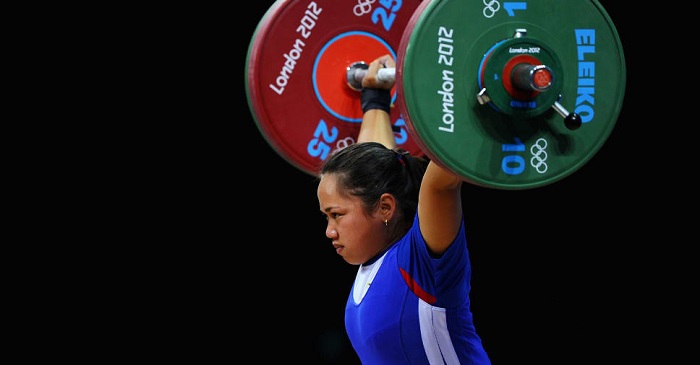
First off, sports have long been a passageway for women to prove their strength and their agility, that while different from the physical abilities of men, are ever-present within them, and of equal value to society. Filipino prosumers ought to believe that there need not immediate ‘drastic’ changes in media representation when after all, the voice of women in sports is much stronger in today’s time but maybe–we just need more of it.
Now that the pandemic has halted many of the sports events in the country, it would be much trickier to do that, but still, possible. Add to this, the country witnessing an unfortunate government intervention in May 2020 to the country’s leading broadcast media network, ABS-CBN; denying them franchise, ultimately pushing the network to shut off airtime in traditional TV.
ABS-CBN has, for many years, been the home of the top collegiate sports associations in the Philippines, UAAP and NCAA, airing their games, which makes it more difficult on this front to give media share to female athletes. NCAA, however, has decided to ink a partnership with rival network GMA, while UAAP has also tied with another network TV5, to keep the ground running.
The same Havas study also unearthed other interesting data, letting us in on Filipino prosumers’ perceptions towards sports, most of which, transcends its traditional role in society.
The study found that sports are also being looked at as a source of mental health. About 88% of Filipino prosumers believe that people who play sports are more likely to stay healthy mentally and emotionally. The report notes that this points to a strong belief that sports are in the same category as relaxation, meditation, and other mental health practices that promote mental wellbeing – something we are all in need of as we continue to keep our heads above the water against Covid-19.
In line with inclusivity for women, everyone in the prosumer group, or 99%, also believes that sports brands should further create athletic apparel that takes into consideration people’s religion, most notably, the incorporation of Muslims’ hijab for women.
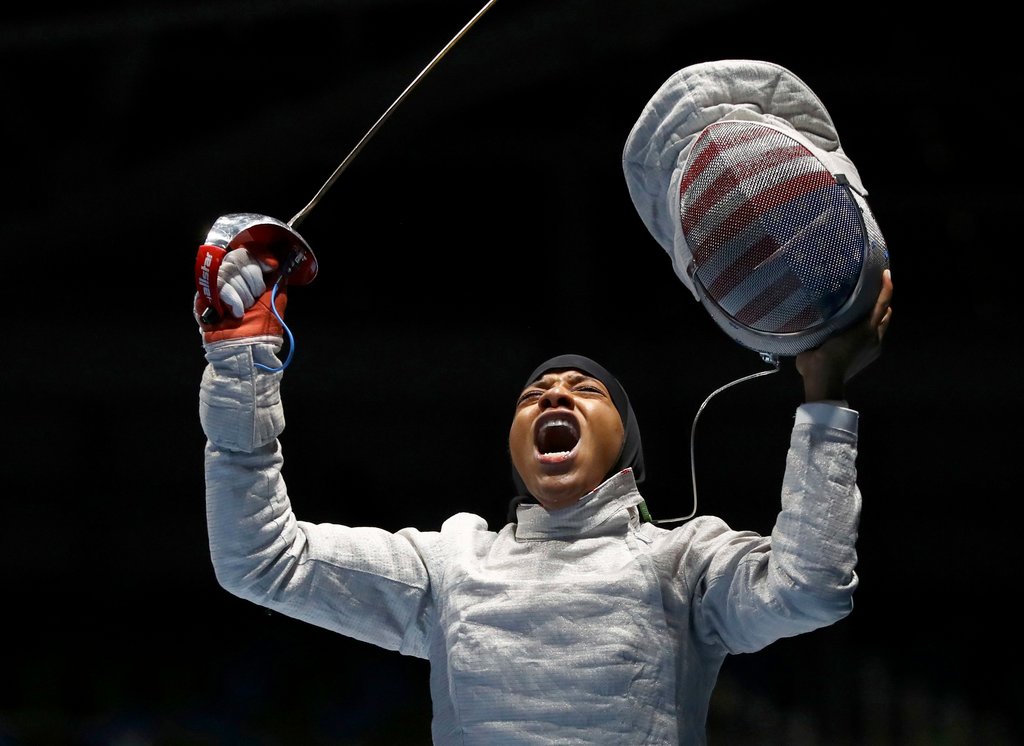
A lot of global brands like Nike and Adidas have the hijab already as a staple apparel in their collections. Women athletes have also accomplished important firsts, where in fact, in 2016, professional fencer Ibtihaj Muhammad became the first Muslim woman to compete for America wearing a hijab during the Rio Olympics.
What Filipino prosumers might in fact is waiting for, is for said global feats to be replicated in the local arena–more local sports apparel offering hijab attire and of course, more representation of women proudly wearing their faith in the Philippine sports industry.
In a press release, Tiongson said that sports have indeed gone a long way from being a mere spectacle and a battle for fame, glory, and money.
“Sports are now seen as content that is imbued with meaning and that can contribute to meaningful, positive change in society,” he said.
Finally, Tiongson believes that with these insights brought to the surface, all stakeholders involved in sports must rethink their contribution to all of this.
“Athletes, celebrities, leagues, clubs, federations, and even sporting apparel and retailer brands should think about their emerged role in the lives of audiences. People look up to them more closely for meaningful inspiration – and they expect more from them,” he said.
Prosumer Reports are a series of thought leadership publications by the global Havas which includes its own proprietary research across the Havas network and client companies. Philippines’ Havas Ortega Group fully implements the initiative with a local adaptation of Filipino insights and data.
The post 90% of Filipino ‘prosumers’ think female athletes on media best way to stir gender stereotypes appeared first on MARKETECH APAC.
]]>The post P&G, Lazada rolls out new campaign to raise awareness on Imposter Syndrome appeared first on MARKETECH APAC.
]]>According to a study by the US National Library of Medicine, about 82% of the general population experience imposter syndrome in different periods of their lives, while the statistics from the 2019 Imposter Syndrome Study, also shared that 1 out of 2 women experiences Imposter Syndrome on a daily or regular basis, attesting to the fact that women often doubt their own abilities through feelings of fraud and belittlement of their own experiences and expertise.
The ‘#RealDeal’ campaign aims to shed light on this psychological experience through a short film, telling the real-life story of Singaporean entrepreneur, Yeo Wan Qing, who overcame Imposter syndrome by being open to those around her about the struggles she was facing.
The campaign will run on Lazada in May and June across five Southeast Asian markets including the Philippines, Thailand, and Singapore, as well as Indonesia, and Vietnam, with a wide range of exclusive offers on P&G products such as Olay, Pantene, and Oral-B.
“Imposter Syndrome should be taken seriously. Women who experience Imposter Syndrome need to come to the realization that people value their expertise, and they can focus on growing through the process. Additionally, they can speak to someone they trust to help them realize that their fears are unfounded,” said Dr. Lim Boon Leng, the psychiatrist from Dr. BL Lim Centre for Psychological Wellness.
Meanwhile, Alexandra Vogler, the senior director of e-commerce at P&G Asia Pacific, Middle East, and Africa, shared, “P&G is deeply committed to equality and inclusion. Through this campaign, we want to bring to light the inner struggles that go unnoticed among women experiencing Imposter Syndrome. Through this short film, we hope to inspire people to start conversations about Imposter Syndrome, and support one another in overcoming it.”
The post P&G, Lazada rolls out new campaign to raise awareness on Imposter Syndrome appeared first on MARKETECH APAC.
]]>